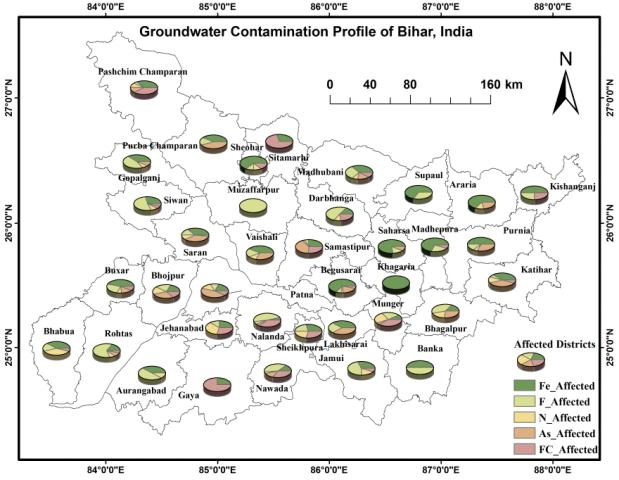
Bihar is facing a severe groundwater contamination crisis, with over 30,000 rural wards reporting unsafe drinking water that poses significant health hazards. A recent report, tabled in the Bihar assembly as part of the Economic Survey, has raised alarms over the presence of high levels of arsenic, fluoride, and iron in groundwater sources across multiple districts.
According to the study conducted by the state’s Public Health Engineering Department (PHED), 4,709 wards are affected by arsenic contamination, 3,789 wards have excessive fluoride levels, and 21,709 wards suffer from high iron content in their groundwater. This means that nearly 26% of rural wards across 31 districts—out of a total of 38—are experiencing groundwater contamination that exceeds permissible safety limits.
The most affected districts include Buxar, Bhojpur, Patna, Saran, Vaishali, Lakhisarai, Darbhanga, Samastipur, Begusarai, Khagaria, Munger, Katihar, Bhagalpur, Sitamarhi, Kaimur, Rohtas, Aurangabad, Gaya, Nalanda, Nawada, Sheikhpura, Jamui, Banka, Supaul, Madhepura, Saharsa, Araria, and Kishanganj. The widespread nature of the contamination has sparked concerns about long-term health risks for millions of people relying on these groundwater sources.
In response to the crisis, the Bihar government has pledged to make rural areas ‘hand pump-free’ and provide access to safe drinking water under the ‘Har Ghar Nal Ka Jal’ scheme. The initiative aims to supply potable water to 83.76 lakh families in rural areas, including those in the most affected wards. The government is also implementing multi-village schemes to improve overall water quality in the state.
To further address the issue, the state has embarked on projects to utilize river water as an alternative drinking water source. In September 2024, Chief Minister Nitish Kumar laid the foundation stone for a ₹1,347-crore project to supply treated water from the Sone River to Aurangabad, Dehri, and Sasaram. This initiative is expected to reduce dependency on groundwater and mitigate contamination risks. Additionally, the Ganga Water Supply Scheme, launched in 2023, continues to provide uninterrupted clean drinking water to residents of Gaya, Rajgir, and Nawada.
Health experts have warned about the serious consequences of consuming contaminated groundwater. Dr. Manoj Kumar, a leading gastroenterologist in Bihar, emphasized the need for authorities to identify contamination sources and implement appropriate countermeasures. He also recommended organizing awareness camps in affected areas to educate residents about the risks of consuming unsafe water.
Dr. Kumar further stressed the importance of establishing standardized drinking water quality parameters, as the presence of harmful contaminants can lead to severe health conditions, ranging from stomach infections to life-threatening diseases like cancer. He urged authorities to introduce comprehensive water quality standards and purification measures tailored to specific contaminants found in different water sources.
As Bihar grapples with this widespread groundwater crisis, urgent intervention is required to ensure safe drinking water access for millions of rural residents. The success of government initiatives and infrastructure projects will play a crucial role in mitigating health risks and securing long-term water safety for the state.