For decades, Bastar represented one of the darkest chapters in India’s internal security history. Dense forests, difficult terrain, poor infrastructure and deep social alienation transformed the tribal dominated region into the strongest base of Maoist insurgency in the country. Generations grew up amid fear, violence and uncertainty while repeated ambushes, attacks on security personnel and civilian killings made Bastar synonymous with Naxalism across India.
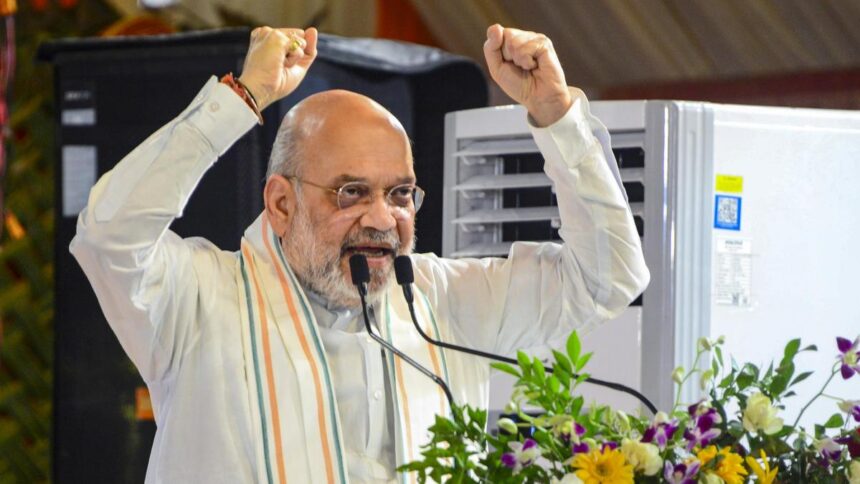
That is precisely why Union Home Minister Amit Shah chose Bastar to announce what the government described as a historic milestone. Standing in a region once considered the epicentre of Left Wing Extremism, Shah declared that India had become “Naxal free” after decades of conflict. The symbolism of the location was impossible to ignore.
The decision to make such an announcement from Bastar was not merely administrative or ceremonial. It was deeply political, strategic and psychological. The message was intended not only for the residents of Bastar or Chhattisgarh but for the entire country. The Centre sought to demonstrate that a region long associated with insurgency and fear had now entered a new phase focused on governance, infrastructure, welfare and investment.
Bastar’s Long Association With Maoist Violence
Bastar’s name became internationally recognised because of Maoist violence. Thick forests of sal, bamboo and teak provided natural cover for insurgent groups, making anti insurgency operations extremely difficult for security agencies. For years, large parts of the region remained inaccessible after sunset and many villages functioned under the shadow of armed insurgent influence.
The memory of April 6, 2010 remains deeply etched in India’s security history. On that day, Maoist rebels ambushed a CRPF patrol in Dantewada district, killing 76 personnel in one of the deadliest attacks ever carried out against Indian security forces. The incident shocked the nation and reinforced the perception that Bastar was the core operational territory of Maoist groups.
Over the past two decades, nearly 1300 security personnel lost their lives in anti Naxal operations across the region. Civilians suspected of supporting police forces were frequently targeted and killed. Government data suggests more than 1800 civilians were murdered by Maoist groups between 2001 and 2024.
The violence also had devastating economic consequences. Investors avoided the region, industries hesitated to establish projects and public infrastructure remained weak. Roads, schools, hospitals, mobile networks and banking services expanded slowly because of security concerns. As a result, Bastar remained one of India’s most underdeveloped regions despite rich natural resources.
Why Bastar Was Chosen For The Announcement
The choice of Bastar carried enormous symbolic significance. By announcing the end of Naxalism from the very region that once symbolised insurgency, the government attempted to project victory not only in military terms but also in psychological and developmental terms.
According to Amit Shah, while India gained independence in 1947, Bastar experienced “real freedom” only after March 31, 2026. The statement reflected the government’s attempt to frame the anti Naxal campaign as both a security success and a liberation movement for tribal communities trapped between insurgent violence and state neglect for decades.
Political analysts believe the announcement was carefully designed to reshape national perception about Bastar. For years, the name evoked images of ambushes, landmines and armed conflict. The government now wants Bastar to be viewed as a model of transformation and stability.
The timing also aligned with the Centre’s larger strategy of projecting development alongside security achievements. Over the past few years, authorities intensified military operations while simultaneously expanding welfare infrastructure.
Anti Naxal Operations Intensified After 2019
The campaign against Maoist insurgency accelerated significantly after 2019. Security agencies adopted aggressive operational strategies supported by improved intelligence gathering and enhanced coordination between central and state forces.
The effort gained additional momentum after the Bharatiya Janata Party formed the government in Chhattisgarh in 2023. Security operations expanded deeper into forest regions previously considered inaccessible.
Government figures indicate that 224 Maoists were killed during operations in 2024. In 2025, the number reportedly increased to around 400. More than 10000 insurgents surrendered over the past decade as pressure mounted from sustained operations and weakening local support structures.
Officials argue that this decline in insurgent capacity was not accidental but the result of coordinated security planning combined with developmental outreach. New roads improved mobility for security forces while communication towers expanded surveillance and intelligence networks.
The Centre also increased the number of security camps across vulnerable regions. These camps became operational bases for anti insurgency missions while simultaneously serving as points for welfare distribution and public engagement.
Development Push Becomes Central To New Bastar Narrative
Amit Shah’s declaration was accompanied by a detailed development blueprint for Bastar. The government’s objective now is to reposition the region from a conflict zone into an investment and development destination.
One of the most important announcements involved converting existing security camps into Jan Seva Kendras. According to the Home Minister, these centres will function as integrated hubs for public services and welfare delivery.
Residents will receive access to banking facilities, Aadhaar services, digital connectivity and government benefit schemes through these centres. Officials believe this model will strengthen administrative presence in remote tribal areas while improving citizen trust.
The Centre has also expanded road construction, healthcare facilities, educational institutions and mobile connectivity projects across Bastar in recent years. Improved connectivity is expected to increase economic activity and reduce isolation among tribal communities.
Analysts say this dual approach of security operations and development outreach became crucial because military action alone could not permanently eliminate insurgency. Long term stability required governance, economic opportunities and stronger public institutions.
Central Zonal Council Meeting Sent Another Strong Message
The political symbolism around Bastar became even stronger when the region hosted the 26th Central Zonal Council meeting. Chief ministers from Uttar Pradesh, Madhya Pradesh, Chhattisgarh and Uttarakhand attended the high level gathering alongside senior Union ministers.
Traditionally, such meetings are held in state capitals or New Delhi. Conducting the meeting in Bastar was therefore viewed as a deliberate signal from the Centre.
The government wanted to demonstrate that Bastar was secure enough to host top political leadership and major administrative discussions. The event reinforced the broader narrative that the region had moved beyond insurgency and entered a phase of normal governance.
Security experts believe such optics matter significantly because perception often shapes investment decisions and public confidence. If Bastar is increasingly viewed as stable, it could attract tourism, industrial projects and private sector participation in the future.
Challenges Still Remain Despite Optimism
While the government has declared India “Naxal free,” experts caution that long term peace will depend on sustained governance and economic inclusion. Many tribal communities continue to face poverty, unemployment and inadequate access to public services.
Questions also remain regarding rehabilitation of surrendered insurgents and ensuring that development projects genuinely benefit local populations. Land rights, forest protection and tribal representation are likely to remain sensitive issues.
Human rights organisations have also raised concerns in the past about the impact of prolonged militarisation in tribal areas. Balancing security priorities with democratic accountability will remain an important challenge moving forward.
Nevertheless, the decline in large scale Maoist violence marks a significant shift compared to the situation a decade ago. Markets, roads and public institutions are now functioning in areas once considered conflict hotspots.
A New Political And Development Narrative
By choosing Bastar for this declaration, Amit Shah attempted to create a defining political image. The government wanted the country to see Bastar not as a battlefield but as evidence of transformation through security operations and development initiatives.
For residents who spent decades living under the fear of insurgent violence, the announcement carried emotional significance. For the government, it represented proof of policy success. And for political observers, it highlighted how security achievements are increasingly being integrated into a broader narrative of governance and national integration.
Whether Bastar fully emerges as a long term model of peace and development will depend on what follows after the declaration. But the symbolism of the moment was unmistakable. The region once associated with fear is now being projected as the face of a transformed India.