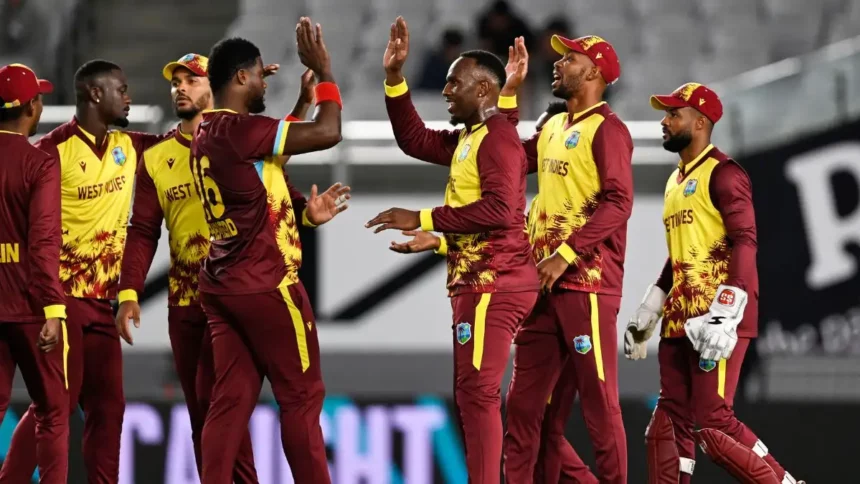
The announcement of the West Indies squad for the ICC Men’s T20 World Cup 2026 signals a defining moment for Caribbean cricket as the team prepares to compete on the global stage in India and Sri Lanka. Combining seasoned internationals with emerging players who have impressed in recent domestic and franchise competitions, the selection reflects a deliberate effort to balance experience, adaptability, and explosive potential. With the tournament approaching, the squad embodies both the legacy of West Indies’ dominance in the shortest format and a renewed ambition to reclaim prominence through strategic selection and youth integration.
Leadership stability and returning experience shape west indies’ core strategy
At the heart of the squad is Shai Hope, who continues to anchor the team’s leadership setup with a calm and methodical approach. His retention as a senior figure underscores the selectors’ confidence in his ability to guide the team through high-pressure matches in subcontinental conditions. Hope’s leadership is complemented by the return of Jason Holder, whose experience, tactical awareness, and all-round capabilities add depth to both the batting and bowling units. Holder’s presence also strengthens the dressing room with his calm authority and ability to mentor younger players navigating their first global tournament.
Another significant recall is that of Rovman Powell, whose aggressive middle-order batting and field leadership have made him a key figure in West Indies’ T20 structure. Powell’s power-hitting ability provides balance to the batting lineup, particularly in situations demanding acceleration against quality spin and pace. Alongside him, the squad features established performers such as Shimron Hetmyer, whose flair and improvisation remain vital assets in modern T20 cricket, especially on slower pitches where creativity becomes decisive.
The bowling unit reflects a blend of experience and variety, with Akeal Hosein and Gudakesh Motie offering control and wicket-taking options through spin. Their inclusion highlights the team’s recognition of spin as a crucial factor in Indian and Sri Lankan conditions, where matches often hinge on middle-over efficiency. Fast-bowling duties are reinforced by the presence of Jayden Seales and Matthew Forde, both of whom bring pace, athleticism, and the ability to adapt lengths according to surface conditions.
The selection also marks a strategic decision to exclude certain established names who have struggled with fitness or form, indicating a shift toward current performance metrics rather than reputation alone. This approach reflects a broader recalibration within West Indies cricket, where consistency and adaptability are being prioritised over past achievements. The squad composition suggests a clear intent to field a team capable of responding dynamically to varying match situations, while still leaning on experienced campaigners to steady the ship during crucial phases of the tournament.
New faces, youthful energy and renewed ambition define west indies’ world cup vision
Among the most discussed inclusions is Quentin Sampson, whose maiden call-up to a T20 World Cup squad marks a significant personal milestone and a broader statement of intent by the selectors. Sampson’s rise through domestic cricket and his impactful performances in franchise leagues have positioned him as a symbol of the new generation of Caribbean cricketers, combining raw power with increasing tactical maturity. His selection reflects confidence in his ability to adapt quickly to international pressure and contribute meaningfully in high-stakes encounters.
The squad further includes dynamic all-round options such as Romario Shepherd and Roston Chase, whose versatility strengthens team balance. Their dual skill sets provide flexibility in team combinations, allowing West Indies to adjust their playing eleven according to pitch conditions and opposition strengths. This flexibility is particularly valuable in a tournament format where turnaround times between matches are short and adaptability becomes a decisive advantage.
Batting depth is enhanced by players like Brandon King and Sherfane Rutherford, both known for their ability to score quickly and shift momentum during powerplay and middle-over phases. Their inclusion underscores the team’s continued commitment to aggressive batting, a hallmark of West Indies cricket that has historically defined their success in the T20 format. This aggressive philosophy is now being refined with greater emphasis on situational awareness and strike rotation, aligning traditional Caribbean flair with modern tactical demands.
The overall squad composition reflects a careful balance between legacy and renewal, acknowledging the team’s two-time T20 World Cup triumphs while recognising the need to evolve in an increasingly competitive global landscape. Younger players are being entrusted with responsibility alongside senior figures, creating an environment where experience guides ambition rather than overshadowing it. This approach suggests a long-term vision extending beyond a single tournament, aimed at rebuilding West Indies as a consistent force in international T20 cricket.
As the team prepares to face a challenging group stage featuring strong and emerging opponents, the emphasis remains on cohesion, clarity of roles, and adaptability to diverse conditions. The squad announcement has generated cautious optimism among fans and analysts alike, reflecting hope that this blend of experience and youth can translate potential into performance. With preparation intensifying and expectations rising, West Indies enter the T20 World Cup 2026 carrying both the weight of history and the promise of renewal.