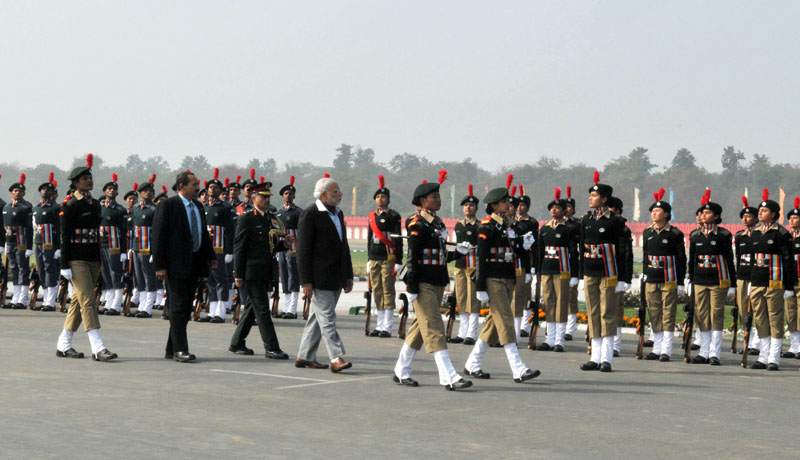
The Prime Minister’s address at the National Cadet Corps Prime Minister Rally in Delhi marks a significant moment in India’s ongoing celebration of youth leadership, discipline, and national service. Held at the Cariappa Parade Ground as the concluding event of the Republic Day Camp, the rally brings together young cadets from across the country and abroad, symbolising the collective strength of India’s youth in shaping a confident and forward-looking nation. The gathering reflects how institutions like the NCC continue to nurture values of unity, responsibility, and commitment among young citizens, while reinforcing the idea that national development is inseparable from youth empowerment.
A historic gathering of cadets showcasing discipline, diversity and youth power
The Republic Day Camp this year stands out for its scale, diversity, and symbolic importance. A total of 2,361 NCC cadets participated in the camp, representing every region of the country and reflecting India’s cultural and geographic diversity. Among them were 917 girl cadets, the highest number of female participants in the history of the Republic Day Camp, underscoring the growing role of young women in leadership, service, and national representation. This milestone reflects broader social change, where young women are increasingly visible in uniformed services and civic institutions, contributing equally to nation-building efforts.
Throughout the month-long camp, cadets underwent intensive training designed to strengthen physical endurance, mental resilience, leadership skills, and teamwork. Their daily routines combined ceremonial drills, physical fitness sessions, adventure activities, and educational engagements that emphasised civic responsibility and national values. These activities were not limited to performance or display but aimed at shaping disciplined individuals capable of contributing meaningfully to society in both civilian and professional spheres. The camp also functioned as a space for cultural exchange, allowing cadets from different states to interact, share traditions, and develop a deeper understanding of India’s pluralistic identity.
The Prime Minister Rally serves as the culminating moment where this training and preparation find public expression. Cadets present a disciplined march past and synchronised performances that reflect precision, unity, and collective effort. Over eight hundred cadets participate in cultural presentations that weave together music, movement, and storytelling to portray India’s heritage, contemporary challenges, and aspirations for the future. These performances are designed not merely as entertainment but as expressions of national pride and youth creativity, shaped through weeks of dedicated rehearsal and teamwork.
The presence of the Prime Minister at the rally holds deep symbolic value for the cadets. It represents recognition at the highest level of the commitment and discipline they have demonstrated. For many young participants, the opportunity to perform and be addressed by the country’s leader becomes a defining memory, reinforcing their sense of responsibility toward the nation. The rally thus functions as both a ceremonial conclusion to the camp and a reaffirmation of the NCC’s role in nurturing informed, confident, and service-oriented citizens.
International participation and volunteer engagement strengthen the spirit of collaboration
Adding a global dimension to the rally, 144 cadets from eighteen friendly foreign countries participate alongside Indian cadets, highlighting the NCC’s role in fostering international youth engagement. Their presence reflects India’s emphasis on building people-to-people connections and promoting mutual understanding through youth diplomacy. By training, performing, and interacting together, cadets from different nations experience shared values of discipline, respect, and service, transcending cultural and national boundaries. This international participation transforms the rally into a platform for global youth solidarity, reinforcing the idea that challenges such as peace, development, and cooperation require collective effort.
The inclusion of foreign cadets also enhances cultural exchange, as participants share traditions, perspectives, and experiences from their respective countries. These interactions often extend beyond the parade ground, shaping friendships and networks that endure beyond the camp itself. Such exchanges contribute to India’s soft power outreach, positioning youth engagement as a vital component of international relations and cultural diplomacy.
Complementing the cadets’ participation is the presence of over 650 volunteers drawn from initiatives such as Mera Yuva Bharat, along with representatives from the Ministry of Education and the Ministry of Tribal Affairs. Their involvement highlights the collaborative ecosystem supporting youth development in India. Volunteers play a crucial role in mentoring, coordinating, and facilitating activities that enable young people to maximise their potential. Their attendance at the rally symbolises institutional support for youth-centric programmes that integrate education, skill development, and civic engagement.
The theme of the rally, ‘yuva shakti, viksit bharat’, encapsulates the broader vision linking youth empowerment with national progress. It reflects the belief that India’s future growth depends on nurturing disciplined, skilled, and socially conscious young citizens. Every element of the rally, from ceremonial drills to cultural performances and international participation, reinforces this narrative. The event showcases how structured youth organisations like the NCC serve as bridges between individual aspiration and collective national goals, preparing young people to contribute constructively to India’s democratic and developmental journey.