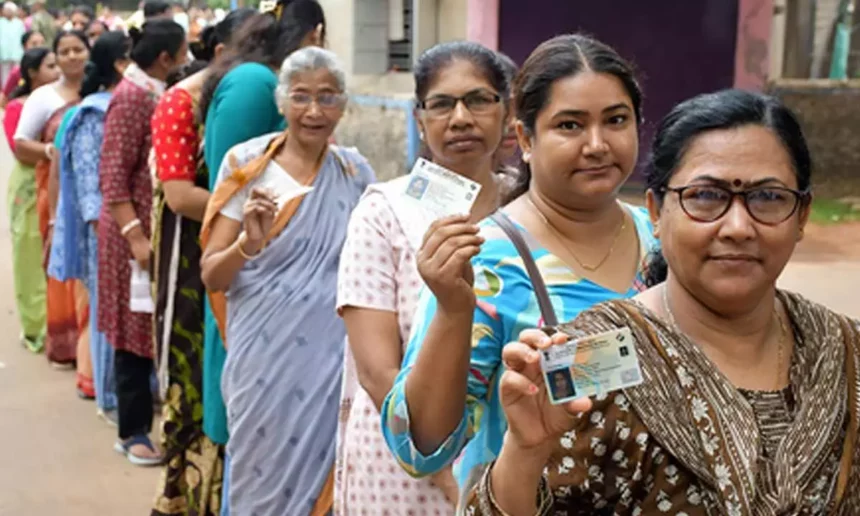
West Bengal has set a remarkable benchmark in India’s democratic history with a record-breaking voter turnout in the 2026 Assembly elections. The Election Commission confirmed that the combined turnout across the two phases stood at 92.47%, surpassing all previous records in the state since Independence. This milestone reflects not only the vibrancy of democracy in the region but also the growing political awareness and engagement among citizens.
The elections were conducted in two phases, both of which witnessed extraordinary participation. The first phase, held on April 23, recorded a turnout of 93.19%, while the second phase saw 91.66% participation as of the final reporting time. The combined figure highlights the consistency of voter enthusiasm across different regions and phases.
A New Benchmark in Electoral Participation
The 92.47% turnout significantly exceeds the previous highest voter participation recorded in West Bengal, which was 84.72% during the 2011 Assembly elections. The sharp increase indicates a major shift in voter behavior and engagement over the years.
With a voter base of approximately 6.81 crore, the scale of participation in West Bengal is particularly noteworthy. Millions of voters turned up at polling stations across urban and rural areas, braving long queues and varying weather conditions to exercise their democratic right.
This surge in turnout is being seen as a reflection of increased trust in the electoral process, as well as the success of efforts aimed at encouraging voter participation.
Women Voters Drive the Momentum
One of the most significant highlights of the 2026 elections in West Bengal is the higher participation of women voters compared to men. According to official data, 92.28% of women voters cast their votes, while the turnout among men stood at 91.07%.
This trend is not only a testament to the growing empowerment of women but also an indication of their increasing role in shaping political outcomes. In many constituencies, women voters turned out in large numbers early in the day, contributing to the high overall turnout.
The rising participation of women is part of a broader national trend observed in recent elections, where female voter turnout has often matched or exceeded that of male voters. This shift is being viewed as a positive development for inclusive governance and representation.
Urban and Rural Participation Patterns
Traditionally, rural areas in India have recorded higher voter turnout compared to urban regions. However, the 2026 elections in West Bengal have shown a more balanced pattern, with strong participation from both urban and rural voters.
Cities like Kolkata witnessed long queues outside polling stations, reflecting increased awareness and engagement among urban voters. Improved infrastructure, better accessibility, and targeted awareness campaigns have played a crucial role in boosting turnout in urban areas.
At the same time, rural regions continued to demonstrate their strong participation, driven by local issues, community engagement, and a deep-rooted sense of civic duty.
Factors Behind the Record Turnout
Several factors have contributed to the historic voter turnout in West Bengal:
- Extensive Voter Awareness Campaigns: The Election Commission and various organisations conducted widespread campaigns to encourage voter participation, including digital outreach and grassroots initiatives.
- Improved Polling Infrastructure: Enhanced facilities at polling stations, including provisions for elderly and differently-abled voters, made the voting process more accessible.
- Heightened Political Engagement: Intense campaigning by political parties and increased public interest in electoral issues contributed to higher turnout.
- Robust Security Arrangements: Strong security measures ensured a safe and secure environment for voters, boosting confidence in the electoral process.
- Technological Integration: The use of technology in voter management and monitoring helped streamline the process and reduce logistical challenges.
These combined efforts created an environment that encouraged maximum participation across different sections of society.
Comparison with Other States
The high turnout in West Bengal is part of a broader trend observed across states that went to polls in 2026. States like Assam and Tamil Nadu also recorded impressive voter participation.
Assam reported a turnout of 85.38%, while Tamil Nadu saw strong participation with women voters again outnumbering men. Puducherry recorded 89.83% turnout, further highlighting the nationwide trend of increased voter engagement.
In all these states, the higher turnout of women voters stands out as a significant development, pointing to a shift in the demographic dynamics of electoral participation.
Role of the Election Commission
The Election Commission of India played a crucial role in ensuring the smooth conduct of the elections. From logistical planning to security arrangements, the Commission implemented several measures to facilitate a free and fair electoral process.
Chief Election Commissioner Gyanesh Kumar praised the people of West Bengal for their enthusiastic participation, stating that the record turnout is a testament to the strength of India’s democracy.
The Commission also acknowledged the efforts of polling officials, security personnel, and volunteers who worked tirelessly to manage the large-scale electoral exercise.
Significance of High Voter Turnout
High voter turnout is widely regarded as a key indicator of a healthy democracy. It reflects public confidence in the electoral system and a willingness among citizens to participate in governance.
In West Bengal, the record turnout suggests that voters are highly engaged and motivated to influence the political direction of the state. It also indicates that key issues and policies have resonated strongly with the electorate.
The increased participation of women further enhances the representativeness of the electoral process, ensuring that diverse voices are heard.
Implications for Election Results
While high voter turnout is generally seen as a positive sign, its impact on election outcomes can vary. In some cases, higher turnout may benefit incumbent governments, while in others, it may signal a desire for change.
In West Bengal, the record turnout has added an element of uncertainty to the election results. Political analysts believe that the high participation could lead to closely contested outcomes in several constituencies.
The final results, to be announced on May 4, will provide clarity on how voter sentiment has translated into electoral outcomes.
Challenges and Lessons Learned
Despite the success in achieving high voter turnout, the election process also highlighted certain challenges. Managing large crowds, ensuring timely polling, and maintaining security across multiple constituencies required significant coordination.
However, the successful conduct of the elections demonstrates the capability of India’s electoral system to handle complex and large-scale processes. The lessons learned from this election can be applied to future polls to further improve efficiency and participation.
Looking Ahead
As West Bengal awaits the counting of votes, the focus will shift to the final results and their implications. Political parties are preparing for various scenarios, while analysts continue to study the trends indicated by voter turnout.
The record participation in the 2026 Assembly elections sets a new standard for future elections, not only in West Bengal but across the country. It highlights the importance of continuous efforts to engage voters and strengthen democratic processes.
Conclusion
The 2026 Assembly elections in West Bengal have marked a historic moment in India’s democratic journey, with a record voter turnout of 92.47%. The enthusiastic participation of citizens, particularly women, underscores the strength and inclusivity of the electoral process.
As the state moves toward the announcement of results, this election will be remembered for its unprecedented voter engagement and its contribution to the evolution of democratic participation in India.