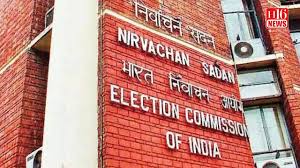
The Election Commission has released the draft electoral roll for West Bengal as part of the ongoing Special Intensive Revision, revealing the deletion of more than 58 lakh names from the voters’ list ahead of the 2026 elections. The move, aimed at cleaning and updating the electoral database, has drawn attention because of the sheer scale of deletions, which include voters marked as deceased, relocated, duplicate, or untraceable, and has triggered political and administrative scrutiny across the state.
Large-scale deletions mark special intensive revision of electoral rolls
According to officials of the Election Commission in Kolkata, a total of 5,820,898 pre-existing voters have been removed from the draft roll published on Tuesday. The deletions are part of the Special Intensive Revision process being carried out to ensure the accuracy and integrity of the electoral rolls before the next round of elections. Of the names removed, approximately 2.4 million belonged to voters recorded as deceased, while others were excluded due to relocation, duplication, prolonged absence, or failure to verify details during the revision exercise.
The revised draft list has now been made available online, allowing voters, political parties, and other stakeholders to examine the changes. Election officials have stated that the process was conducted following established protocols, with booth-level officers and supervisory staff carrying out field verification to identify ineligible or duplicate entries. The objective, according to the poll panel, is to ensure that only eligible and verified voters remain on the rolls, thereby strengthening the credibility of the electoral process.
The scale of the deletions has attracted particular attention in politically sensitive constituencies. In Bhowanipore, the south Kolkata assembly segment from which Chief Minister Mamata Banerjee casts her vote, at least 127 names were removed from a single polling station. While officials insist that such deletions are routine outcomes of verification drives, the figures have added to the broader debate over voter list accuracy and transparency.
Senior Election Commission officials have emphasised that the draft roll is not the final list and that adequate safeguards are in place to prevent wrongful exclusion. They have reiterated that the revision exercise is intended to remove long-standing inaccuracies that accumulate over time due to migration, deaths, and duplication, especially in a densely populated and highly mobile state like West Bengal.
Claims, objections, and verification process to follow before final roll
With the publication of the draft roll, the Election Commission has now opened a window for claims and objections that will remain in effect until January 15, 2026. During this period, voters whose names have been deleted, as well as political parties and other stakeholders, can submit applications seeking inclusion, correction, or objection to entries in the draft list. This stage is considered a critical component of the revision process, as it allows errors or omissions to be addressed before the roll is finalised.
Following the claims and objections phase, hearings and verification exercises are scheduled to take place between January 16 and February 7, 2026. During this period, election officials will examine submitted claims, verify documents, and conduct field checks where necessary to determine the eligibility of applicants. The poll panel has indicated that this process will be carried out in a transparent and time-bound manner, with due opportunity provided to all concerned parties.
The final electoral roll is slated to be published on February 14, 2026, after incorporating accepted claims and objections. Officials have underlined that no voter will be disenfranchised without due process and that every eligible citizen has the right to seek inclusion if their name has been removed in error. Political parties have also been encouraged to actively participate in the verification process to ensure that the rolls accurately reflect the electorate.
The Special Intensive Revision in West Bengal comes amid heightened political attention to electoral processes nationwide, with voter list revisions often becoming flashpoints for debate between ruling and opposition parties. While the Election Commission maintains that the exercise is purely administrative and data-driven, its outcome is expected to be closely monitored given the state’s complex political landscape and history of tightly contested elections.
As the verification process unfolds over the coming weeks, the focus will remain on how effectively claims and objections are addressed and whether the final roll succeeds in balancing accuracy with inclusiveness. The updated voters’ list will play a crucial role in shaping the democratic process in West Bengal, making the ongoing revision one of the most consequential electoral exercises in the state in recent years.