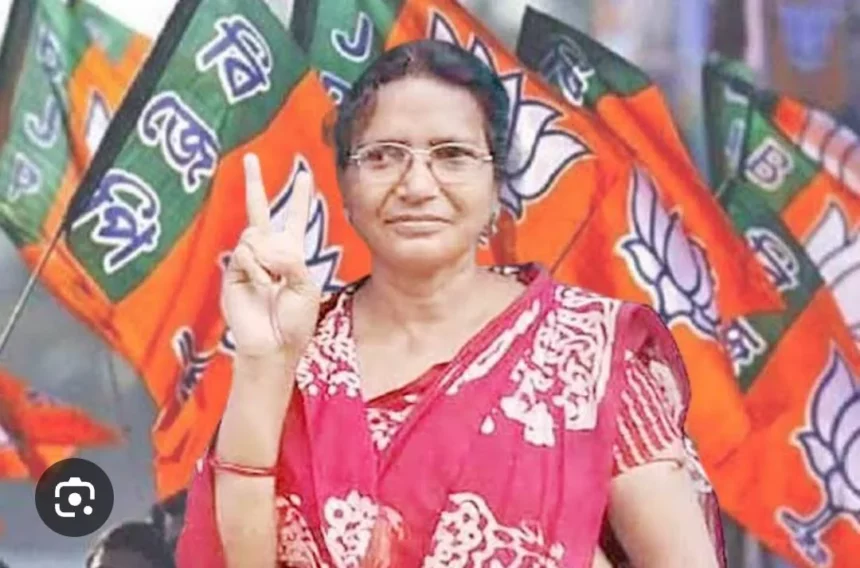
The political landscape of West Bengal has taken a significant turn ahead of the Assembly elections as the Bharatiya Janata Party announced Ratna Debnath, mother of the RG Kar Medical College rape and murder victim, as its candidate from the Panihati constituency. The decision, part of the party’s third list of nominees, formally brings a grieving mother into active politics, transforming a deeply emotional and widely debated criminal case into a central electoral issue.
Ratna Debnath’s candidature has not only drawn immediate political attention but has also reignited public discourse around justice, accountability, and women’s safety in West Bengal. Her entry into the electoral arena reflects a shift from protest to political participation, marking a moment where personal tragedy intersects with state-level political narratives.
From Protest to Politics: A Shift Driven by Quest for Justice
Ratna Debnath’s political entry did not emerge suddenly but followed weeks of speculation and public statements indicating her willingness to contest elections. After months of protests, appeals, and demands for justice in the RG Kar case, she had openly expressed dissatisfaction over the pace of legal proceedings and the lack of closure.
Her decision to contest elections on a BJP ticket stems from what she described as a continued struggle for justice. According to her earlier statements, the prolonged delay in accountability compelled her to take a more direct route by entering politics. The move signals a transition from symbolic protest to institutional participation, where she now seeks to influence governance and policy decisions from within the political system.
Her family had also indicated that discussions with BJP leaders had taken place prior to the announcement. This suggests that the decision was not only emotional but also strategically aligned with a political platform that promised to amplify her demands on a larger stage.
The Panihati constituency, where she has been fielded, becomes a focal point of this transformation. The constituency is expected to witness heightened attention as voters assess not only party agendas but also the symbolic weight of her candidature.
Political Reactions and Public Debate Intensify
The announcement of Ratna Debnath as a candidate has triggered varied reactions across political and social circles. While some have viewed her decision as a courageous step towards seeking justice through democratic means, others have expressed concern over the politicisation of a sensitive and tragic case.
Several voices associated with protest movements that had emerged after the RG Kar incident reacted critically to the development. These groups had earlier mobilised public support under campaigns demanding justice and accountability. Some activists have described the move as “unfortunate,” arguing that the transition into electoral politics could dilute the moral clarity of the movement.
At the same time, there are perspectives that acknowledge the family’s frustration. Supporters argue that prolonged delays in justice can push individuals toward alternative paths, including political engagement. From this viewpoint, Ratna Debnath’s decision is seen not as politicisation but as an extension of her fight for justice in a different arena.
Political analysts note that the BJP’s decision to field her is likely to have strategic implications. By associating itself with a case that generated widespread public outrage, the party may aim to position itself as a champion of justice and women’s safety. However, this strategy also carries risks, as it opens the party to criticism regarding the use of sensitive issues for electoral gain.
The ruling party and opposition groups are expected to respond strongly during the campaign, making the Panihati seat one of the most closely watched constituencies in the upcoming elections.
Electoral Strategy and Broader Political Implications
The inclusion of Ratna Debnath in the BJP’s candidate list is part of a broader electoral strategy as the party seeks to expand its influence in West Bengal. The third list, which includes candidates across multiple constituencies, reflects an effort to combine experienced political figures with new entrants who bring strong public narratives.
Panihati, identified as Assembly constituency number 111, holds strategic importance in the electoral map. By fielding a candidate whose personal story resonates with issues of justice and safety, the BJP appears to be focusing on emotive and issue-based campaigning.
The move also underscores a growing trend in Indian politics where individuals associated with social movements or high-profile cases enter electoral politics. Such candidates often bring visibility and public engagement, potentially influencing voter sentiment.
However, the effectiveness of this strategy will depend on multiple factors, including local political dynamics, voter priorities, and the overall campaign narrative. While Ratna Debnath’s candidature may attract attention, translating that into electoral success requires organisational support, effective messaging, and voter outreach.
The broader political implications extend beyond a single constituency. The RG Kar case had already sparked statewide and national discussions on women’s safety. By incorporating this issue into electoral politics, the campaign may shape debates on law enforcement, judicial processes, and governance.
Emotional Narrative Meets Electoral Reality
One of the most defining aspects of Ratna Debnath’s candidature is the emotional dimension it brings to the election. Unlike traditional political candidates, her entry is rooted in personal loss and a quest for justice, which may resonate strongly with voters.
At the same time, electoral politics demands a transition from individual narrative to broader policy engagement. As a candidate, she will need to address local issues, articulate a vision for development, and engage with diverse voter concerns beyond the central issue of justice.
This dual responsibility presents both an opportunity and a challenge. On one hand, her story can mobilise support and create a strong emotional connection with voters. On the other hand, sustaining that support requires effective communication on governance and policy matters.
Political observers note that voters may evaluate her candidature through multiple lenses — empathy, credibility, and capability. The campaign will need to balance these aspects to build a comprehensive electoral appeal.
BJP’s Candidate List and Expanding Campaign
Ratna Debnath’s name was included in the BJP’s third list of 19 candidates, covering several constituencies across West Bengal. This list reflects the party’s continued efforts to strengthen its presence in the state by introducing a mix of new and experienced candidates.
The constituencies mentioned in the list include regions with diverse political dynamics, indicating a targeted approach to candidate selection. By finalising its nominees in phases, the party aims to build momentum and maintain visibility in the run-up to the elections.
The inclusion of a candidate like Ratna Debnath adds a unique dimension to the campaign. It not only highlights specific issues but also differentiates the party’s candidate profile from traditional political line-ups.
Focus on Women’s Safety and Justice Debate
The RG Kar case had triggered widespread protests and discussions on women’s safety in West Bengal. By fielding Ratna Debnath, the BJP has brought this issue directly into the electoral narrative.
During the campaign, women’s safety is expected to emerge as a key theme, with parties presenting their approaches to addressing crime, improving law enforcement, and ensuring accountability. The debate may also extend to broader issues such as judicial efficiency and victim support systems.
For voters, these discussions provide an opportunity to evaluate policy commitments and track records. The presence of a candidate directly linked to a high-profile case may intensify scrutiny on these issues.
Ratna Debnath’s entry into electoral politics marks a significant development in the West Bengal Assembly elections. It represents a convergence of personal tragedy, public protest, and political strategy, creating a complex and emotionally charged campaign narrative.
As the election approaches, the Panihati constituency is likely to witness heightened attention and debate. The outcome will depend not only on political alignments but also on how effectively candidates connect with voters and address their concerns.
The broader impact of this development will extend beyond the election itself, influencing discussions on justice, governance, and the role of individual narratives in shaping political discourse.