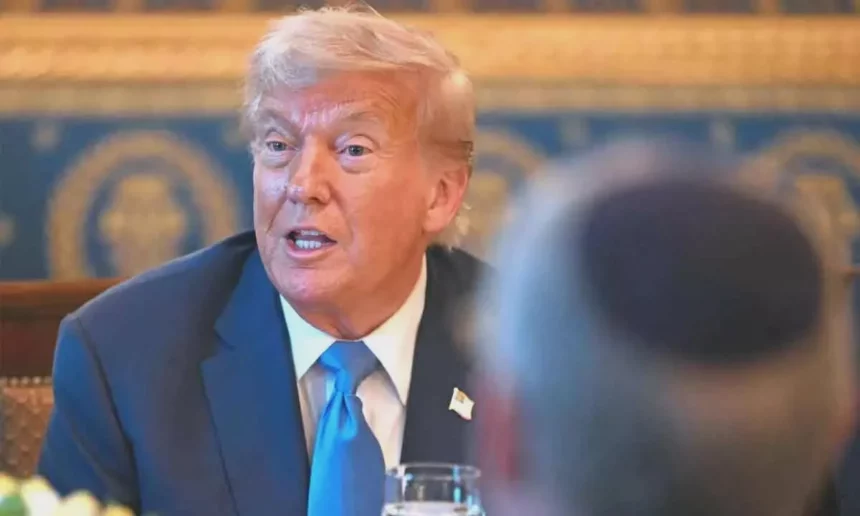
Donald Trump has warned that a Supreme Court decision on tariffs could unleash financial chaos and unprecedented refund liabilities.
Trump’s Alarm Over Supreme Court Scrutiny of Tariffs and the Scale of Potential Fallout
Former US President Donald Trump has issued one of his starkest warnings yet over the future of American trade policy, claiming that an adverse ruling by the United States Supreme Court on his tariff measures could push the country into a massive financial and administrative crisis. Trump’s comments came as the court considers challenges to tariffs imposed during his presidency under emergency economic powers, a legal battle that could redefine the limits of executive authority over trade and taxation.
According to Trump, if the Supreme Court rules that the tariffs were imposed unlawfully, the United States government could be forced to refund colossal sums to companies and entities that paid the duties. He has suggested that the figure could reach hundreds of billions of dollars and potentially climb into the trillions once secondary effects are considered. In his characteristically blunt language, Trump described such a scenario as catastrophic, warning that the government would struggle not only to pay back the money but even to calculate who is owed what, how much, and over what timeframe.
The tariffs in question were a central pillar of Trump’s economic and political strategy. Implemented using emergency powers, they were designed to pressure trading partners, protect domestic industries, and project strength in global trade negotiations. Trump repeatedly framed tariffs as both an economic weapon and a revenue-generating tool, arguing that they brought money into US coffers while forcing other countries to renegotiate trade terms. For his supporters, the tariffs symbolised a more assertive America; for critics, they represented an overreach of presidential authority and a distortion of constitutional checks and balances.
At the heart of the legal challenge is whether the president can unilaterally impose broad tariffs by invoking national emergency statutes originally intended for extraordinary situations. Lower courts have already expressed doubts about this interpretation, setting the stage for the Supreme Court to weigh in. Trump has seized on the potential consequences of an unfavourable ruling, portraying it as not merely a legal setback but a threat to economic stability and governmental functionality.
Trump’s argument goes beyond the immediate cost of refunds. He has warned that undoing years of tariff collections would trigger a cascade of complications, including disputes over interest payments, claims from businesses that altered supply chains due to tariffs, and uncertainty for industries that relied on tariff protections. In his view, the process would mire the federal government in years of litigation and bureaucratic paralysis, undermining confidence in US economic governance.
Despite Trump’s dire warnings, some current and former officials have offered more measured assessments. They argue that while refunding tariffs would be complex and expensive, the US Treasury possesses the resources to manage such an outcome over time. From this perspective, the issue is less about whether the government can pay and more about how the ruling would reshape the balance of power between Congress and the presidency. Even so, Trump has continued to frame the matter in apocalyptic terms, using it to rally support and underscore what he sees as the dangers of judicial interference in economic policy.
Economic, Political, and Global Implications of a Landmark Supreme Court Decision
The stakes of the Supreme Court’s decision extend far beyond Trump’s personal legacy. A ruling against the tariff regime would have profound implications for how future presidents wield economic authority. For decades, trade policy has been an area of shared responsibility between Congress and the executive branch, with lawmakers delegating certain powers to the president. Critics argue that Trump’s use of emergency statutes stretched that delegation too far, effectively allowing the president to impose what amounts to taxes without direct congressional approval.
If the court sides with these critics, it could significantly curtail the scope of executive power in trade matters. Such a decision would reaffirm Congress’s constitutional role in setting tariffs and could prompt lawmakers to revisit and clarify the statutes governing emergency economic powers. For future administrations, the ruling could limit the use of tariffs as a rapid-response tool in trade disputes, forcing presidents to seek legislative backing for sweeping measures.
Economically, the ripple effects would be substantial. Businesses that paid tariffs could seek refunds, but the impact would not be evenly distributed. Large importers might receive substantial sums, while smaller firms could face delays or difficulties navigating the refund process. Supply chains that were reconfigured in response to tariffs may not revert easily, leaving companies to absorb losses or renegotiate contracts. International trading partners would also be watching closely, as a rollback of tariffs could alter competitive dynamics and trade flows.
Markets, too, are sensitive to the outcome. Uncertainty over trade policy can influence investment decisions, currency values, and stock prices. A ruling that invalidates tariffs could be welcomed by some sectors that suffered under higher import costs, while others that benefited from protection could face renewed competition. The broader question for investors is how predictable US trade policy will be in the future and whether legal constraints will reduce sudden shifts driven by executive action.
Politically, Trump has used the looming decision to reinforce his narrative of institutional resistance to his agenda. By warning that the country could be “screwed” by a court ruling, he positions himself as a defender of economic nationalism facing opposition from judges and legal elites. This framing resonates with supporters who view tariffs as a symbol of strength and sovereignty. At the same time, opponents argue that the case demonstrates the importance of judicial oversight in preventing abuses of power.
The international dimension adds another layer of complexity. Trump’s tariffs were a defining feature of US relations with major trading partners, from allies to rivals. A Supreme Court ruling that dismantles those tariffs could be interpreted abroad as a shift in US posture, even if driven by legal rather than political change. Governments and businesses worldwide would need to reassess their strategies in response to a potentially more constrained US executive on trade issues.
Beyond immediate policy implications, the case touches on deeper questions about governance in a globalised economy. As trade disputes increasingly intersect with national security, technology, and geopolitics, the temptation for executives to invoke emergency powers is likely to persist. How the Supreme Court delineates the boundaries of those powers will shape not only trade policy but the broader relationship between law, politics, and economics in the United States.
As anticipation builds around the court’s ruling, Trump’s warnings have amplified public attention on what might otherwise have been a technical legal dispute. Whether his predictions of chaos prove accurate or exaggerated, the decision is set to become a landmark moment. It will determine not only the fate of past tariffs but also the rules governing how future leaders can deploy economic tools in pursuit of national goals, leaving lasting consequences for American democracy and the global trading system.