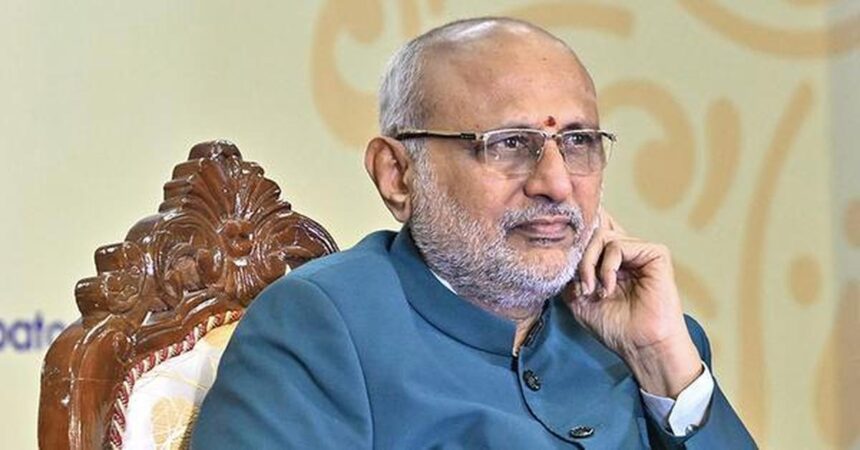
C. P. Radhakrishnan is scheduled to visit Rameswaram on December 30 to participate in the valedictory ceremony of the Kasi Tamil Sangamam 4.0, an event that has sought to celebrate and reaffirm the deep cultural, spiritual, linguistic and philosophical ties between Tamil Nadu and Kasi. Ahead of the Vice-President’s visit, security arrangements have been significantly intensified across the coastal district, reflecting the importance of the occasion and the presence of several senior dignitaries.
The Vice-President’s participation in the concluding ceremony is seen as the culmination of a nationwide cultural initiative that brought together scholars, students, artists and thinkers to revisit India’s shared civilisational roots. Officials said preparations were underway to ensure smooth conduct of the programme, with enhanced surveillance and coordination among security agencies in and around Rameswaram.
Valedictory of kasi tamil sangamam and cultural significance
According to officials, Vice-President C. P. Radhakrishnan will attend the valedictory function of the Kasi Tamil Sangamam celebration, which was originally inaugurated in Varanasi. The fourth edition of the programme, Kasi Tamil Sangamam 4.0, was held from December 2 to December 15 in Varanasi and witnessed wide participation from across the country.
The event brought together students, academicians, artists, writers and cultural practitioners, creating a platform for dialogue and exchange rooted in India’s ancient traditions. It highlighted the historic and spiritual connections between Tamil Nadu and Kasi, two regions that have long occupied central places in India’s religious and cultural imagination. Through seminars, performances and discussions, the programme sought to underline how these linkages have endured through centuries, transcending geography and political boundaries.
The valedictory ceremony at Rameswaram carries symbolic importance, as the town is one of the most sacred pilgrimage centres in southern India and is closely associated with the spiritual journey connecting the south and the north. By concluding the Sangamam in Rameswaram, organisers aim to reinforce the idea of cultural continuity and civilisational unity that binds different parts of the country.
Tamil Nadu BJP president Nainar Nagenthiran praised Narendra Modi for conceptualising and organising the Kasi Tamil Sangamam. He said the initiative helped revive and remind people of the timeless connection between Kasi and Rameswaram, a bond that has existed since ancient times through pilgrimage, philosophy and shared spiritual traditions.
Dignitaries, security arrangements and logistical preparations
Several prominent dignitaries are expected to address the valedictory event alongside the Vice-President. Officials said R. N. Ravi, Union Ministers Dharmendra Pradhan and L Murugan, as well as V. Kamakoti, Director of IIT Madras, are among those scheduled to speak at the programme. Their participation underscores the national importance accorded to the event and its broader cultural message.
In view of the Vice-President’s visit and the large gathering expected for the ceremony, police and district authorities have stepped up security across the coastal region. Surveillance has been increased at key locations, including entry points, public venues and along major routes. Officials confirmed that coordination between local police, intelligence agencies and other security forces had been strengthened to ensure a safe and orderly event.
As part of the logistical arrangements, the Vice-President is likely to arrive at Mandapam helipad via a defence helicopter from Madurai before proceeding to Rameswaram. Traffic regulations and movement restrictions are expected to be in place during his visit to facilitate smooth passage and maintain security.
The Vice-President’s presence at the valedictory of Kasi Tamil Sangamam 4.0 is expected to lend further prominence to the initiative, which has been positioned as a celebration of India’s living heritage. By bringing together voices from diverse fields and regions, the programme has aimed to reaffirm shared values and historical linkages that continue to shape the country’s collective identity.