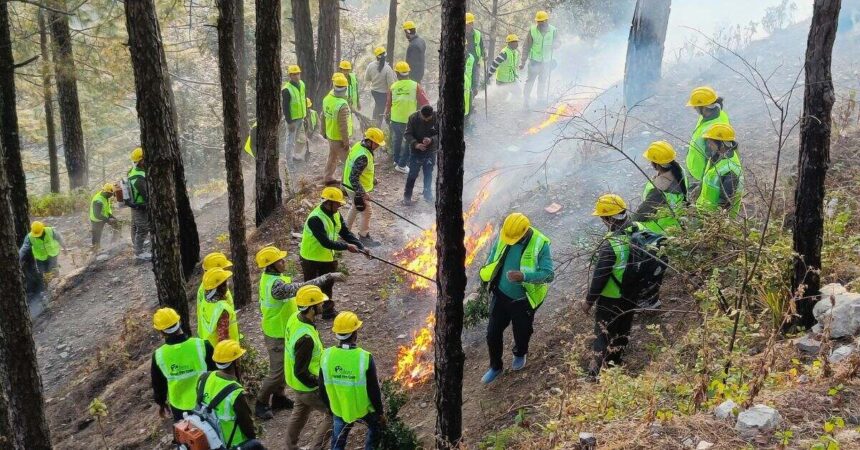
As the fire season in Uttarakhand begins, the state’s Forest Department is rolling out a comprehensive strategy to address the growing threat of forest fires. In 2024, the state saw a significant rise in fire incidents, with 1,276 fires affecting 1,771.76 hectares of forest land, a sharp increase from the previous year. To tackle this, the Forest Department is focusing on community participation, advanced technology, and traditional fire management practices.
One of the key steps being taken by the department is the revival of fire lines, a fire prevention method used since the British colonial era. Fire lines are clearings or ditches within forests that act as firebreaks, preventing the spread of fires by cutting off the supply of dry vegetation. While this practice was halted following a Supreme Court order in the 1980s, it was reinstated in 2023 after the court revoked the earlier ban. The government is now working to reintroduce fire lines to control fire spread more effectively.
To enhance fire prevention, the department has recruited 4,500 additional fire watchers who will be deployed across vulnerable regions. These fire watchers will help identify early signs of fire and take action accordingly. An integrated command and control room has also been set up to manage fire incidents more efficiently. Additionally, the “Forest Fire Uttarakhand Mobile App” has been launched to engage local communities, self-help groups, women’s and youth groups, and forest management committees in fire prevention efforts.
The department has also increased the collection rate for pine needles, a highly flammable material, from Rs 3 to Rs 10 per kilogram. This move encourages community participation in collecting pine needles, thus reducing the material available to fuel fires. Last year, Rs 1.135 crore was paid to self-help groups for the pine needle collection. Furthermore, fire watchers will receive Rs 11,000 per month to incentivize their role in the fire season.
The government has allocated Rs 39 crore to address forest fires, sourced from the Centre, state government, and the CAMPA fund. However, despite requests for Rs 20 crore from the Centre, only Rs 3 crore was allocated, highlighting the financial challenges the department faces.
The Forest Department is also focused on increasing community involvement in fire management. The department is conducting training sessions and exposure visits for field staff, SHGs, and Forest Fire Management Committees to educate them on fire prevention techniques. These visits have already reached 20 teams from 15 forest divisions, with nearly 1,000 participants, including forest officials and local leaders.