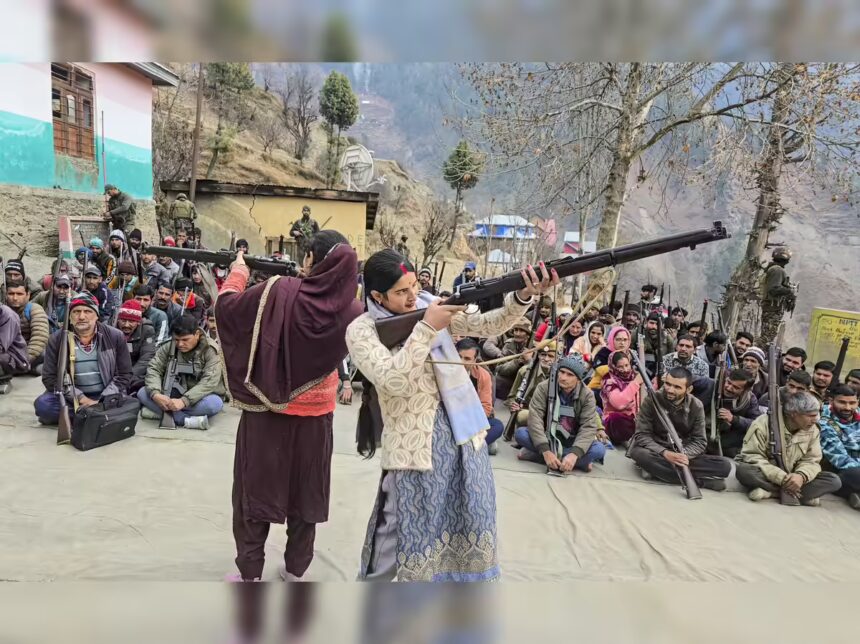
As counter-terror operations continue across the chenab valley, the Indian Army has intensified efforts to strengthen local security networks by training village defence guards in Jammu and Kashmir’s doda district, aiming to enhance vigilance and community-level preparedness against militant threats.
strengthening local defence amid evolving security challenges
The Indian Army has stepped up training programmes for village defence guards in Doda, reflecting a renewed focus on community participation in maintaining security across sensitive areas of the chenab valley. The initiative comes at a time when security forces are continuing sustained anti-terror operations in the region, responding to attempts by militants to exploit difficult terrain and remote habitations.
Village defence guards, drawn from local populations, play a crucial role in providing early warning, local intelligence, and basic defensive support in remote villages that are often the first to face security threats. By training these volunteers, the army aims to ensure that they are better equipped to identify suspicious movements, communicate effectively with security forces, and protect their communities until professional forces arrive.
According to officials, the training programme focuses on basic weapon handling, situational awareness, communication protocols, and coordination with army and police units. Emphasis is also placed on discipline, restraint, and adherence to standard operating procedures, ensuring that village defence guards act responsibly and within the framework of law. The army has underlined that the objective is deterrence and preparedness, not militarisation of civilian life.
The chenab valley, which includes parts of doda, kishtwar, and ramban districts, has seen increased security attention in recent months due to sporadic militant activity and infiltration attempts. Dense forests, mountainous terrain, and scattered settlements make the region operationally challenging, increasing the importance of local support networks that can supplement formal security deployments.
counter terror operations and community partnership in jammu and kashmir
The training of village defence guards is part of a broader counter-terror strategy that combines military operations with community engagement across Jammu and Kashmir. Security forces have been conducting targeted search operations, area domination patrols, and intelligence-based actions to neutralise militant presence in the chenab valley. These operations are aimed at preventing the revival of terror networks and ensuring the safety of civilians.
Officials note that community participation has become increasingly important in countering asymmetric threats. Villages located far from major towns often face delays in security response due to terrain and weather conditions. Trained village defence guards can act as the first line of observation, reporting unusual activity and helping prevent panic or misinformation during tense situations.
The army has stressed that the programme is defensive in nature and designed to empower residents rather than burden them. Alongside physical training, sessions also cover awareness about misinformation, the importance of maintaining communal harmony, and the need to avoid vigilantism. By building trust between security forces and local populations, the initiative seeks to create a more resilient security environment.
The move also reflects lessons drawn from past security challenges in the region, where local knowledge and timely information have often proved critical in preventing attacks or apprehending militants. By institutionalising training for village defence guards, the army aims to formalise this role and ensure better coordination with police and paramilitary forces.
As anti-terror operations continue in the chenab valley, officials believe that strengthening grassroots security will complement broader military efforts. The training programme in doda is expected to be expanded to other vulnerable areas, reinforcing the message that long-term stability in Jammu and Kashmir depends not only on force deployment but also on active cooperation between security agencies and local communities.