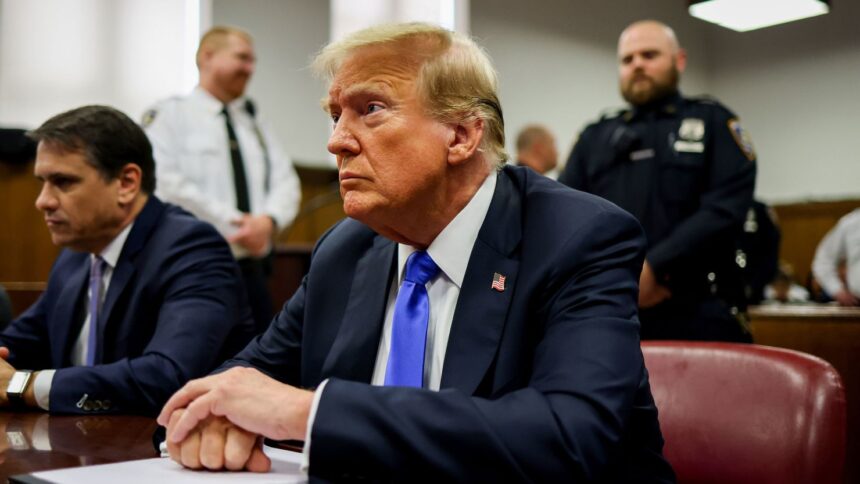
In a significant development, the United States Supreme Court on Thursday denied a last-minute request by former President Donald Trump to halt his sentencing in the hush money case, rejecting his emergency application with a 5-4 vote. This decision comes after Donald Trump had sought to delay his sentencing scheduled for Friday, intensifying the legal challenges surrounding his involvement in the case.
The hush money case has been one of the most high-profile legal battles Donald Trump has faced, stemming from allegations that he used illegal campaign funds to silence an adult film actress, Stormy Daniels, who claimed to have had an affair with Donald Trump before his presidential run in 2016. The case has sparked significant public and legal scrutiny, particularly given the involvement of the former president and his campaign.
Donald Trump’s legal team had argued that the sentencing should be postponed, seeking to block the process while pursuing further legal actions. However, the Supreme Court’s rejection means that the sentencing will proceed as planned on Friday, signaling a further step in the ongoing legal proceedings against the former president.
The 5-4 ruling reflects the sharp divisions within the highest court of the United States, which has consistently weighed in on matters concerning Donald Trump’s legal battles, especially in relation to his business dealings and campaign practices. The justices did not provide an explanation for their decision, leaving many to speculate on the motivations behind the ruling.
The hush money case centers on Donald Trump’s alleged attempt to prevent Daniels from speaking publicly about the affair, using financial incentives. Daniels was reportedly paid $130,000 in hush money during the final stages of the 2016 presidential campaign. Federal authorities later became involved, alleging that the payment constituted an illegal campaign contribution.
Donald Trump’s defense has been that the payment was a personal matter and did not violate campaign finance laws. However, prosecutors have argued that the funds were used to influence the election by keeping Daniels quiet, thus violating campaign finance regulations. As the case has progressed, it has become a key point of contention in the broader context of Trump’s legal troubles.
With the Supreme Court ruling on the case, the legal clock continues to tick on Donald Trump’s other pending legal challenges. In addition to the hush money case, Donald Trump faces several other lawsuits and investigations, many of which center on his business practices, election interference, and the events surrounding the January 6th Capitol riot.
Despite these legal challenges, Donald Trump has maintained his innocence, describing the investigations as politically motivated. His supporters have rallied around him, claiming that he is being unfairly targeted by the legal system. The case has become a focal point of political debate, especially as Donald Trump remains a prominent figure within the Republican Party and continues to hint at the possibility of a 2024 presidential bid.
As the sentencing date approaches, legal experts are closely watching how the case will unfold and what impact it might have on Donald Trump’s political future. If the sentencing proceeds without further delays, it could have significant consequences for Donald Trump, both legally and politically.
The decision by the Supreme Court to allow the sentencing to proceed is likely to add fuel to the ongoing political fire surrounding Donald Trump’s legal issues. As the case continues to evolve, both Donald Trump’s legal team and his political allies will likely continue to mount efforts to challenge the process and delay any consequences.
The outcome of the hush money case could set the stage for future legal battles involving Donald Trump, further shaping the political and legal landscape as the 2024 election approaches. The case highlights the deepening divide between Donald Trump and his critics, with each legal decision likely to have far-reaching consequences for the former president and his ability to maintain his influence on American politics.