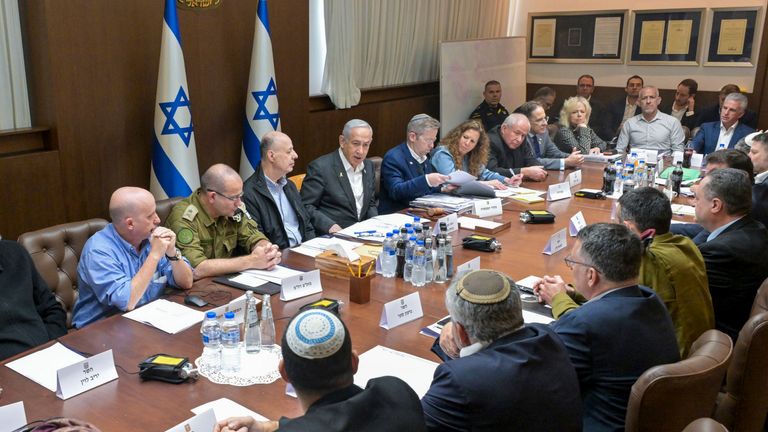
Israel’s cabinet has approved a landmark ceasefire agreement for Gaza, signaling a potential end to the violence in the region. The truce, which is set to take effect tomorrow, Sunday, will bring a halt to the ongoing fighting and bombardment that has left Gaza in ruins. The ceasefire deal, announced by Prime Minister Benjamin Netanyahu’s office, has raised hopes of a much-needed respite for the residents of Gaza, while also allowing for the release of hostages held by Hamas since the October 7, 2023, attack on Israel. In exchange, hundreds of Palestinian prisoners currently incarcerated in Israeli jails will be freed.
The ceasefire, after a prolonged period of uncertainty, was confirmed early Saturday, following a cabinet vote. The government’s approval of the ceasefire is seen as a significant step in resolving the deadliest war Gaza has ever faced. According to Netanyahu’s office, the deal also includes a plan for the return of hostages, a critical element that has shaped international diplomatic efforts in recent days.
The Justice Ministry of Israel has published a list of 95 Palestinian prisoners set to be freed as part of the ceasefire deal, which will begin Sunday. The list includes 69 women, 16 men, and 10 minors, all of whom will be released “subject to government approval.” The move comes after months of intense negotiations, mediated by the United States, Qatar, and Egypt, aimed at bringing about a cessation of hostilities.
Despite the ceasefire agreement, violence continues. The Israeli military has reported launching strikes on several targets in Gaza, killing dozens in the days leading up to the truce. The continuing violence has stirred tensions, with Hamas warning that Israeli airstrikes are putting the lives of hostages in danger, risking the deal’s success. The death toll in Gaza has reached staggering levels, with nearly 47,000 people killed in Israeli retaliatory attacks, most of them civilians, according to health ministry figures in Gaza.
The ceasefire agreement was reached amid rising international pressure, as the devastation in Gaza has drawn widespread condemnation and calls for a swift resolution. US Secretary of State Antony Blinken expressed confidence in the deal’s implementation, affirming that the truce would begin as scheduled on Sunday. Blinken’s remarks came after Israel’s security cabinet gave its approval for the agreement, which the Israeli government believes will help achieve the war’s objectives.
Meanwhile, Palestinian President Mahmoud Abbas has declared that the Palestinian Authority is ready to assume full responsibility in Gaza once the conflict subsides, signaling a shift in the region’s political landscape. The truce has garnered support from various global leaders, including French President Emmanuel Macron, who confirmed that French-Israeli citizens will also be among those freed in the first phase of the release.
In Israel, the ceasefire has been met with a mixture of relief and anguish. Many families, including those of the remaining hostages, hold out hope that their loved ones will soon return. Kfir Bibas, the youngest Israeli hostage, whose second birthday coincides with the ceasefire’s announcement, remains missing. His family, like many others, clings to hope, despite Hamas’s claims that certain hostages have died in airstrikes, a claim that has not been independently confirmed by Israeli authorities.
The ceasefire agreement also includes the withdrawal of Israeli forces from Gaza’s densely populated areas, providing an opportunity for displaced Palestinians to return to their homes. The Qatari Prime Minister, who played a key role in securing the ceasefire deal, emphasized the importance of full implementation and the need for a second phase that will bring about a lasting peace.
The deal, however, is not without its challenges. With Gaza’s infrastructure in ruins and its population displaced, humanitarian organizations are preparing for a difficult task ahead. The region, which has been under intense siege for months, faces an enormous rebuilding effort. Humanitarian workers from organizations such as Doctors Without Borders are already sounding alarms, stressing the need for urgent assistance and resources to address the dire situation facing Gaza’s citizens.
The agreement has also ignited political debates within Israel. Some far-right members of Netanyahu’s coalition government have expressed opposition to the deal, with one threatening to resign from the cabinet. Nevertheless, Netanyahu has affirmed the importance of securing the truce as part of Israel’s broader war objectives. The deal’s announcement has also highlighted the intricate role of international diplomacy in securing peace, with both US and Qatari officials praising the cooperation between nations in brokering the ceasefire.
In the coming days, attention will turn to the effectiveness of the ceasefire in halting the cycle of violence and facilitating the return of the hostages. The second phase of the deal will see further Palestinian prisoner releases and the establishment of a joint operations room in Cairo to oversee the agreement’s implementation.
As the truce prepares to take effect, the world watches closely, hopeful that the agreement can bring an end to the violence and offer a path toward long-term peace. However, the road to stability in Gaza remains fraught with challenges, and the fate of countless hostages and civilians hangs in the balance.