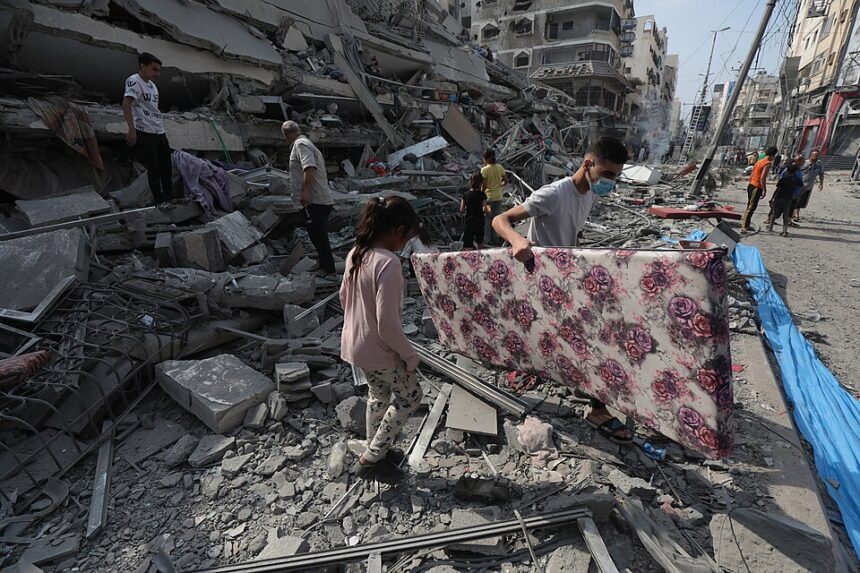
The U.S. State Department announced on Thursday that a solution to facilitate food aid delivery to Gaza is “just steps away” and an announcement will be made soon. However, many aid organizations have raised concerns about whether the plan will truly address the needs of Gaza’s war-torn population. This announcement follows nearly two years of conflict between Israel and Hamas, which has left Gaza in ruins and displaced millions.
Aid Plan Faces Criticism from Aid Groups
The new aid mechanism, which U.S. officials are calling a significant step forward, aims to streamline the distribution of food and supplies to Gaza. However, critics, including European leaders and aid organizations, have expressed skepticism, especially regarding Israel’s plan to take control of the aid distribution process. Many have criticized the proposal, which includes using private companies to deliver food to Gaza’s civilian population, as inadequate and potentially dangerous.
The United States has indicated that a newly-formed Gaza Humanitarian Foundation will manage the distribution of aid, establishing four “Secure Distribution Sites” designed to serve 300,000 people each. These sites would facilitate the movement of pre-packaged rations, hygiene kits, and medical supplies through tightly-controlled corridors to prevent diversion. The plan also promises on-site security to deter interference from armed groups, with no Israeli Defense Forces personnel stationed near the distribution points.
Despite these assurances, the aid community remains wary. The United Nations Office for the Coordination of Humanitarian Affairs has questioned the feasibility of Israel’s proposed authorization mechanism, arguing that it is incompatible with humanitarian principles and will likely create further insecurity in Gaza.
Tensions Between Humanitarian Principles and Military Control
Aid groups have expressed concerns that the Israeli plan risks militarizing the aid distribution process. Some experts argue that allowing Israel to control where aid goes and how it is distributed could set a dangerous precedent in conflict zones. The Norwegian Refugee Council has described the plan as “a non-starter,” warning that it could jeopardize the safety of civilians and undermine trust in humanitarian efforts.
As pressure mounts, expectations remain high among the international community. Diplomatic discussions continue, with the United Nations Security Council keeping a close watch on developments, hoping the U.S. will address the concerns raised by aid groups and find a viable solution to deliver much-needed assistance to Gaza’s people.