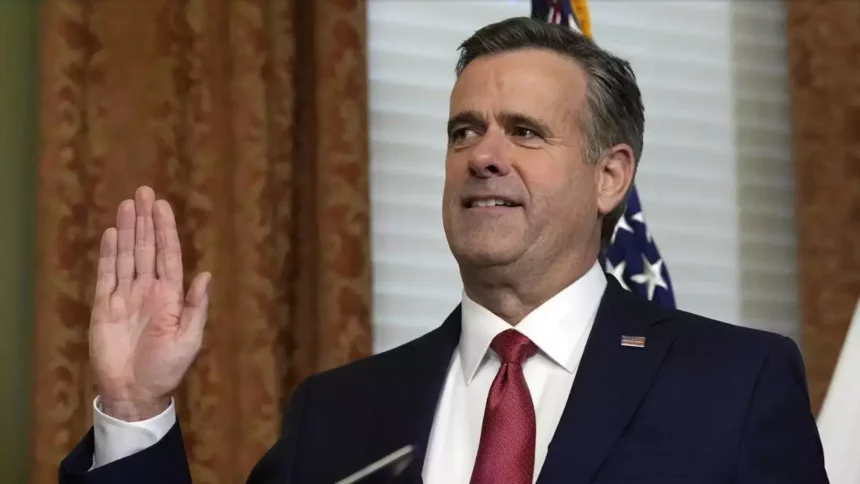
The United States Senate on Thursday confirmed John Ratcliffe as the new director of the Central Intelligence Agency (CIA), marking a significant step in President Donald Trump’s efforts to solidify his national security team. Ratcliffe, who was nominated for the post earlier this year, received overwhelming bipartisan support, with the Senate voting 74-25 in favor of his confirmation.
Ratcliffe brings with him an extensive background in national security and intelligence. He served as the director of national intelligence from 2020 to 2021, during Trump’s first term in office. In that role, he was responsible for overseeing the US intelligence community and advising the president on national security matters. His confirmation as CIA director follows a series of positions that saw him play a key role in shaping intelligence policy under the Trump administration.
During his confirmation hearing, Ratcliffe outlined his vision for the CIA, promising to lead the agency with integrity and objectivity. He emphasized the need for the CIA to produce “insightful, objective, all-source analysis,” highlighting that the agency would never allow political or personal biases to influence its work. He further noted that maintaining the agency’s reputation for impartiality and professionalism would be a cornerstone of his leadership.
A key focus of Ratcliffe’s approach as CIA director will be intensifying the agency’s efforts in addressing the growing threats posed by China. He stressed the importance of increasing the CIA’s focus on Beijing and its ruling Chinese Communist Party, warning that China’s actions present a significant national security challenge to the United States. Ratcliffe also pointed to the necessity of understanding China’s capabilities in various areas, particularly in technology, where advancements could affect the global balance of power.
Ratcliffe’s stance on technology also extends to the need for the CIA to remain vigilant in monitoring the technological capabilities of adversaries around the world. He underscored that understanding the technological landscape and keeping pace with advancements in cyber warfare and other tech-related threats is “more important than ever.”
Before his tenure as the director of national intelligence, Ratcliffe had a career in public service as a federal prosecutor and later as a US representative for Texas from 2015 to 2020. During his time in Congress, he was known for his staunch defense of President Trump, particularly during the first impeachment proceedings against him. His close ties to Trump, along with his background in national security, made him a natural fit for the role of CIA director, though his confirmation was met with some scrutiny, particularly due to his political connections.
Ratcliffe’s appointment as CIA director is expected to continue the Trump administration’s push for a more aggressive national security strategy, focusing on both traditional threats from adversaries like China and Russia, as well as emerging challenges in technology and cyber capabilities. His leadership will likely influence the direction of the CIA as it adapts to a rapidly changing global security environment.
As CIA director, Ratcliffe will now oversee the agency’s work in intelligence gathering, analysis, and covert operations, playing a pivotal role in shaping US foreign policy and national security strategy in the coming years. His confirmation solidifies Trump’s commitment to strengthening the US intelligence community, with a focus on confronting the most pressing global threats in an increasingly complex geopolitical landscape.