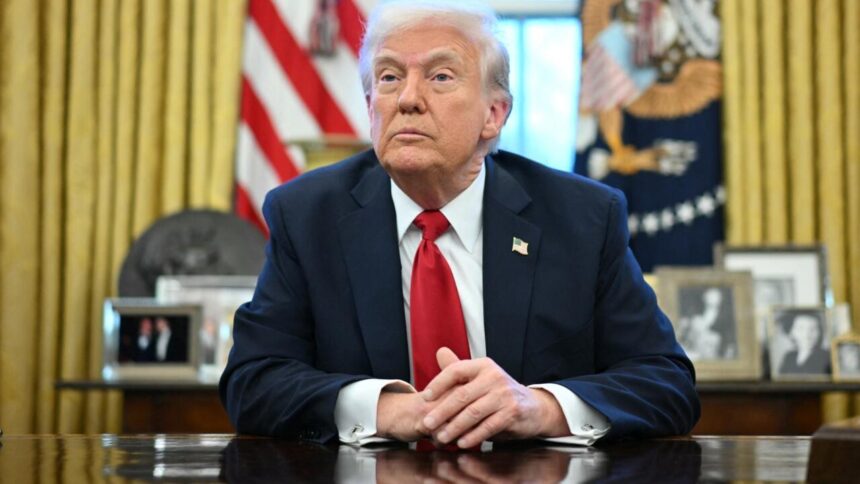
US President Donald Trump has announced a 25% tariff on car imports, including car parts, effective from April 2. This move is set to exacerbate the ongoing global trade tensions, potentially impacting global car trade and supply chains. The tariffs, aimed at boosting the American car industry, are expected to create significant disruptions in both the US and foreign markets, with critics warning that the measure could result in higher car prices, a slowdown in production, and strained relationships with key trading partners.
The newly imposed tariffs will target cars and car parts coming into the US, with the charges for car parts slated to begin in May. President Donald Trump defended the move, claiming that it would lead to “tremendous growth” for the US car industry by fostering job creation and spurring investment in the country. However, economists and industry experts caution that the tariffs could lead to a reduction in car imports, a rise in domestic car prices, and a possible halt in car production in the US as manufacturers deal with the higher costs of imported parts.
The US imports around eight million cars annually, with Mexico being the largest foreign supplier of vehicles, followed by South Korea, Japan, Canada, and Germany. This tariff policy directly targets the free trade agreements between the US, Canada, and Mexico, potentially causing major disruptions in the automotive supply chain, particularly since many US-based car manufacturers operate in these neighboring countries. The White House has stated that the tariffs will also apply to car parts, but there will be temporary exemptions for parts imported from Canada and Mexico.
Shares of major car manufacturers like General Motors and Ford have fallen in response to the announcement, signaling investor concern over the potential negative impacts of the tariffs. Foreign automakers, especially from Japan, have expressed concerns over the new trade barriers, with Japanese Prime Minister Shigeru Ishiba calling the move a direct attack on his country’s car industry.
In response to these tariffs, several countries, including Canada, the European Union, and Japan, have expressed their disapproval, with Canadian Prime Minister Mark Carney calling it a “direct attack” on his nation’s car industry. The EU has also voiced concerns, signaling that they will seek negotiated solutions to protect their economic interests.
The move is part of Donald Trump’s broader economic strategy to protect US jobs and manufacturing. Despite the potential risks, including retaliatory tariffs from other nations, Donald Trump remains firm in his stance, emphasizing the need to bring more car production back to the US. As the tariffs take effect, the global car industry faces a new era of uncertainty and heightened trade tensions.