In a significant step reinforcing India-US counter-terrorism ties, the United States has officially designated The Resistance Front (TRF), a Lashkar-e-Taiba proxy responsible for the deadly Pahalgam attack, as a Foreign Terrorist Organization. The move, warmly welcomed by India, signals a unified global stance against terrorism as both nations continue to pursue accountability for the brutal April 22 attack that killed 26 civilians, including tourists, in Jammu and Kashmir.
The US State Department’s decision to label TRF as a Foreign Terrorist Organization (FTO) and Specially Designated Global Terrorist (SDGT) marks a pivotal moment in global counter-terror cooperation, underscoring the seriousness with which Washington views threats from Pakistan-based terror networks. TRF, widely recognized as a proxy of Lashkar-e-Taiba (LeT), claimed responsibility for the Pahalgam attack, which has been described as the deadliest assault on civilians in India since the 2008 Mumbai attacks.
India Applauds US Action Against TRF
India’s external affairs minister, S Jaishankar, expressed appreciation for the US move, describing it as a “strong affirmation” of India-US counter-terrorism cooperation. Taking to X, Jaishankar highlighted the significance of the designation, thanking Senator Marco Rubio and the US State Department for the action. He emphasized India’s zero-tolerance policy towards terrorism, a stance that has been consistently reinforced in the wake of the Pahalgam attack and the subsequent retaliatory measures undertaken by India.
The Indian embassy in Washington echoed similar sentiments, stating that the move demonstrated “strong India-USA counter-terrorism cooperation.” The embassy’s statement underscored the fact that TRF, functioning as a Lashkar-e-Taiba proxy, had taken responsibility for the April 22 attack targeting civilians, reiterating India’s commitment to ensuring accountability for such acts of terror.
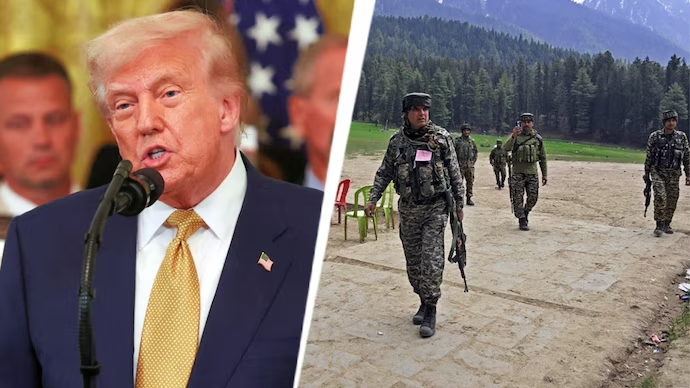
Senator Marco Rubio, who played a key role in pushing for the designation, described TRF as a “front and proxy” for LeT, noting that the action reflects the Trump administration’s commitment to protecting US security interests, countering terrorism, and ensuring justice for the victims of the Pahalgam attack.
Operation Sindoor: India’s Counter-Offensive
The April 22 attack in Pahalgam, which resulted in the deaths of 26 civilians, prompted India to launch Operation Sindoor, a targeted cross-border offensive against terror infrastructure in Pakistan and Pakistan-occupied Kashmir. The operation, initiated on May 7, aimed to dismantle terror launch pads and eliminate active militants operating along the Line of Control.
According to Indian security forces, the operation resulted in the neutralization of over 100 terrorists, striking nine significant terror sites during the precision attacks. The offensive also led to a brief escalation with Pakistan, as Islamabad launched drone and missile attacks into Indian territory in response to the strikes.
India’s air defenses repelled the intrusions effectively, followed by precision counter-strikes that pressured Pakistan into seeking a ceasefire by May 10. The swift, calibrated response by India underlined its commitment to eliminating cross-border terrorism while managing the risk of broader conflict escalation in the region.
Global Outreach to Counter Pakistan-Based Terrorism
In the aftermath of the Pahalgam attack and Operation Sindoor, India intensified its diplomatic efforts to isolate Pakistan on the global stage for its continued support of terror networks operating in South Asia. New Delhi dispatched seven multi-party delegations to 33 global capitals, including Washington DC, to highlight Pakistan’s alleged role in harboring and enabling terror groups that target civilians and security forces in India.
These diplomatic engagements sought to build a broader international consensus to pressure Islamabad into taking concrete action against terror entities like Lashkar-e-Taiba and its proxies, including TRF. India’s strategy aimed to align global narratives on terrorism, pushing for a unified approach in designating and dismantling terror groups operating from Pakistani soil.
The US decision to list TRF as a Foreign Terrorist Organization and a Specially Designated Global Terrorist entity was a crucial diplomatic win for India, validating its consistent calls for international cooperation in counter-terror efforts and sending a strong message to networks operating in the region.
The designation, apart from freezing any US-based assets of the group and prohibiting transactions with it, also signals a significant blow to the operational capabilities of TRF and its backers by cutting off avenues of funding and international movement. It further demonstrates the evolving India-US partnership, particularly in security and intelligence sharing, as both nations align their interests in countering terrorism emanating from the region.
Amid rising regional tensions and the persistent threat of cross-border terrorism, the move against TRF is being viewed as a critical step in enhancing deterrence against terror organizations while reaffirming global solidarity with victims of terrorism worldwide.