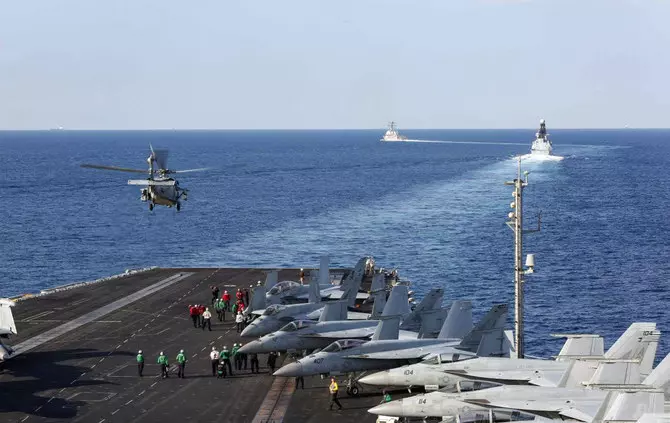
The United States has intensified its military presence in the Middle East, deploying additional warplanes as tensions with Iran continue to escalate. This move follows an ongoing U.S. bombing campaign in Yemen and heightened concerns over Iran’s nuclear ambitions. While the Pentagon has not disclosed specifics regarding the aircraft or their precise locations, sources indicate that up to six B-2 bombers have recently been stationed at Diego Garcia, a U.S.-British military base in the Indian Ocean. These bombers, equipped with stealth technology and capable of carrying nuclear weapons, position the U.S. military advantageously in the region.
The Pentagon reaffirmed that the U.S. will take decisive action if Iran or its proxies threaten American personnel and interests. Pentagon spokesperson Sean Parnell stated, “Should Iran or its proxies pose a threat, the United States will act swiftly to protect its people and interests.”
While the U.S. Strategic Command has declined to confirm the exact number of B-2 bombers deployed, the Middle East already hosts significant U.S. military firepower, including two aircraft carriers expected to be in the region soon. Experts believe the B-2 bombers’ presence signals Washington’s readiness to counter any aggressive actions from Tehran, particularly concerning its nuclear program.
Tensions have surged following U.S. President Donald Trump’s warning that Iran would face severe repercussions, including potential bombing and economic sanctions, if it failed to negotiate its nuclear activities with Washington. Iran has consistently denied allegations of developing nuclear weapons, asserting that its program is solely for civilian energy purposes. However, Western nations argue that Tehran has exceeded the limits on uranium enrichment set under the 2015 nuclear agreement, which the U.S. abandoned in 2018.
The B-2 bombers, capable of deploying the formidable 30,000-pound GBU-57 Massive Ordnance Penetrator, could be used against fortified Iranian nuclear sites. However, military analysts suggest these bombers are excessive for operations in Yemen, where the U.S. has targeted Houthi strongholds.
Iran’s Supreme Leader Ayatollah Ali Khamenei has warned that the U.S. will face retaliation if it follows through on its threats. Similarly, Revolutionary Guards Aerospace Commander Amirali Hajizadeh cautioned that U.S. military bases in the region are vulnerable, stating, “They are in a glass house and should not throw stones.”
In response to the rising tensions, Washington is reportedly repositioning air defense capabilities from Asia to the Middle East. The continued strain in U.S.-Iran relations underscores the fragile stability of the region, with both nations preparing for potential escalations.