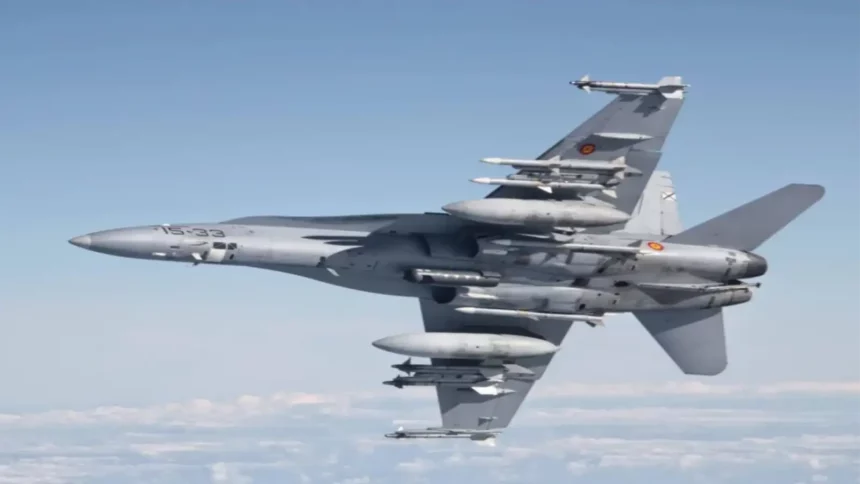
The recent nod from Washington to sell AIM-120C-8 Advanced Medium-Range Air-to-Air Missiles (AMRAAMs) to Turkey has stirred unease in New Delhi, not because of the deal’s financial worth alone, but due to its geopolitical implications — especially Turkey’s growing military ties with Pakistan.
The $225 million deal includes not only the missiles but also support equipment, software, and logistics, positioning the sale as a strategic shift rather than a mere defence transaction. For India, it raises red flags over regional security dynamics.
What the US-Turkey Missile Deal Involves
On May 14, the US Defense Security Cooperation Agency disclosed that Turkey requested 53 AMRAAM missiles along with six guidance units. The package includes containers, test and reprogramming gear, spare parts, classified software, transport support, and maintenance assistance.
The official rationale behind the deal is to strengthen Turkey’s air defence capabilities as a NATO ally and to assist in securing its territory and American personnel stationed there.
While such defence cooperation among NATO countries is routine, the timing and broader geopolitical landscape have made this particular transaction more sensitive — particularly for India.
AMRAAM: Why It Matters
The AIM-120 AMRAAM is among the most advanced and widely used air-to-air missiles in the world. Designed for long-range engagements, it combines inertial navigation with active radar guidance and has been integrated into platforms like the F-16, F-18, F-22, Eurofighter Typhoon, and all variants of the F-35.
Beyond fighter aircraft, AMRAAM is also a core component of the NASAMS ground-based air defence system, which is used for defending critical airspace.
Its versatility and combat record — over 4,900 live firings and multiple air-to-air kills — make it a high-stakes weapon. For India, it’s not the missile’s capabilities alone, but its potential downstream users that raise security concerns.
India’s Worry: A Lesson from 2019
India’s apprehension about the AMRAAM stems from an incident in February 2019, when Pakistani F-16 jets allegedly fired AMRAAM missiles during an aerial engagement over Jammu and Kashmir. This followed India’s Balakot airstrikes targeting terror camps across the border.
At the time, Indian authorities presented evidence that American-made AMRAAMs were used by Pakistan’s F-16s — aircraft that can exclusively launch these missiles. The incident raised uncomfortable questions about how weapons supplied to one partner could end up being used against another.
Given that backdrop, India fears a scenario where Turkey’s strengthening defence partnership with Pakistan could lead to similar outcomes — either through direct transfer or shared operational knowledge.
Turkey-Pakistan Defence Nexus: A Growing Concern
Turkey’s alignment with Pakistan goes beyond diplomacy. In recent years, Ankara has supplied advanced drone systems to Islamabad, including ones used in recent cross-border skirmishes with India.
Turkey’s top leadership has also been vocal in supporting Pakistan’s position on Kashmir and broader regional matters. After India’s recent anti-terror operation, Turkish leaders reached out to Pakistan in a show of solidarity and urged restraint, while indirectly blaming India for escalation.
Turkey even backed Islamabad’s calls for an independent probe into the conflict, further cementing its stance as a close political and defence ally of Pakistan.
This deepening bilateral relationship has triggered a wave of discontent in India. From online campaigns to trade disruptions, Indian sectors including tourism and agriculture have started severing ties with Turkish counterparts.
A Complicated US-Turkey Relationship
Despite friction over Turkey’s acquisition of the Russian S-400 air defence system — a move that got Ankara expelled from the F-35 fighter programme — the US continues to support Turkey’s existing military assets, particularly its F-16 fleet.
Turkey operates a vast arsenal of US-origin systems: F-16s, Black Hawk helicopters, Patton tanks, M113 carriers, and air-launched missiles like Sidewinders and Mavericks. It remains one of NATO’s most integrated members in terms of American defence hardware.
Though there are diplomatic tensions, military interoperability and shared strategic interests have ensured that defence ties remain intact between Ankara and Washington.
For India, the implications of the AMRAAM sale go beyond conventional defence deals. The concern is not that Turkey will attack India directly, but that shared weapons systems and strategic know-how might end up bolstering Pakistan’s capabilities — especially in a hostile scenario.
With the US expanding defence cooperation with India while continuing to arm Pakistan-aligned nations like Turkey, New Delhi may find it necessary to raise its voice more assertively. India’s growing partnerships with Western nations give it a platform to push for regional sensitivity in future arms approvals.
While Washington’s intentions may be to maintain NATO cohesion, New Delhi’s takeaway is that regional threat perceptions must also be factored in. The AMRAAM deal, in this light, underscores the complexity of modern alliances — where friends of friends can sometimes become indirect enablers of conflict.