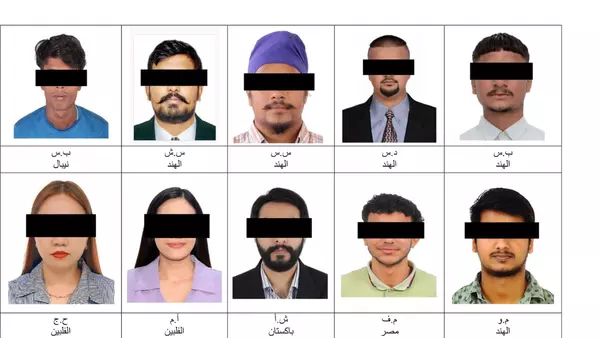
Authorities in the United Arab Emirates have arrested 35 individuals, including 19 Indian nationals, for allegedly spreading fake news and AI-generated videos on social media during the ongoing Israel-Iran conflict. The arrests were made after investigators monitored digital platforms and identified accounts that were sharing misleading content and rumours that could potentially create confusion and unrest. According to officials, some of the videos circulating online falsely claimed that Israeli Prime Minister Benjamin Netanyahu had died. The rumours spread rapidly across several social media platforms, prompting authorities to take swift action against those responsible for disseminating the misleading material. UAE Attorney General Dr Hamad Saif Al Shams stated that the arrests were part of a broader effort to curb misinformation and ensure that digital platforms are not used to spread rumours during a period of heightened geopolitical tension.
AI-generated videos and rumours about Netanyahu’s death
The controversy began when a video of Israeli Prime Minister Benjamin Netanyahu appeared online showing him sitting at a café in Jerusalem and drinking coffee. The video was shared widely on social media amid rumours that Netanyahu had died. Some users claimed that the video was fake and had been generated using artificial intelligence technology. These claims gained momentum after an earlier video message released on March 13 sparked debate online. In that video, several viewers claimed that Netanyahu’s hand appeared to have six fingers, which they argued was evidence that the video might have been AI-generated or manipulated. As speculation spread, many users began sharing posts suggesting that the Israeli leader had died and that the circulating footage was a deepfake created to hide the truth.
In response to the rumours, Netanyahu himself shared a new video on social media showing him casually drinking coffee at a restaurant in Jerusalem. In the clip, he jokingly addressed the rumours by saying, “Do you want to count my fingers?” The remark appeared to be a light-hearted response to the online speculation and served as a way to dismiss the claims circulating on social media.
UAE authorities crack down on misinformation
UAE authorities stated that the arrests were made after a detailed investigation into online accounts that were spreading misinformation. Attorney General Dr Hamad Saif Al Shams explained that the government has been closely monitoring digital platforms to prevent the spread of rumours and false information that could create instability. Officials said that the individuals arrested were involved in sharing manipulated videos and misleading posts that misrepresented facts about the ongoing Middle East conflict. The UAE has strict cybercrime laws that prohibit the spread of false information online, especially content that could threaten public order or national security. Authorities have warned that anyone found spreading fake news or manipulated media could face severe legal consequences.
Indian LPG ships safely cross Strait of Hormuz
Meanwhile, amid the escalating tensions in the Middle East, two Indian ships carrying liquefied petroleum gas from Gulf countries have safely crossed the Strait of Hormuz. The ships, named Shivalik and Nanda Devi, are Indian-flagged LPG carriers transporting a combined cargo of about 92,700 tonnes of LPG to India. Rajesh Kumar Sinha, Special Secretary in India’s Ministry of Shipping and Waterways, confirmed that both vessels successfully passed through the strategic waterway on Saturday. The ships are now heading towards India’s western coast and are expected to arrive at the ports of Mundra and Kandla in Gujarat within the next two to three days. The vessels had been among several ships temporarily stranded in the western section of the Strait of Hormuz after hostilities intensified in the region.
Wider impact of the Middle East conflict
The ongoing conflict involving Israel, the United States and Iran has significantly heightened tensions across the Middle East. Missile strikes, drone attacks and military operations have been reported across several countries in the region. Governments around the world are closely monitoring developments as the conflict threatens to disrupt global energy supplies and maritime trade routes. The Strait of Hormuz, through which a significant portion of the world’s oil and gas shipments pass, has become a focal point of concern for international markets. Any disruption in shipping through this route could have serious consequences for global energy prices and supply chains. Experts warn that if the conflict continues to escalate, its economic and geopolitical impact could extend far beyond the Middle East.