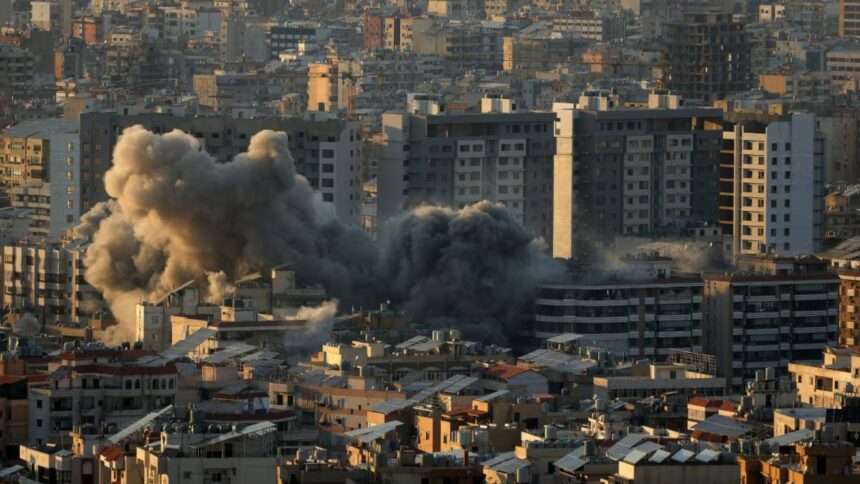
The ongoing conflict involving Iran, the United States and Israel has entered its seventeenth day, raising serious global concerns about energy security, regional stability and international trade. The escalation of military operations across the Middle East has begun affecting not only regional security but also global economic systems. One of the most immediate consequences of the conflict has been the sharp increase in crude oil prices, which crossed the $100 per barrel mark amid fears that the Strait of Hormuz could face disruption. At the same time, reports of another drone strike near Dubai International Airport have highlighted how the conflict is increasingly affecting civilian infrastructure and international transportation hubs. Governments, security agencies and global markets are closely monitoring developments as the situation continues to evolve.
Oil prices surge amid Strait of Hormuz tensions
The surge in oil prices has become one of the most significant economic consequences of the ongoing war. The Strait of Hormuz, a narrow maritime route connecting the Persian Gulf to global shipping lanes, is responsible for transporting nearly one fifth of the world’s oil supply. As tensions between Iran and Western allies intensified, fears emerged that the strait could be blocked or become unsafe for commercial shipping. These concerns immediately affected global energy markets, causing oil prices to surge above $100 per barrel. Analysts say the mere possibility of disruption in this critical shipping route is enough to trigger volatility in international markets. Countries such as Saudi Arabia, Iraq, Kuwait, the United Arab Emirates and Iran rely heavily on this corridor to export crude oil to international buyers. If military confrontations escalate further and shipping routes are disrupted, oil prices could rise significantly higher. Experts warn that prolonged instability in the region could push crude prices toward $120 or even $150 per barrel, which would have serious consequences for global economies. Higher energy prices would affect transportation costs, manufacturing sectors and electricity production worldwide. Economists warn that sustained oil price increases could also trigger inflationary pressures across multiple economies and slow down global economic growth.
Drone strike near Dubai Airport raises global concern
Amid the rising tensions, a drone strike was reported near Dubai International Airport, one of the busiest aviation hubs in the world. Authorities confirmed that emergency teams quickly responded to the incident after a fire broke out near airport infrastructure. The fire was contained before causing large-scale damage, and there were no immediate reports of casualties. However, the incident forced authorities to temporarily suspend several flights and implement strict security checks across airport operations. Dubai Airport plays a crucial role in global aviation, acting as a transit hub connecting Europe, Asia and Africa. Any disruption at the airport can affect thousands of passengers and cargo shipments moving through international aviation networks. Aviation experts say that repeated attacks on civilian infrastructure could significantly increase security risks for airlines operating in the region. Several airlines have already begun reviewing their flight routes and safety measures in response to the growing instability. Some carriers are considering alternative routes that avoid certain parts of Middle Eastern airspace if the conflict continues to escalate.
Military escalation spreads across the Middle East
As the war continues, military confrontations are expanding across multiple countries in the Middle East. Iran has launched several missile and drone strikes targeting military installations associated with the United States and Israel. Some of these attacks have also targeted bases in Gulf countries that host American military personnel. Israel has responded with intensified airstrikes targeting Iranian military infrastructure, command centres and strategic facilities. Israeli officials say these operations are intended to weaken Iran’s military capabilities and prevent further missile attacks. The United States has also been actively involved in the conflict. Earlier in the war, American forces carried out strikes against Iranian military sites and strategic energy infrastructure. One of the most notable targets was Kharg Island, which serves as a major hub for Iran’s oil exports. Military analysts believe that targeting energy infrastructure is intended to weaken economic resources supporting military operations. However, such strikes also increase the risk of global economic consequences because disruptions in energy supply can affect international markets. In addition to direct military actions by nation states, several armed groups across the region have joined the conflict. Militias aligned with Iran have launched rocket and drone attacks against US and Israeli positions in different parts of the Middle East. These developments have widened the scope of the war and increased the risk of a broader regional conflict.
Global economic and geopolitical consequences
The longer the conflict continues, the greater its impact on the global economy and geopolitical stability. Rising oil prices are already increasing transportation costs, manufacturing expenses and electricity generation costs worldwide. Economists warn that sustained high energy prices could slow global economic growth and create inflationary pressures in both developed and developing countries. International shipping routes are also facing increased security risks. Insurance premiums for vessels travelling through the Persian Gulf have risen sharply due to fears of missile attacks and naval confrontations. Some shipping companies are exploring alternative routes to avoid passing through the Strait of Hormuz altogether. The aviation sector is also facing challenges as airlines reassess safety protocols and flight routes in response to regional instability. Beyond economic implications, the conflict is reshaping geopolitical alliances. Countries across the Middle East are strengthening defence cooperation with global partners while simultaneously urging diplomatic solutions to prevent further escalation. As the Iran war enters its third week, uncertainty continues to dominate the geopolitical landscape. With oil markets under pressure, military operations intensifying and civilian infrastructure facing security threats, the situation remains volatile and unpredictable.