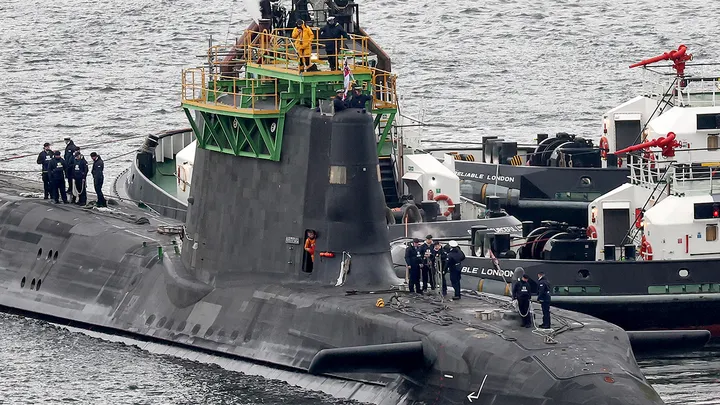
Two individuals have been arrested after attempting to gain access to one of the United Kingdom’s most sensitive military installations, HM Naval Base Clyde, raising fresh concerns over national security at a time of heightened global tensions. The incident involved a 34-year-old Iranian man and a 31-year-old woman, whose nationality has not been confirmed, and took place near Helensburgh, Scotland. Authorities have launched an investigation into the circumstances surrounding the attempted entry, although initial reports indicate that no breach of the facility’s security perimeter occurred.
According to Police Scotland, the arrests were made at approximately 5:00 PM on Thursday after the pair approached the base and requested access. They were denied entry and subsequently detained shortly thereafter. Officials confirmed that the individuals did not attempt to force their way into the facility, but their actions were deemed suspicious enough to warrant immediate intervention and investigation.
Security Concerns Rise Amid Global Tensions
The timing of the incident has drawn particular attention due to ongoing geopolitical tensions involving Iran, the United States, and Israel. Recent military developments in the region have heightened global security concerns, prompting countries to review their threat assessments and strengthen protective measures around critical infrastructure.
The United Kingdom has responded by maintaining its terror threat level at “substantial,” indicating that an attack is considered likely. John Healey stated that authorities are actively reviewing the threat environment in light of recent developments. Meanwhile, Prime Minister Keir Starmer confirmed that security at British military bases and personnel locations has been elevated to the highest level, reflecting a precautionary approach to potential risks.
While there is no immediate evidence linking the arrested individuals to any organised threat, the broader geopolitical context has amplified concerns. Security agencies are expected to examine all possible angles, including the individuals’ motives, background, and any potential connections to external entities.
Strategic Importance of Faslane Naval Base
HM Naval Base Clyde, commonly referred to as Faslane, is one of the most strategically significant military installations in the United Kingdom. It serves as the home base for the country’s nuclear deterrent, housing all of its nuclear-armed submarines. These include the Vanguard-class submarines, which are equipped with Trident nuclear missiles and form a critical component of the UK’s defence strategy.
The base is also set to play a central role in the future of the UK’s nuclear capabilities, with plans to replace the current fleet with Dreadnought-class submarines after 2030. These next-generation vessels are expected to enhance the country’s deterrence capabilities and ensure continuity in its nuclear defence posture.
Given its importance, Faslane is subject to stringent security measures designed to prevent unauthorised access and protect sensitive assets. The presence of nuclear weapons and advanced military technology makes it a high-priority target for potential threats, necessitating constant vigilance and robust security protocols.
Ongoing Investigation and Broader Implications
Authorities have confirmed that investigations are ongoing, with efforts focused on understanding the intent behind the attempted entry. While the individuals did not breach the base’s defences, the incident highlights the importance of maintaining strict security measures and rapid response capabilities.
The case also underscores the challenges faced by security agencies in an increasingly complex global environment. As geopolitical tensions continue to evolve, incidents such as this serve as reminders of the need for preparedness and coordination across multiple levels of government and law enforcement.
In addition to its military significance, Faslane has historically been a focal point for protests and activism, particularly by groups advocating nuclear disarmament. The Campaign for Nuclear Disarmament has maintained a presence near the base for decades, reflecting ongoing debates about the role of nuclear weapons in national defence. However, authorities have clarified that the current incident is being treated as a security matter rather than a protest-related activity.
The United Kingdom’s policy of maintaining a continuous at-sea nuclear deterrent since 1969 further emphasizes the critical nature of the base. Submarines operating from Faslane are capable of remaining underwater for extended periods, ensuring a constant state of readiness. This capability is considered a cornerstone of the country’s defence strategy, providing a credible deterrent against potential threats.
As the investigation progresses, more details are expected to emerge regarding the circumstances of the arrests. For now, the incident serves as a reminder of the importance of safeguarding critical infrastructure and the ongoing challenges posed by a rapidly changing global security landscape.