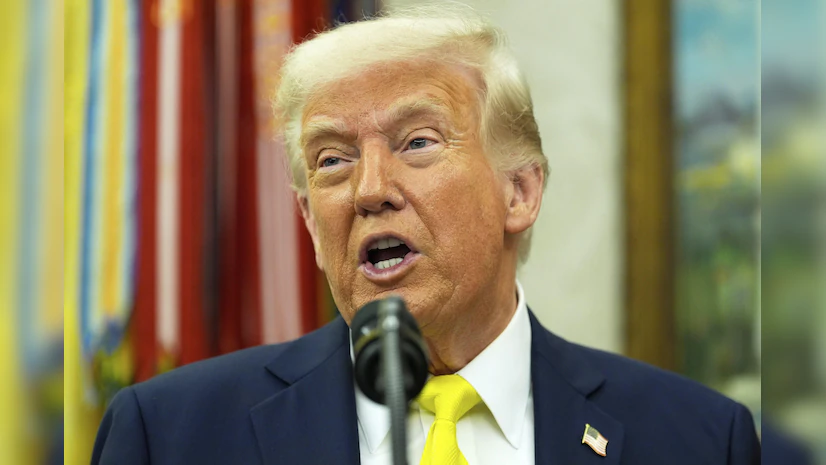
The Trump administration has introduced a new voluntary departure program that offers undocumented immigrants $1,000 in travel assistance if they choose to leave the United States voluntarily. This initiative, led by the U.S. Department of Homeland Security (DHS), aims to encourage self-deportation and reduce the financial burden and logistical complications associated with formal deportations.
$1,000 for Voluntary Deportation
Under this program, migrants who voluntarily return to their home countries will receive $1,000 in travel assistance, including coverage of their travel expenses. U.S. Secretary of Homeland Security, Kristi Noem, emphasized that self-deportation is the “best, safest, and most cost-effective” way for undocumented immigrants to leave the United States. The DHS has reconfigured its CBP One app, initially designed by the Biden administration for scheduling border appointments, into a new tool called CBP Home, facilitating the self-deportation process.
Why the U.S. Government Prefers Voluntary Deportation
The traditional process of deporting undocumented immigrants is expensive and time-consuming. According to DHS figures, the average cost to arrest, detain, and deport an individual amounts to approximately $17,121. This includes costs for investigative resources, detention, legal proceedings, and removal logistics. By offering a financial incentive for self-deportation, the U.S. government hopes to save on these significant expenses and streamline the process.
Voluntary departures also bypass the need for prolonged court proceedings and international repatriation negotiations, especially with countries reluctant to accept deported nationals.
The Costs of Deportation and Trump’s Strategy
Deportations under the Trump administration have seen a sharp increase. Since taking office, Immigration and Customs Enforcement (ICE) has made over 32,000 arrests of individuals who entered illegally, overstayed visas, or violated green card terms. Despite common misconceptions, deportation is not just for criminals; violations like overstaying visas or status violations alone are enough to trigger removal proceedings.
Deportations can be a lengthy process, with many migrants detained for weeks or months before their court hearings. As of 2024, approximately 1.5 million asylum cases are pending in immigration courts, creating a massive backlog.
Impact on Indian Migrants
India ranks among the top countries of origin for undocumented immigrants in the United States. As of 2022, an estimated 725,000 undocumented Indians lived in the U.S., making them the third-largest group of undocumented migrants after Mexicans and Salvadorans. The government’s increased enforcement efforts, particularly focusing on the interior of the country, have resulted in the deportation of over 600 Indians in 2025 alone.
This indicates that the Trump administration’s immigration enforcement is now targeting not just border areas, but also the interior regions, involving agencies like the FBI, DEA, and U.S. Marshals.
Will the Pay-to-Go Programs Work?
Historically, voluntary return or “pay-to-go” schemes have had mixed results. A 2011 study examining 128 global programs concluded that most failed to attract large numbers of participants. Even when migrants accepted incentives to return home, many later tried to re-enter the host countries due to economic difficulties or instability in their home countries.
However, for the Trump administration, this program provides a cost-effective tool to alleviate the pressure on the overwhelmed immigration system while avoiding the legal and diplomatic complications of formal deportations. The $1,000 incentive is seen as a low-cost method to address the issue without the need for complex and resource-intensive procedures.
The new voluntary departure program offering financial incentives to undocumented migrants marks a shift in U.S. immigration policy. It aims to reduce the strain on the immigration system while offering migrants a way out without undergoing the costly and lengthy deportation process. While its effectiveness remains to be seen, it represents a new approach to immigration enforcement under the Trump administration.