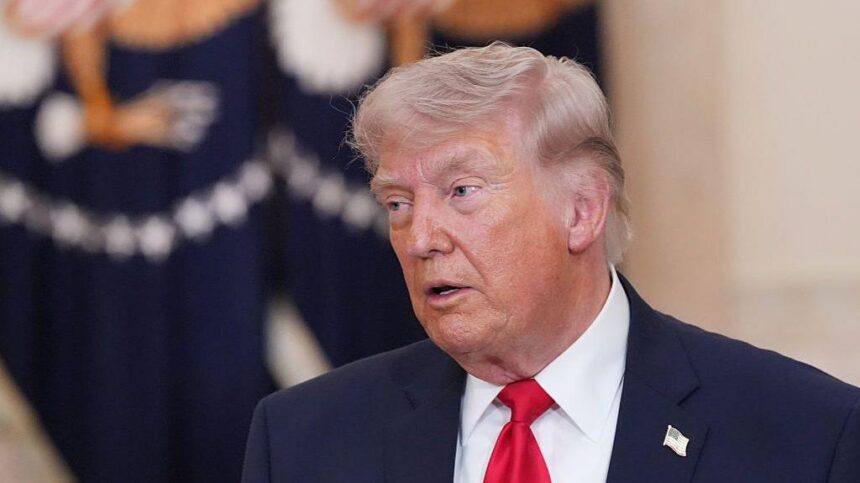
Former US President Donald Trump has issued a strong warning to Iran following a high-risk and historic rescue operation that successfully retrieved American airmen from hostile territory. The development has significantly escalated tensions in the Middle East, with fears growing over a potential wider conflict as both nations adopt increasingly aggressive positions.
The warning came shortly after US forces carried out a daring mission to rescue crew members of a downed F-15 fighter jet inside Iran. Trump described the operation as “very historic” and one of the most complex military rescues ever conducted, highlighting both the risks involved and the strategic importance of retrieving American personnel from enemy territory.
The rescue mission unfolded after the aircraft was shot down during ongoing hostilities, leaving two crew members stranded deep inside Iranian territory. One of the airmen reportedly survived for nearly two days while evading capture, despite being injured and surrounded by hostile forces.
Historic rescue mission intensifies conflict and military posturing
The operation involved a large-scale deployment of US military assets, including special forces, aircraft, and intelligence support. Reports suggest that the mission required coordinated efforts across multiple units, with heavy air cover and deception tactics used to avoid detection by Iranian forces.
Trump praised the mission as one of the most daring in US history, emphasizing the principle that no American soldier is left behind. The successful extraction of both crew members was seen as a significant morale boost for US forces, even as it highlighted the dangers of the ongoing conflict.
However, the rescue came at a cost. Several aircraft were reportedly damaged or destroyed during the operation to prevent them from falling into enemy hands. The intense exchange of fire and the scale of the mission underline the seriousness of the situation on the ground.
The incident is part of a broader military confrontation between the United States and Iran that has been escalating over weeks. The downing of US aircraft and subsequent rescue attempts have added a new layer of complexity to an already volatile conflict, drawing international attention and concern.
Trump’s warning signals potential escalation and global concern
Following the rescue, Trump adopted a more aggressive tone, warning Iran of severe consequences if tensions continue to rise. He suggested that the United States has the capability to launch large-scale strikes, even stating that the country could be “taken out in one night” if necessary.
The warning is linked to broader geopolitical concerns, including control of the Strait of Hormuz, a critical route for global oil supplies. Trump has reportedly issued ultimatums demanding that Iran reopen the waterway, raising the stakes for both regional stability and the global economy.
Recent US military actions, including targeted strikes on Iranian infrastructure, have further heightened tensions. Iran, in response, has warned of retaliation and expanded its military posture, creating a dangerous cycle of escalation that could impact multiple countries in the region.
The situation is compounded by the broader context of the ongoing conflict, which began earlier in 2026 and has already resulted in casualties and significant destruction. The rescue mission, while successful, underscores the risks involved in military operations within hostile territory and the potential for miscalculation.
As diplomatic efforts remain uncertain, the combination of military success and aggressive rhetoric has placed the region on edge. The rescue of the US pilot may be seen as a tactical victory, but it has also intensified the strategic confrontation between Washington and Tehran, raising critical questions about the future trajectory of the conflict.