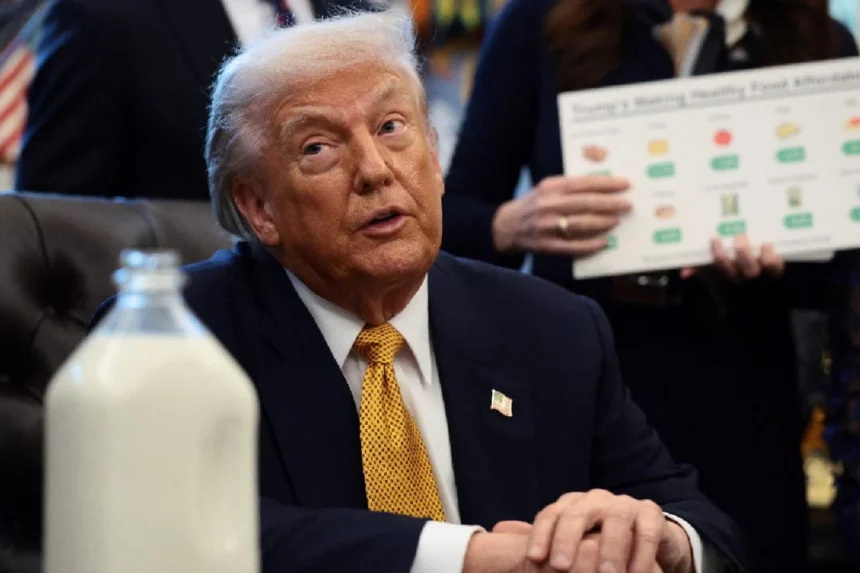
Trump warns France with sharp wine tariff threat to secure Macron’s backing for his board of peace aimed at Gaza.
In a dramatic escalation of both economic and diplomatic tensions, United States president Donald Trump has threatened to impose extraordinarily high tariffs on French wine and champagne unless French president Emmanuel Macron agrees to support and participate in a new international peace initiative focused on Gaza. Trump’s announcement has stirred controversy across global capitals because it combines aggressive trade policy with foreign policy coercion, touching on sensitive issues of national sovereignty, international peace processes and alliance diplomacy at a time when the world is watching the fragile situation in the Middle East. The threat of punitive tariffs has deepened disagreements between Washington and Paris, highlighting fractures in relations between two long-standing allies and raising questions about the future direction of international cooperation over conflict resolution.
Trump’s Peace Initiative and the French Response
President Trump’s proposal revolves around a so-called “board of peace” that he says is intended to bring about a stable ceasefire and a durable peace around the Gaza conflict. Trump has described the board in grand terms, championing it as a prestigious international body that will play a central role in reconstruction, governance and security arrangements in conflict zones, starting with Gaza and potentially extending to other hotspots around the world. In Trump’s vision, the board would include contributions, both political and financial, from participating nations and would be chaired by Trump himself in its early stages.
Central to the controversy is France’s response. President Macron has declined to join the board or lend support at this time, reportedly on the grounds that the initiative’s structure and mandate risk undermining the role of established international institutions like the United Nations. French officials have expressed concerns that the board’s charter goes beyond the scope of addressing the Gaza situation alone, potentially encroaching on multilateral frameworks that Paris and other countries have long championed for conflict mediation and peacebuilding. This refusal has triggered a sharply worded reaction from President Trump, who used public statements and repeated social media posts to urge Macron and other allies to reconsider.
When asked about his threat to impose tariffs, Trump twice reiterated that if Macron did not agree to be part of the peace board, the United States might levy tariffs as high as 200 percent on French wines and champagnes — products that are central to France’s export economy and cultural identity. The proposal is unprecedented in scale, dwarfing typical trade tariffs, and serves as a stark example of using economic pressure to achieve diplomatic ends.
The reaction from French leadership has been firm. French officials have called the threat coercive and inappropriate, arguing that trade measures should not be used as leverage in diplomatic negotiations. Paris has made clear that it views the United Nations and other established international mechanisms as the appropriate frameworks for addressing conflict and reconstruction, and that any new initiative should align with those principles rather than sideline them.
In addition to the political and diplomatic pushback, questions have been raised about the economic consequences of Trump’s tariff threat. France is among the world’s leading producers of wine and champagne, and the United States is one of its largest markets for these exports. A tariff as high as 200 percent would dramatically increase the cost of French products in the United States, likely leading to a collapse in demand for many French imports and potentially triggering retaliatory measures from the European Union. Some French industry leaders have warned that such a tariff could jeopardize jobs and investments tied to the agriculture and spirits sectors, underscoring the heavy economic toll that aggressive trade moves could impose.
This standoff represents not only a test of diplomatic negotiation but also a broader clash over the role of economic leverage in foreign policy. It illustrates how trade tools once used primarily for economic purposes are increasingly being deployed in the service of geopolitical objectives — in this case, an attempt to shape the composition and support for an international conflict-resolution body.
Geopolitical Implications and International Reactions
The tariff threat and diplomatic sparring between the United States and France have sent shockwaves through international arenas. Many global leaders and diplomats are watching closely, aware that this confrontation could have ripple effects beyond the immediate issue of the Gaza peace board. As discussions continue behind closed doors in capitals from Paris to Brussels to Washington, officials are contemplating the broader implications of using punitive trade policy to influence foreign policy positions.
European Union representatives have hinted at possible countermeasures should the United States move forward with punitive tariffs on French products. Although detailed plans have not been publicly disclosed, there is talk of reciprocal measures that could target American goods across the EU market. Such a tit-for-tat escalation could rapidly intensify into a broader trade dispute, with adverse consequences for global markets already grappling with economic uncertainties.
Within the context of the peace initiative itself, the controversy over France’s participation has extended beyond Europe. Other countries invited to participate in Trump’s board have reportedly expressed caution or hesitation, especially where involvement might be perceived as undermining multilateral institutions like the United Nations Security Council. Some invited nations have conditioned their engagement on assurances that the board’s activities will complement, rather than supplant, ongoing UN-led diplomatic efforts.
Analysts suggest that the unfolding dispute illustrates broader geopolitical shifts that have been underway for several years. The United States’ willingness to employ tariffs as a diplomatic tool reflects a more transactional approach to alliances and international cooperation. Critics argue that this approach undermines the cooperative spirit needed to address complex global challenges, especially in conflict zones where long-term peace requires broad diplomatic buy-in and legitimacy from multiple stakeholders.
On the French side, refusing to join the board underscores Paris’s insistence on preserving multilateral frameworks and protecting national autonomy in foreign policy decisions. Macron’s stance has been framed domestically and internationally as an affirmation of France’s commitment to collective global governance — even if it risks confrontation with a powerful ally.
The diplomatic tensions have also spilled into public rhetoric. President Trump’s repeated criticisms of Macron have been framed in personal as well as political terms, with Trump publicly referencing Macron’s future in office and questioning his decisions. These comments have contributed to a broader narrative of friction between the countries, compounding concerns among foreign policy observers about the durability of the U.S.-France relationship and its impact on global diplomatic coalitions.
More broadly, the board of peace has become a symbol of competing visions for how the international community should address conflict and reconstruction. For the United States under Trump, the initiative represents an ambitious attempt to create a new forum for peace leadership that could potentially streamline decision-making and assert American influence. For France and other cautious states, the initiative raises concerns about legitimacy, overlap with existing structures and the risk of fragmenting efforts led by the United Nations or regional organisations.
The situation continues to evolve, with diplomatic channels actively engaged in high-level discussions about both the tariffs and the broader implications for cooperation. Whether a compromise can be reached that satisfies both economic interests and diplomatic principles remains uncertain, and many expect the next phases of negotiation to be closely tied to upcoming international summits and forums where world leaders will meet.