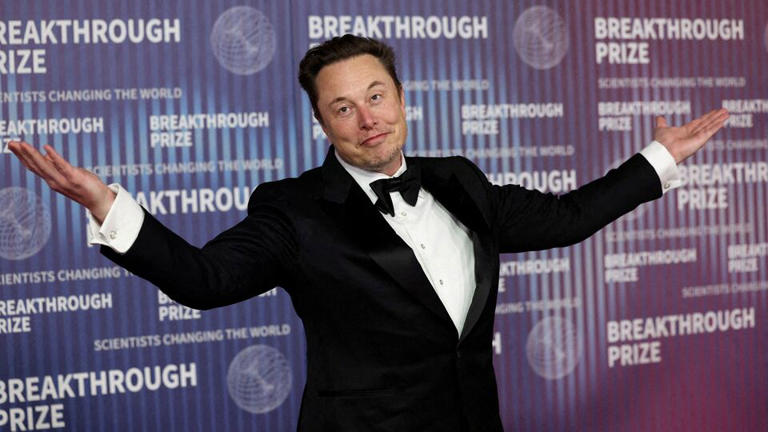
Speculation over one of the world’s most audacious corporate acquisitions erupted after billionaire entrepreneur Elon Musk publicly toyed with the idea of buying Europe’s largest low-cost airline, Ryanair, following a sharp and very public clash with its outspoken chief executive Michael O’Leary. What began as a disagreement over the feasibility of installing Starlink satellite internet on commercial aircraft quickly spiralled into a global media spectacle, blending humour, insults, corporate rivalry and speculation about a multitrillion-rupee takeover. While few industry experts believe such a purchase is imminent, the episode has reignited debate about leadership style, the future of airline connectivity and the growing role of social media in shaping serious business narratives.
The Starlink Dispute That Triggered a Corporate Showdown
The confrontation between Musk and O’Leary originated from contrasting visions of how technology should shape the future of air travel. Musk, whose SpaceX-operated Starlink satellite network has already been adopted by several international airlines, has long promoted the idea that high-speed, low-latency internet should become a standard feature of commercial aviation. According to Musk, satellite connectivity is no longer a luxury but a basic expectation in a digitally connected world, particularly as passengers increasingly demand uninterrupted access to work, entertainment and communication even while airborne.
O’Leary, however, dismissed the proposal in characteristically blunt terms. He argued that Starlink’s hardware would increase aircraft weight, create aerodynamic drag and ultimately drive up fuel costs — a fundamental concern for a low-fare airline built on extreme cost discipline. Ryanair’s business model, he stressed, is focused on short-haul flights where passengers prioritise affordability and punctuality over onboard amenities. From his perspective, installing satellite internet would undermine the airline’s core promise of keeping fares as low as possible.
The disagreement escalated rapidly when Musk responded publicly, calling O’Leary’s claims inaccurate and outdated. This exchange triggered a volley of remarks from both executives, each known for their unapologetically confrontational communication style. O’Leary labelled Musk a “fool” and questioned his understanding of aviation economics, while Musk suggested that Ryanair’s leadership lacked vision and innovation. What might once have been a closed-door industry debate became an open confrontation watched by millions.
The situation reached a new level of spectacle when Musk jokingly floated the idea of buying Ryanair outright. In a series of posts, he mused about replacing the airline’s leadership and even conducted an online poll asking users whether he should proceed with the acquisition. The poll attracted massive engagement, fuelling headlines and speculation about whether Musk’s comments were mere provocation or a signal of genuine interest.
Although framed with humour, the idea of Musk acquiring Ryanair captured public imagination because of his track record. Musk has previously turned seemingly casual remarks into reality, most notably with his acquisition of a major social media platform. This history has made observers cautious about dismissing his comments outright, even when they appear tongue-in-cheek.
At the same time, serious obstacles stand in the way of any such deal. European aviation regulations restrict non-European ownership of EU-based airlines, making a full takeover by an American billionaire legally complex. Moreover, Ryanair’s corporate culture, aggressive cost controls and highly centralised leadership structure would likely clash with Musk’s management style and broader technological ambitions. Despite these challenges, the mere suggestion of a takeover has placed Ryanair and its leadership under intense global scrutiny.
Market Response, Leadership Styles and the Future of Airline Connectivity
Financial markets reacted cautiously to Musk’s takeover talk. Ryanair’s share price showed no dramatic surge or collapse, indicating that investors largely viewed the episode as a publicity-driven clash rather than a credible acquisition attempt. Analysts noted that while Musk’s involvement often brings volatility, the fundamentals of Ryanair’s business remained unchanged, and there was no formal indication of a buyout process.
Beyond immediate market movements, the episode has sparked broader discussion about leadership styles in the modern corporate world. Both Musk and O’Leary are known for their combative rhetoric and willingness to engage critics directly, often bypassing traditional public relations channels. Supporters view this approach as refreshingly transparent and authentic, while critics argue that it risks trivialising serious business decisions and undermining investor confidence.
The feud has also highlighted a deeper divide within the airline industry regarding technology adoption. Full-service and long-haul carriers increasingly see high-speed internet as a revenue opportunity, offering premium connectivity packages and integrating digital services into the passenger experience. For low-cost airlines like Ryanair, however, every additional feature is scrutinised through the lens of cost efficiency. The Starlink debate has thus become a proxy for larger questions about whether technological enhancements are compatible with ultra-low-fare business models.
From a strategic standpoint, the confrontation has arguably benefited both parties in different ways. Musk has reinforced Starlink’s visibility as a disruptive technology with the potential to reshape aviation connectivity. Ryanair, meanwhile, has reaffirmed its commitment to cost leadership and operational simplicity, a message that resonates strongly with its customer base and investors.
The public nature of the dispute also reflects the evolving role of social media in corporate governance. When business leaders engage directly with audiences of millions, the line between personal expression and corporate communication becomes increasingly blurred. Decisions that once unfolded quietly through boardrooms and regulatory filings are now debated in real time, often shaped by public reaction and online engagement.
While the prospect of Musk buying Ryanair remains highly speculative, the episode has underscored how quickly modern business narratives can escalate. A disagreement over technology transformed into global takeover speculation within days, demonstrating the power of personality, platform and public attention in shaping economic discourse.
As airlines continue to navigate rising costs, evolving passenger expectations and rapid technological change, debates like this one are likely to become more frequent. Whether driven by genuine strategic disagreement or amplified by personal rivalry, such clashes reveal the tensions at the heart of industries balancing innovation with efficiency.