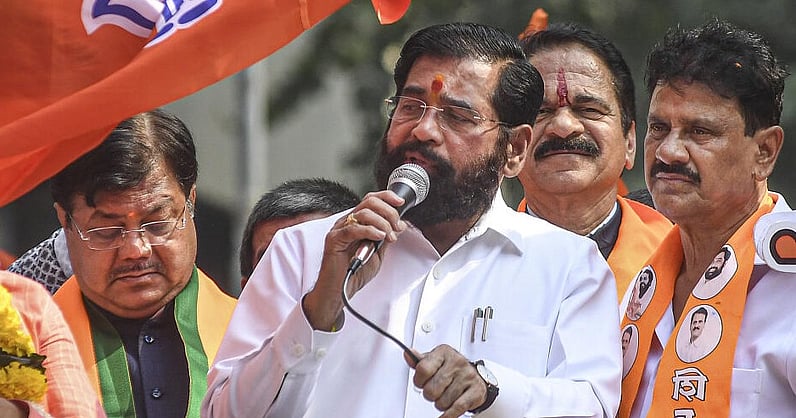
Shiv Sena presses for BMC mayor’s post during Bal Thackeray’s centenary amid alliance negotiations and shifting power equations in Mumbai.
The battle for political influence in Mumbai has intensified following the Brihanmumbai Municipal Corporation elections, with the mayor’s post emerging as the focal point of negotiations within the ruling alliance. As the birth centenary of Bal Thackeray approaches, the Eknath Shinde-led Shiv Sena has asserted that the symbolic and political significance of the moment warrants the mayor’s position being held by its party. This assertion has added a new emotional and historical dimension to what is otherwise a numbers-driven political process, bringing legacy, identity and alliance dynamics into sharp focus at a time when control of India’s richest civic body carries immense administrative and political value.
Shiv Sena’s Assertion Rooted in Legacy and Symbolism
The demand for the Brihanmumbai Municipal Corporation mayor’s post by the Shiv Sena has been framed not merely as a political negotiation but as a tribute to its founder during his centenary year. For decades, the party’s identity has been inseparable from Mumbai’s civic administration, where it once exercised near-total control. The centenary of Bal Thackeray has therefore been positioned by party leaders as an opportunity to reaffirm this historical bond and reassert relevance in a city where political dominance has become increasingly competitive.
Shiv Sena leaders argue that the mayor’s post holds more than administrative authority; it carries symbolic weight that resonates deeply with the party’s traditional support base. The Brihanmumbai Municipal Corporation has long been viewed as the institutional stronghold that enabled the party to shape Mumbai’s civic priorities, urban development decisions and political narrative. By seeking the mayor’s post during the centenary year, the party is attempting to reconnect with its legacy while navigating the realities of a changed political landscape.
The results of the municipal election, however, have altered the balance of power. While the ruling alliance secured a majority, the Shiv Sena emerged with significantly fewer seats than its partner. Despite this numerical disadvantage, the party has emphasised alliance ethics and shared governance rather than raw seat counts. According to its leadership, the alliance victory represents a collective mandate, and symbolic positions should reflect the emotional and historical dimensions of that partnership.
This argument has been reinforced by messaging directed at party workers and supporters, many of whom view the centenary as a defining moment for organisational morale. By elevating the mayoral claim to a matter of legacy, the leadership has sought to strengthen internal unity and present a cohesive front in negotiations. The move also serves as a reminder to allies that the Shiv Sena’s influence in Mumbai extends beyond electoral arithmetic and into the realm of cultural and political identity.
At the same time, the party has taken steps to ensure internal discipline during this sensitive phase. Newly elected corporators have been kept together to prevent defections and maintain bargaining strength. This strategy underlines the high stakes involved and reflects a broader understanding that municipal politics in Mumbai often mirror the intensity and complexity of state-level power struggles.
Alliance Negotiations and the Arithmetic of Power
While the Shiv Sena’s claim is rooted in sentiment and history, the alliance negotiations are inevitably shaped by electoral arithmetic and governance considerations. The alliance partner, having emerged as the single largest party in the civic elections, holds a strong claim to leadership positions based on numerical strength. This has created a delicate balancing act between respecting the mandate reflected in seat counts and accommodating the symbolic expectations raised by the centenary narrative.
Alliance leaders have publicly emphasised unity and mutual respect, indicating that discussions over the mayor’s post will be resolved through consensus rather than confrontation. However, behind the scenes, the negotiations reflect competing priorities. For the larger party, control of the mayor’s office represents an opportunity to consolidate its growing influence in Mumbai and demonstrate administrative leadership in the country’s financial capital. For the Shiv Sena, the mayor’s post represents continuity, identity and reassurance to its cadre that the party remains a central player despite recent electoral shifts.
The negotiation process is further complicated by procedural factors within the Brihanmumbai Municipal Corporation. The mayoral post is subject to reservation rules that can influence candidate selection and strategic planning. Until the reservation category is announced, parties are limited in their ability to finalise nominees, adding an element of uncertainty to the talks. This procedural layer has encouraged cautious public statements while intensifying behind-the-scenes coordination.
Political observers note that the outcome of these negotiations will have implications beyond municipal governance. The allocation of the mayor’s post is likely to shape perceptions of power sharing within the alliance and influence future electoral strategies at both state and national levels. A decision that visibly accommodates symbolic considerations may strengthen alliance cohesion, while a purely numbers-based outcome could redefine internal hierarchies.
The broader context of Mumbai’s governance also looms large over the debate. The Brihanmumbai Municipal Corporation oversees a massive budget and plays a crucial role in infrastructure development, public health, education and urban planning. Control of the mayor’s office therefore offers not just political visibility but practical influence over policies that affect millions of residents. This reality underscores why negotiations have been both prolonged and carefully managed.
As discussions continue, the centenary of Bal Thackeray remains a powerful reference point shaping political language and expectations. Whether the final decision reflects legacy, arithmetic or a compromise between the two will signal how contemporary alliances navigate the intersection of history and power. For now, the contest over the mayor’s post stands as a vivid example of how symbolism and strategy coexist in India’s urban political landscape.