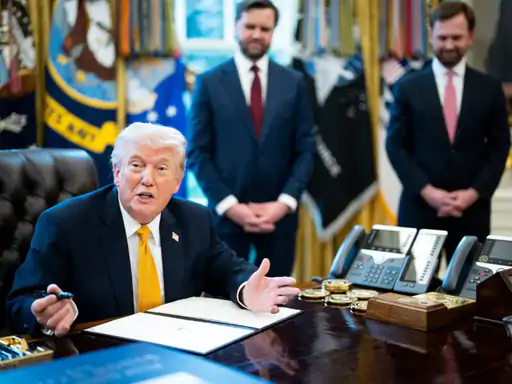
Washington D.C., March 29, 2026 | Former US President Donald Trump has withdrawn his recent remark suggesting that Cuba could be the next target of US action, saying shortly after making the statement that it should be considered as if he “never said this.”
Trump had made the comment during a business summit in Miami, where he indicated that military force could be an option if required. “I have made the American military very strong… sometimes it has to be done. By the way, Cuba is next,” he said, before quickly retracting the statement.
Strong Remarks Followed by Clarification
The initial statement raised concerns due to its implications for US foreign policy, especially in the context of ongoing geopolitical tensions. However, Trump’s immediate retraction appeared to signal an attempt to downplay the remark amid potential diplomatic sensitivities.
Despite the clarification, the comments have drawn attention to Washington’s increasingly assertive posture toward Cuba.
Cuba Facing Deep Economic Crisis
Cuba is currently grappling with a severe economic downturn, largely driven by disruptions in energy supply. The country has been facing acute fuel shortages, leading to prolonged power outages and widespread disruptions in daily life.
The situation worsened after a decline in oil supplies from Venezuela, historically one of Cuba’s primary energy partners. The shortage has triggered blackouts, rising fuel prices, and shortages of essential goods, including food and medicines.
Hospitals have reportedly been forced to postpone surgeries, while the healthcare system is under increasing strain due to lack of resources.
US Pressure and Policy Signals
The United States has been increasing pressure on Cuba in recent months. Reports indicate that oil supplies to the island have been significantly restricted, and other nations have been cautioned against supplying fuel to Cuba.
These measures have further deepened the economic crisis, with black market fuel prices reportedly surging and daily power cuts becoming more frequent.
Trump has also previously described Cuba as a “failed country” and suggested the possibility of a “friendly takeover,” indicating a more aggressive approach in dealing with the island nation.
Talks Continue Despite Tensions
Despite the strong rhetoric, diplomatic channels between the US and Cuba remain open. Officials from both sides have confirmed that discussions are ongoing, with efforts focused on avoiding escalation.
Cuban President Miguel Díaz-Canel has acknowledged that talks with the United States are continuing, signalling Havana’s willingness to pursue dialogue even as external pressures mount.
Historical Context of US-Cuba Relations
Relations between the United States and Cuba have long been marked by tension and conflict. Following Cuba’s independence from Spain, the US exerted significant influence over the island’s political and economic systems.
The situation changed dramatically after the 1959 revolution led by Fidel Castro, who established a communist government and nationalised American-owned assets. In response, the US imposed economic sanctions, pushing Cuba closer to the Soviet Union during the Cold War.
Over the decades, relations remained strained, with limited diplomatic engagement until recent efforts at normalisation.
Strategic and Economic Interests
Trump’s remarks also highlight a broader perspective that views Cuba not only through a political lens but also as a potential investment destination. He has previously expressed interest in economic opportunities on the island, including tourism and infrastructure projects.
This dual approach—combining political pressure with economic interest—reflects a complex strategy toward Cuba.
While Trump’s retraction may have eased immediate concerns, the episode underscores the fragile nature of US-Cuba relations. With ongoing economic challenges in Cuba and continued geopolitical tensions, the situation remains closely watched.
As diplomatic talks continue, the focus will be on whether dialogue can lead to stability or if escalating rhetoric will shape the next phase of engagement between the two nations.