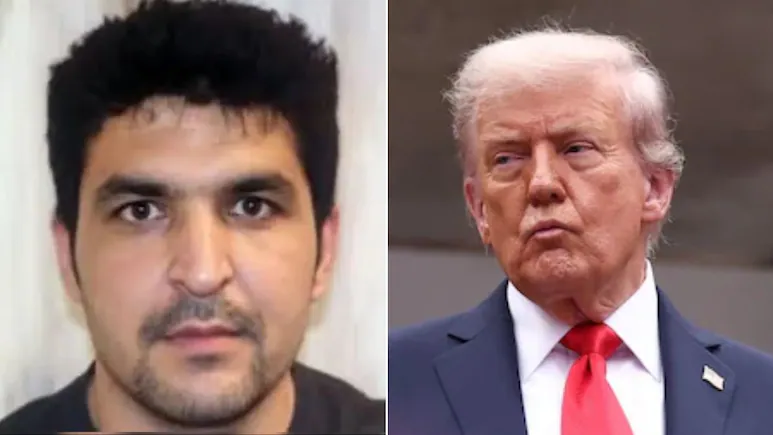
In the wake of a deadly shooting involving two National Guard troopers near the White House, US President Donald Trump has announced one of the most sweeping immigration measures in modern American history. Declaring that the United States needs time to “fully recover,” Trump stated that migration from all Third World countries will be permanently paused. His announcement carries massive consequences for millions of people globally who seek entry into the US for work, education, safety, or asylum. The move has ignited political debate, raised legal questions, and intensified scrutiny of America’s immigration system amid growing national security anxieties.
Trump’s sweeping immigration freeze and the security concerns intensified by the White House shooting
President Trump’s announcement came just days after an Afghan national opened fire on two National Guard personnel stationed near the White House. The timing of the event has contributed to the administration’s strengthened stance and its long-standing demand for strict immigration controls. In a detailed post on Truth Social, Trump claimed that lax immigration policies under previous administrations had undermined national stability, diluted technological and economic progress, and allowed potentially dangerous individuals into the United States.
His post accused the prior administration of facilitating “millions of illegal admissions” and suggested that some of these approvals were processed using what he called unauthorized “autopen signatures.” Trump vowed to terminate all these admissions, remove those he views as not beneficial to the country, and end federal benefits and subsidies for all noncitizens. He also said he would denaturalize migrants who he believes undermine national harmony and deport foreign nationals he considers public charges, security threats, or incompatible with what he described as Western values.
Trump wrote that the goal of his policy is to achieve a substantial reduction in what he called illegal and disruptive populations. He insisted that only “reverse migration” could restore the country’s safety and social order. He ended his post by wishing Americans a Happy Thanksgiving with a warning directed at those he accused of harming American values, adding that they “won’t be here for long.”
The announcement triggered immediate discussion across political, social, and diplomatic circles. For supporters of strict immigration controls, Trump’s move appeared decisive and necessary, especially given the recent White House-area shooting. For critics, however, his speech was inflammatory, sweeping, and likely to deepen divisions within American society.
The shooting itself has been central to the national conversation in recent days. On November 10, a gunman approached two National Guard personnel—Sarah Beckstrom, 20, and Andrew Wolfe, 24—and opened fire at extremely close range. Beckstrom succumbed to her injuries, while Wolfe remains in critical condition. The suspect, identified as 29-year-old Rahmanullah Lakanwal, had moved to the United States after the 2021 troop withdrawal from Afghanistan.
Authorities have not yet confirmed a motive, but the incident has intensified calls for strengthened background checks, vetting processes, and revised refugee protocols. The tragedy deeply affected military communities and prompted heartfelt condolences from Trump, who described Beckstrom as a “magnificent young person” who served with honor.
Soon after the suspect’s identity was released, the US Department of Citizenship and Immigration Services halted all immigration requests from Afghan nationals indefinitely. The department stated that homeland security remained its top priority, and it was necessary to reassess existing procedures. This development, combined with Trump’s newly announced policy, marks one of the harshest shifts in American immigration policy in decades.
In another move that signaled his escalating rhetoric, Trump shared an image of the 2021 evacuation from Afghanistan, claiming that “hundreds of thousands” of unvetted individuals had entered the United States due to what he described as a poorly executed airlift. He blamed the previous administration for what he called one of the most disastrous decisions in US history.
The shift in tone continued in his Thanksgiving post, where Trump launched a sharp critique of what he sees as the consequences of political correctness and lax immigration policies. He argued that the United States had allowed itself to be overwhelmed by migrants who he claimed originated from “failed nations,” prisons, mental institutions, gangs, or drug cartels. Trump cited a figure of 53 million foreigners currently residing in the United States and claimed that many receive costly benefits that burden American taxpayers. According to him, a migrant earning $30,000 annually could receive nearly $50,000 in benefits, which he framed as an indicator of a broken system.
He asserted that the increasing refugee population is now the leading cause of what he called social dysfunction in America—listing failing schools, increased crime rates, overwhelmed hospitals, housing shortages, and growing deficits as examples. He specifically highlighted the influx of refugees from Somalia, claiming they had transformed the demographic landscape of Minnesota.
These statements reflect Trump’s consistent messaging over the years: that immigration, particularly from countries he labels as unstable or dangerous, poses a threat to America’s future. His critics, however, argue that the rhetoric fuels xenophobia, oversimplifies complex global issues, and places unfair blame on entire populations for isolated incidents.
The shooting near the White House has undeniably played a significant role in shaping the urgency and tone of the administration’s response. For many Americans, the idea that a deadly attack could take place so close to one of the most secure locations in the country is unsettling. It has reignited debates around border security, refugee resettlement, and national defense. The incident has also placed pressure on immigration authorities to reassess vetting mechanisms and identify any gaps that may have allowed individuals with violent intent to enter the country.
Policy analysts note that a permanent halt on migration from all Third World countries would fundamentally reshape the United States’ demographic, economic, and diplomatic landscape. American universities, which host millions of international students, would see far-reaching consequences. The labor market, especially in sectors dependent on foreign workers—technology, healthcare, agriculture, and research—would experience acute shortages. Diplomatically, many nations could interpret the move as hostile or discriminatory.
Nevertheless, Trump’s supporters argue that the United States has reached a breaking point and must prioritize safety and the well-being of its own citizens. They cite rising crime rates, economic pressures, and recent violent incidents as justification for dramatic changes. Opponents insist that immigration is one of America’s greatest strengths and that restricting it so severely will damage the country’s global standing and moral leadership.
For now, the national conversation remains heated. The public, political strategists, security experts, and immigration officials are all grappling with what Trump’s announcement could mean for the future of immigration law and American society. What is clear, however, is that the recent shooting has accelerated the urgency with which these questions are being asked, and the administration appears determined to take a hard line.
White House-area shooting intensifies debates on immigration, national security, and America’s changing social landscape
The shocking attack on two National Guard troopers has become a watershed moment in America’s debate over immigration and national security. The incident unfolded just blocks away from the White House, an area known for some of the tightest security measures in the country. For many, the assault represents a significant breach and highlights broader concerns about threats originating from individuals who enter the United States through refugee or resettlement channels.
The suspect, Rahmanullah Lakanwal, had arrived in the United States after the chaotic withdrawal from Afghanistan in 2021, when tens of thousands of Afghans were evacuated during a massive and hurried military mission. Investigators are currently examining his digital footprint, communication history, and potential affiliations to determine whether he acted independently or was influenced by extremist ideologies. So far, officials have not established a motive, but security agencies are treating the investigation with utmost seriousness.
The death of 20-year-old soldier Sarah Beckstrom has deeply shaken the nation. Tributes flooded in from military personnel, families, and political leaders honoring her courage and dedication. The fact that Beckstrom had been on routine duty when the attack occurred has only intensified public outrage. Trooper Andrew Wolfe remains in critical condition, further heightening tensions.
The Biden administration’s earlier decision to allow large-scale resettlement of Afghan nationals remains a focal point for criticism from Trump and his supporters. They argue that the speed and scale of the airlift compromised the thoroughness of background checks. Trump’s posts repeatedly referenced the 2021 evacuation and accused the previous administration of importing potential threats into the country. Critics, however, argue that such statements unfairly demonize an entire community and overlook the humanitarian necessity of the airlift.
The immigration freeze targeting all Third World countries marks a drastic expansion of policies that had previously focused on specific regions or high-risk groups. Legal experts warn that such a blanket ban could face substantial constitutional challenges, as it may be interpreted as discriminatory on the basis of national origin. Human rights groups have denounced the measure as extreme, arguing that many people from developing countries seek refuge in the United States to escape violence, persecution, or poverty.
Economists have also pointed out that immigrants play a crucial role in sustaining the American workforce, generating innovation, and filling essential roles across numerous industries. A permanent freeze would alter the structure of the US economy and could weaken the country’s competitive edge in fields such as technology, medicine, and academic research.
Diplomatic analysts note that relations with several countries could suffer if the United States abruptly stops accepting migrants. Such a move may strain bilateral ties, especially with nations that rely heavily on remittances sent by workers living abroad. It may also encourage rival nations to exploit tensions and challenge America’s moral authority on the global stage.
Trump’s reference to a foreign population of 53 million living in the United States has sparked fresh debate about demographic data, the accuracy of such figures, and their interpretation. His assertion that many migrants originate from prisons, gangs, or unstable regions has drawn condemnation from civil rights activists, who argue that it promotes harmful stereotypes and misrepresents the immigrant population. Studies have repeatedly shown that immigrants, including refugees, commit crimes at lower rates than native-born citizens.
Trump’s claims that “refugee burden” is the leading cause of social dysfunction—such as failing schools and rising crime—remain controversial. Sociologists and criminologists argue that social issues in the United States stem from complex factors including inequality, infrastructure strain, and economic disparities. Pinpointing refugees as the cause, they say, oversimplifies deeply rooted challenges.
Yet, among a significant section of the population, Trump’s messaging resonates. Supporters express frustration with rising costs of living, urban crime, and fears about national security. For them, Trump’s promise of restoring order through strict immigration control represents a direct response to their anxieties.
Meanwhile, the families of the victims of the White House-area shooting continue to grieve. Public vigils have been held in honor of Beckstrom, and messages of hope pour in for Wolfe’s recovery. The tragic event has amplified calls for reforms in vetting processes and has reinforced demands for political clarity on immigration policies.
As investigations into the shooting continue, and as Trump’s announcement reverberates worldwide, the United States finds itself at a critical juncture. Immigration—a defining feature of the nation’s identity—has become the center of a polarizing and emotional national debate. While the administration’s defenders believe that only extreme measures can protect America, critics warn that such decisions risk isolating the nation and dismantling the ideals it has long stood for.