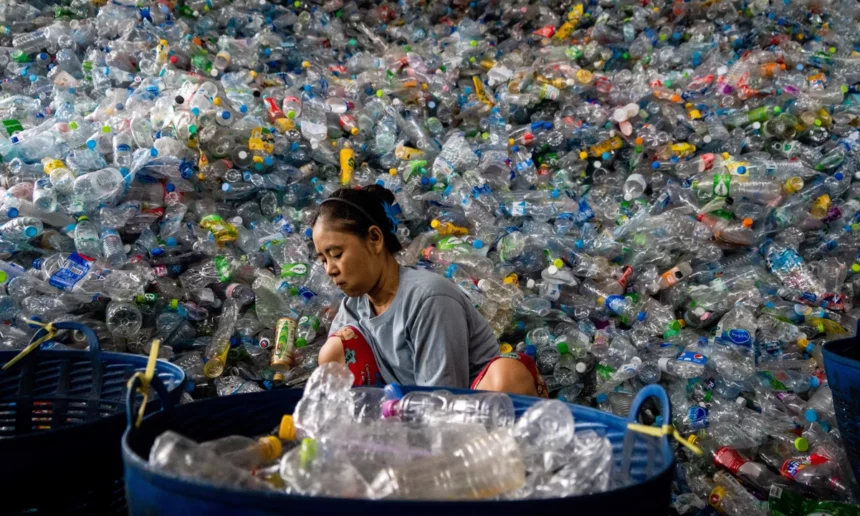
Thailand has become the latest nation to take decisive action against the growing global plastic waste crisis by announcing a complete ban on the import of plastic waste. The ban, which came into effect on January 1, 2025, is a significant move for a country that had long been one of the largest recipients of plastic waste from developed nations, such as the United States, the United Kingdom, and Japan. For years, Thailand had been a major destination for plastic waste, with millions of tonnes shipped in from around the world. However, the country has now decided that the environmental and health costs associated with this practice outweigh any economic benefits.
Historically, Thailand played a significant role in managing plastic waste from wealthier nations, with imports peaking in 2023 when Japan alone exported about 50 million kilograms (50,000 tonnes) of plastic waste to Thailand. Between 2018 and 2021, the country imported over 1.1 million tonnes of plastic scrap. Unfortunately, much of this plastic waste was poorly managed and often ended up being incinerated rather than recycled, causing severe environmental pollution and health hazards. Thailand’s Ministry of Natural Resources and Environment, along with environmental activists, has long advocated for an end to this practice, and the recent ban marks the culmination of years of campaigning.
For decades, wealthy countries in the Global North, including the US, Japan, and many European nations, have relied on exporting their plastic waste to nations in the Global South, including Thailand. This practice, often referred to as “waste colonialism,” has been driven by economics. In these countries, waste management is cheaper and less regulated, allowing developed nations to meet their recycling targets at a lower cost. In addition, these exporting nations can still present themselves as environmentally responsible while outsourcing the burden of waste disposal. The Global South, including Thailand, has been caught in a cycle where economic incentives and cheap labor have driven the acceptance of plastic waste imports, despite the detrimental environmental and public health impacts.
Thailand’s decision to stop accepting plastic waste reflects the growing realization that these economic benefits are not worth the long-term consequences. The rapid influx of plastic waste has been linked to widespread pollution, poor waste management practices, and significant harm to both the environment and the population’s health. Experts have long warned that the burning of plastic waste releases toxic chemicals and pollutants that can lead to respiratory and cardiovascular diseases, particularly in areas with poor waste management infrastructure.
The economic logic behind plastic waste exports is rooted in cost savings. Western countries can recycle plastic waste at a lower cost by sending it to nations with weaker labor laws and fewer environmental regulations. For instance, Thailand has had to cope with rising plastic waste imports from developed countries like the US, UK, and Japan due to lower labor costs, a weaker exchange rate, and lax regulations that make waste processing more affordable. This situation has also been seen within certain developed nations, such as the United States, where waste is often sent to poorer states with fewer environmental safeguards.
However, the decision to ban plastic waste imports was not without its challenges. While the ban is a clear victory for environmental activists and health advocates, it also presents economic hurdles for countries like Thailand, which has long benefited from the recycling industry. By accepting waste, these nations created jobs and contributed to their local economies. In fact, in 2022, countries like Turkey and Malaysia earned millions of dollars from importing plastic waste. Thailand’s new policy, therefore, poses a significant disruption to the local recycling sector, forcing the country to find alternative ways to process waste and handle its own plastic waste problem.
The impact of plastic waste on human health and the environment is dire. One of the most concerning effects is the widespread contamination of ecosystems with microplastics—tiny plastic particles that result from the degradation of larger plastic items. These microplastics have been found in water, air, soil, food, and even human tissue. Studies indicate that microplastics can take anywhere from 100 to 1,000 years to break down, posing long-term risks to wildlife and human health. Additionally, when plastic is burned, it releases harmful toxins into the air, further exacerbating respiratory and cardiovascular issues for residents in areas with poor waste management infrastructure.
Despite Thailand’s efforts, the issue of global plastic waste persists, with other nations in Southeast Asia, including Vietnam, Malaysia, and Indonesia, continuing to import large quantities of plastic waste. Until 2018, China was the largest importer of plastic waste, taking in nearly half of the world’s plastic scrap. However, China implemented a ban on plastic waste imports in that year, which led to a sharp increase in exports to other Southeast Asian countries, including Thailand. In response, countries like Turkey, Malaysia, and Vietnam also became major recipients of plastic waste, further exacerbating the environmental challenges in these regions.
The practice of “waste colonialism,” where wealthy nations export their plastic waste to poorer countries, has become increasingly controversial. Environmental activists argue that developed nations should take responsibility for their waste, instead of offloading it onto countries with weaker regulations. This view was echoed during a series of protests in 2019, when activists from Thailand and Greenpeace demanded an end to plastic and electronic waste exports at the 34th Association of Southeast Asian Nations (ASEAN) summit in Bangkok. The global plastic waste trade has become a symbol of environmental injustice, where rich countries benefit from low-cost waste disposal at the expense of poorer nations’ health and ecosystems.
In addition to Thailand’s ban, other countries are starting to follow suit in response to growing pressure. In 2023, the European Union announced plans to phase out plastic waste exports to poorer nations outside the Organisation for Economic Co-operation and Development (OECD) by mid-2026. This move aims to protect the environment and public health in developing countries, though it has been met with resistance from industries in some countries that rely on imported plastic waste for raw materials. Even within the OECD countries, stricter regulations on plastic waste are expected to come into force, setting the stage for further global changes in waste management practices.
However, critics argue that such country-specific or bloc-specific measures are only partial solutions to the global plastic crisis. Activists and environmental organizations are pushing for a comprehensive global treaty on plastic waste, which would establish legally binding rules to reduce plastic production, improve recycling systems, and promote more sustainable consumption practices worldwide. In December 2024, the United Nations failed to reach a consensus on a global plastic waste treaty during talks in Busan, South Korea. Although over 100 nations supported a draft treaty to cut the 400 million tonnes of plastic produced annually and phase out harmful chemicals and single-use plastics, disagreements among key players, including oil-producing countries like Saudi Arabia and Russia, led to the collapse of negotiations.
As countries like Thailand take a stand against the global plastic waste trade, the need for a global solution to the plastic crisis becomes ever more urgent. While the ban on plastic waste imports is a significant step forward, experts warn that the battle is far from over. Global cooperation and long-term systemic changes in both production and waste management practices are essential to address the root causes of plastic pollution and protect both the environment and human health for future generations.