Newswise — NOVEMBER 17, 2025, NEW YORK – Like all hardworking things, the cytotoxic T lymphocytes (CTLs) of the immune system charged with detecting and destroying cancer cells tend to get very tired—so much so, in fact, that they can even die from exhaustion. Caused by the chronic stimulation of CTLs by their target antigens, such “terminal exhaustion” is one of the primary reasons so many tumors escape immune clearance and resist immune checkpoint blockade (ICB) therapies.
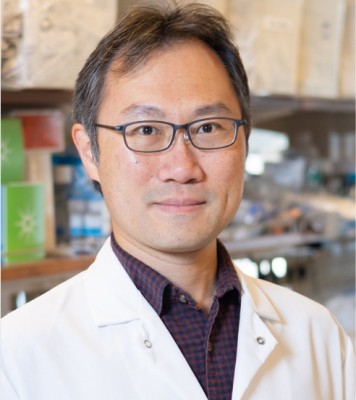
Now researchers led by Ludwig Weill Cornell’s Chien-Huan Weng and Co-directors Taha Merghoub and Jedd Wolchok have uncovered an additional mechanism by which T cells fighting the good fight in tumors are pushed into exhaustion—and shown in preclinical studies how it might be sabotaged to boost the efficacy of cancer immunotherapy.
Weng, Merghoub, Wolchok and their colleagues report in the current issue of Nature Immunology that a protein found in the molecular matrix around cells in tumors, thrombospondin-1 (TSP-1), binds to CD47, a protein receptor on the surface of CTLs, to drive their functional exhaustion. The researchers also detail the biochemical signaling cascade in T cells that mediates this effect and show that its disruption snaps exhausted anti-tumor CTLs out of their functional stupor and extends survival in mouse models of cancer.
“We’ve shown here that the activation of CD47 by TSP-1 in the extracellular matrix is a driver of T cell exhaustion in melanoma, ovarian cancer and likely many other human cancers as well,” said Merghoub. “We also demonstrated in studies using mouse models of cancer that disrupting the interaction of CD47 and TSP-1 can revive the cell-killing capabilities of exhausted CTLs, drive their infiltration into tumors—even so-called cold tumors that ordinarily have low levels of these immune cells—and improve the efficacy of PD-1 blockade, an ICB therapy that revitalizes and activates exhausted CTLs.”
The roots of the study go back to 2019, when the researchers were exploring the targeting of CD47 for cancer therapy. Frequently overexpressed by cancer cells, CD47 has multiple physiological functions. Pioneering studies led by Ludwig Stanford’s former Director Irv Weissman and current Director Ravi Majeti established roughly a decade earlier that these include the transmission of a “don’t eat me” signal to myeloid immune cells, which gobble up sick cells, pathogens and related detritus and help orchestrate immune responses.
In their own studies involving CD47, Wolchok, Merghoub and their colleagues noticed that CTLs bearing the biochemical markers of exhaustion also expressed CD47 at noticeably high levels. Those markers include a master regulator of exhaustion named TOX that, when activated, alters the gene expression patterns of T cells and induces the expression of an alphabet soup of proteins—like TIGIT, TIM-3, LAG-1 and PD-1—that potently inhibit the cytotoxic function of CTLs and are themselves markers of exhaustion.
“This raised the question of whether the CD47 expression seen on T cells in tumors was a cause or consequence of exhaustion,” said Weng. “Using genetic methods, we demonstrated that the former is the case: T cells with reduced expression of CD47 were better at killing cancer cells than counterparts expressing higher levels of CD47 and, when transferred into tumor-bearing mice, significantly extended their survival. We also showed that CD47 directly drives the T cell exhaustion program, in part by regulating the expression of TOX and other markers of exhaustion.”
Subsequent studies revealed that it does so by activating a biochemical signaling cascade known as the calcineurin-NFAT pathway. That discovery furnished biochemical clues that led the researchers to identify TSP-1—a prognostic molecular marker often overexpressed in the oxygen starved and inflamed microenvironment of tumors—as the factor activating CD47 signaling. TSP-1 has multiple effects in cancer. It is known to contribute to tumor metastasis and invasion, though in different circumstances it also helps inhibit the growth of blood vessels that nourish tumors.
The researchers demonstrated that a protein fragment that disrupts CD47 binding to TSP-1 could halt T cell progression to terminal exhaustion in mouse models of cancer. Continuous treatment with the peptide during tumor progression also improved the infiltration of T cells into tumors and enhanced anti-PD-1 ICB therapy in mice bearing cold melanoma tumors that tend to resist the immunotherapy.
“Concepts derived from this study have the potential to improve the efficacy of adoptive cell therapies, including CAR-T cell therapies, in which T cells isolated from patients are engineered to target cancer cells and reinfused for treatment,” said Wolchok. “Our findings also open a path to new strategies for cancer diagnostics and the development of next-generation biologics that selectively block the TSP-1:CD47 signaling axis and complement current immunotherapy approaches.”
The researchers are now exploring the optimal design of such therapeutics and further characterizing the sources of TSP-1 and mechanisms governing its expression and effects on tumor-infiltrating CTLs.
This research was supported by the Ludwig Institute for Cancer Research, the Ludwig Center for Cancer Immunotherapy at Memorial Sloan Kettering, Swim Across America, the Cancer Research Institute, the Parker Institute for Cancer Immunotherapy, the Department of Defense and the U.S. National Institutes of Health.
A director of the Ludwig Collaborative Laboratory at Weill Cornell Medicine, Taha Merghoub is also deputy director of the Sandra and Edward Meyer Cancer Center, the Margaret and Herman Sokol Professor of Oncology Research and a professor of pharmacology and immunology research in medicine at Weill Cornell Medicine.
Jedd Wolchok is a director of the Ludwig Collaborative Laboratory at Weill Cornell Medicine, where he is also the Meyer Director of the Sandra and Edward Meyer Cancer Center and a professor of medicine. He is also a member of the Board of Directors of the Ludwig Institute for Cancer Research.
# # #
About Ludwig Cancer Research
Ludwig Cancer Research is an international collaborative network of acclaimed scientists that has pioneered cancer research and landmark discovery for more than 50 years. Ludwig combines basic science with the translation and clinical evaluation of its discoveries to accelerate the development of new cancer diagnostics, therapies and prevention strategies. Since 1971, Ludwig has invested nearly $3 billion in life-changing science through the not-for-profit Ludwig Institute for Cancer Research and the six U.S.-based Ludwig Centers. To learn more, visit www.ludwigcancerresearch.org.
For additional information please contact communications@ludwigcancerresearch.org.
https%3A%2F%2Fwww.newswise.com%2Farticles%2Ftargeting-the-matrix-for-anti-tumor-t-cell-revival%2F%3Fsc%3Drsla