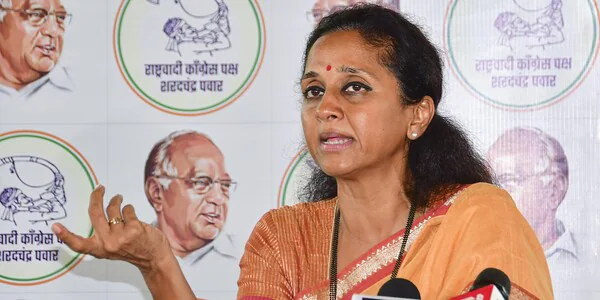
NCP MP Supriya Sule has expressed strong reservations about the Maharashtra government’s proposed anti-urban naxalism bill, likening it to the colonial-era Rowlatt Act, which was historically used to suppress opposition. Sule fears that the bill could be misused to target individuals or organizations critical of the government, leading to a situation resembling a “police raj.”
The Maharashtra Special Public Security Bill, 2024, seeks to address the growing concerns over naxal activities in the state and empower the government and police with extensive powers to curb unlawful activities. The bill outlines that all offenses committed under this act would be cognizable and non-bailable, raising concerns over its potential misuse.
Chief Minister Devendra Fadnavis, who reintroduced the bill during the winter session of the state legislature in December, emphasized that it was aimed at tackling urban naxalism, with no intent to suppress legitimate dissent. However, Sule strongly disagrees with this, asserting that the bill undermines fundamental rights and may curtail the ability of ordinary citizens to voice opposition.
According to Sule, the bill’s vague definition of “illegal acts” could grant sweeping powers to government agencies. She believes this provision could be exploited to silence opposition, with acts such as criticizing government policies, peaceful protests, or even organizing marches being deemed unlawful. The NCP leader also claims that the bill could infringe upon citizens’ Constitutional rights, including freedom of expression, the right to association, and access to a fair trial.
Sule further criticized the bill for its potential to erode judicial independence, stating that it could grant the government excessive control over certain judicial processes. She highlighted that such a law would dangerously resemble the repressive measures imposed by the British during colonial rule and is a direct violation of the principles enshrined in India’s Constitution.
While Fadnavis has justified the bill as a necessary step to combat naxalism in the state, citing similar laws in other states such as Chhattisgarh and Odisha, Sule remains unconvinced. She calls for the government to review the bill, ensuring that it aligns with constitutional values and does not infringe on the rights of the people.
The bill, which was initially tabled in July 2024 under the Eknath Shinde-led government but failed to pass, has been reintroduced. It is expected to be referred to the joint select committee of the state legislature for further review, with a final version to be brought before the legislature in July 2025. The bill aims to address unlawful activities, including acts of violence, vandalism, and the use of explosives, while imposing severe penalties for association with unlawful organizations.
As the bill moves through the legislative process, the debate over its potential impact on democracy and individual freedoms continues to gain momentum.