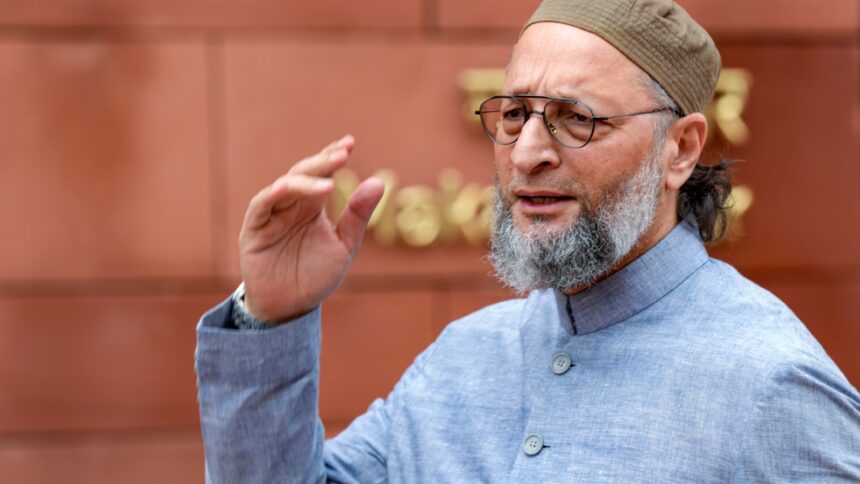
The Supreme Court’s recent interim order on the Waqf (Amendment) Act, 2025 has reignited debates over the protection and management of waqf properties across India. While certain clauses of the Act have been stayed, the interim ruling does not address the overall constitutionality of the legislation. All India Majlis-e-Ittehadul Muslimeen (AIMIM) chief Asaduddin Owaisi expressed concerns that the interim relief would not safeguard waqf properties from exploitation and encroachment. Asaduddin Owaisi, who has long been critical of the Act, urged the Supreme Court to deliver a prompt final verdict on the law to prevent the dilution of waqf mechanisms, alleging that the BJP’s intent behind the legislation is to weaken the waqf system and undermine its purpose.
Interim Order and Its Limitations
The Supreme Court, through a bench led by Chief Justice of India BR Gavai and Justice AG Masih, issued an interim order staying certain provisions of the Waqf (Amendment) Act, 2025. The interim ruling focused primarily on limiting powers granted to the District Collector in determining the status of waqf properties and capping the representation of non-Muslims in Waqf Boards. One significant provision stayed by the Court was the requirement that a person must have practiced Islam for the past five years to create a waqf, a clause that had been widely criticized as restrictive. Additionally, Section 3C(2) and 3C(3) were stayed, which dealt with the presumption of government ownership over waqf properties and the process for revenue record corrections. Despite these temporary injunctions, the Supreme Court declined to stay the entire Act, emphasizing that, in general, the presumption favors the constitutionality of the statute, and intervention is warranted only in the rarest of circumstances.
Asaduddin Owaisi, reflecting on the interim order, asserted that it falls short of protecting waqf properties from encroachment and mismanagement. He pointed out that while certain clauses have been temporarily stayed, the Act, in its entirety, could still facilitate exploitation and administrative interference. According to him, encroachers may find opportunities to benefit under the framework, and the development of waqf properties may remain stalled. Asaduddin Owaisi emphasized the urgency of a final verdict, arguing that prolonged legal ambiguity undermines the foundational objective of the waqf system, which is to safeguard religious endowments and ensure they serve the community.
Political and Legal Implications of the Waqf (Amendment) Act
Asaduddin Owaisi has consistently criticized the Waqf (Amendment) Act, suggesting that its real intent is to weaken the waqf mechanism in India. According to him, the Act imposes unnecessary restrictions on religious endowments, potentially discouraging people from donating property as waqf. He argued that the BJP government seeks to centralize control over waqf properties and dilute community oversight, thereby undermining centuries-old mechanisms that have protected waqf assets from misuse. Asaduddin Owaisi highlighted that, if the law is fully implemented, it could fundamentally alter the way waqf properties are administered, reducing community participation and weakening institutional checks on encroachment and mismanagement.
Asaduddin Owaisi also addressed broader concerns regarding the selective nature of certain provisions. He pointed out that the five-year practice requirement for creating a waqf is unique to Islam and does not apply to other religions such as Hinduism, Christianity, Sikhism, or Buddhism. He questioned whether similar restrictions exist for individuals donating property under other religious frameworks, implying that such targeted provisions reflect discriminatory intent and could complicate the equitable administration of religious endowments. The Hyderabad MP stressed that without proper judicial scrutiny and rules ensuring fairness, these provisions could make it difficult for ordinary donors to endow property as waqf, potentially jeopardizing the future of religious and charitable endowments across India.
The Supreme Court’s interim order has triggered intense discussions about the balance of powers between the judiciary, state authorities, and religious communities. By staying certain provisions, the Court has sought to prevent immediate harm while leaving open the question of the law’s ultimate constitutionality. Legal experts have noted that the interim order preserves the status quo, but a definitive ruling will be critical in clarifying the scope of authority granted to District Collectors and other government officials in determining the status of waqf properties. The interim relief also underscores the judiciary’s cautious approach in matters where religious and administrative interests intersect, highlighting the complex legal landscape surrounding waqf governance.
Asaduddin Owaisi, one of the earliest petitioners challenging the Act, stressed that the legislation in its current form could allow political interference in waqf administration. He contended that the BJP government’s overarching aim is to curtail community control and facilitate administrative dominance over waqf assets. By limiting the autonomy of waqf boards and granting powers to state-appointed officers, the law, according to Asaduddin Owaisi, risks eroding the traditional safeguards that have preserved waqf properties for religious, educational, and charitable purposes. He called on the Supreme Court to ensure that the final verdict restores the protection of waqf assets and preserves the integrity of religious endowments.
The Waqf (Amendment) Act, 2025 had initially sparked controversy for multiple reasons. Critics argued that it grants disproportionate authority to government officials while imposing complex conditions on the creation of waqf properties. While the government defended the legislation as a measure to improve transparency and accountability in waqf administration, opponents have raised concerns about its potential misuse. They warned that encroachers and politically connected individuals could exploit the law to claim waqf lands or divert assets away from community-oriented purposes. Asaduddin Owaisi’s comments highlight the political dimensions of the debate, suggesting that legal interventions may also be influenced by larger contestations over community rights and governance.
Asaduddin Owaisi elaborated on the practical difficulties that may arise from the Act’s provisions. He said that the rules to be framed by the government could make it nearly impossible for ordinary donors to establish a waqf, creating bureaucratic hurdles and delays. He warned that unless the Supreme Court delivers a clear verdict, the legislation could lead to a prolonged period of uncertainty, allowing opportunistic encroachment and administrative overreach. His observations underscore the intersection of law, religion, and politics, highlighting the challenges faced by communities in ensuring the proper utilization of waqf properties.
The Supreme Court’s stay of certain provisions, including those related to the presumption of government ownership, reflects the judiciary’s recognition of potential administrative overreach. However, the interim order does not address broader constitutional questions, such as whether the Act unduly restricts the rights of religious communities or violates principles of equality. Legal scholars suggest that a final decision will need to examine the balance between government oversight and community autonomy, ensuring that waqf properties continue to serve their intended charitable, religious, and educational purposes.
Asaduddin Owaisi’s commentary also touches on the broader implications for minority rights in India. He stressed that waqf properties have historically played a vital role in supporting education, healthcare, and religious institutions within Muslim communities. Weakening the waqf mechanism, he argued, would not only affect property management but also undermine social welfare programs dependent on these endowments. His criticism frames the issue as both legal and social, highlighting the far-reaching impact of legislative changes on community resources and development.
The interim order has thus become a focal point in the ongoing debate about the Waqf (Amendment) Act. On one hand, it limits immediate administrative powers and protects certain rights; on the other, it leaves unresolved questions about the Act’s overall legality and its potential to disrupt the management of waqf properties. Asaduddin Owaisi’s call for a swift final verdict underscores the urgency felt by communities dependent on waqf assets for education, worship, and charitable purposes.
By emphasizing the possibility of encroachment and administrative interference, Asaduddin Owaisi has also drawn attention to the enforcement challenges inherent in waqf management. Even with the interim order in place, the lack of a final judicial ruling leaves room for legal ambiguities and potential disputes over property rights. His demand for a conclusive judgment highlights the need for clarity and stability in waqf administration, ensuring that these properties continue to serve their religious and community purposes without interruption.
As the Supreme Court prepares to examine the constitutional validity of the Waqf (Amendment) Act, all eyes are on the judicial process. The outcome will likely shape not only the legal framework governing waqf properties but also set precedents for the balance between state intervention and religious autonomy. Asaduddin Owaisi’s statements reflect both political and community concerns, emphasizing the critical nature of judicial oversight in safeguarding minority endowments and preserving the socio-religious fabric of India.