In a major counter-terror success, Indian investigative agencies have dismantled two ISIS modules operating across the country, allegedly planning attacks on religious sites and targeted killings. The operations, conducted over multiple states including Jharkhand, Telangana, Andhra Pradesh, Maharashtra, Madhya Pradesh, and Delhi, have revealed sophisticated networks run under the guidance of Pakistani handlers. The investigation uncovered digital evidence linking the accused to global terrorist agendas, particularly the Khilafat model and Ghazwa-e-Hind, exposing their plans to incite violence and radicalize young people in India through social media platforms.
Two ISIS Modules Uncovered Across India
The first ISIS module was identified by the Delhi Police Special Cell through coordinated raids across several states, including Jharkhand, Telangana, Bengaluru, Maharashtra, and Madhya Pradesh. Authorities arrested five individuals—Ashar Danish, Aftab Qureshi, Sufian Abubakar Khan, Mohammad Huzaif Yaman, and Kamran Kamran Qureshi—who were allegedly involved in planning targeted killings and orchestrating attacks on religious sites. During the raids, police recovered a substantial cache of weapons and chemical bomb-making materials, indicating the high level of preparedness and intent of the module. Investigators confirmed that these individuals were deeply influenced by the extremist ideologies promoted by global jihadist leaders and were actively attempting to recruit young Indian Muslims to execute violent acts in the name of jihad.
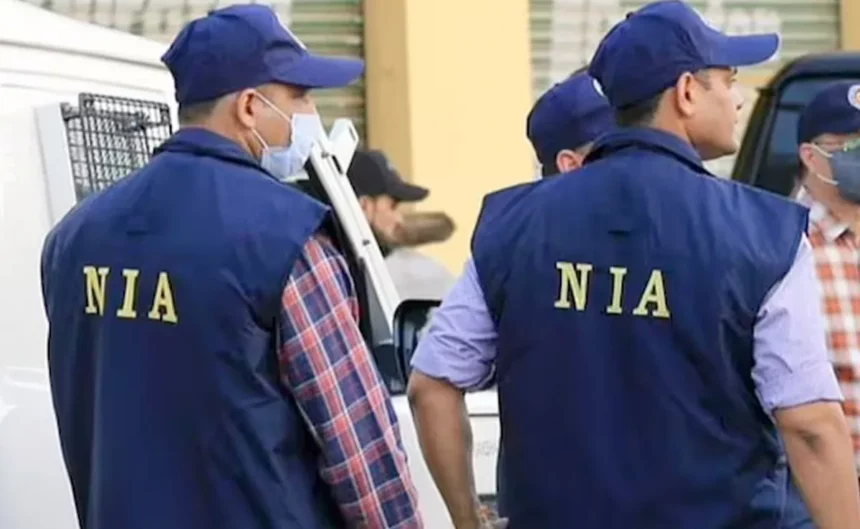
The second module, connected to Vizianagaram in Andhra Pradesh, was uncovered following a comprehensive operation conducted by the National Investigation Agency (NIA), which raided 16 locations across eight states including Andhra Pradesh, Telangana, Tamil Nadu, Jharkhand, Uttar Pradesh, Bihar, Maharashtra, and Delhi. The raids led to the seizure of a significant quantity of digital devices, documents, and chemical bomb-making materials. Two accused individuals, Siraj and Sameer, were apprehended in Vizianagaram. Investigation revealed that they had been using social media platforms such as Instagram, Facebook, Telegram, and Signal to influence young people and incite them toward extremist activities. Pakistani handlers were found to be sharing radical videos and content to manipulate the minds of vulnerable individuals and encourage them to undertake violent actions.
The first accused associated with this second module, Arif Hussain alias Abu Talib, had been apprehended on August 27 while attempting to flee to Riyadh, Saudi Arabia. Further investigations revealed that Arif Hussain and his associates were conspiring to transport weapons into India through the Nepal border, demonstrating the transnational nature of their operations and the cross-border support networks facilitating terrorism in India. Authorities highlighted the strategic planning behind these modules, indicating that the operatives were not only ideologically driven but also logistically coordinated, with precise methods to execute attacks and recruit local participants.
Operational Methods and Radicalization Tactics
Investigators have detailed the modus operandi of these ISIS modules, emphasizing the sophisticated recruitment and radicalization processes employed by the handlers. Operatives were primarily guided by Pakistani handlers who reached out to young Indian Muslims through social media and messaging platforms. The extremists exploited feelings of perceived oppression and discrimination, convincing young people that their inaction would lead to humiliation and failure. Videos depicting jihadist leaders and radical activities were shared to inspire ideological commitment and incite participants to violent action.
Pakistani handlers initiated personalized one-on-one communications with individuals who displayed interest in extremist content, gradually indoctrinating them and providing instructions for operational planning. Investigators noted that the four key ideological figures whose speeches and messages were extensively used to radicalize Indian youth included Maulana Masood Azhar, leader of Jaish-e-Mohammed; Tariq Masood, a Pakistani Deobandi scholar; Tariq Jameel, a Pakistani Islamic cleric and Tablighi Jamaat member; and Zakir Naik, a controversial Islamic preacher known for his influence among Indian and international Muslims. Their speeches and videos were reportedly circulated to motivate participants to engage in jihad, including attacking religious and public sites.
The modules were reportedly working under the framework of the Khilafat model and the Ghazwa-e-Hind agenda. The Khilafat model involves occupying strategic locations and establishing control before executing violent acts in the name of jihad. The Ghazwa-e-Hind agenda, often cited in extremist literature, emphasizes the ideological notion of establishing Islamic dominance in the Indian subcontinent. Investigators indicated that these modules were actively attempting to operationalize these models by recruiting individuals, acquiring weapons, and identifying high-value targets, including religious sites and prominent community figures.
Through social media, operatives created echo chambers to propagate extremist content and narratives. Platforms like Instagram and Facebook were used to publicize videos of radical activities, while messaging applications like Telegram and Signal facilitated private conversations and instructions from handlers. These platforms allowed handlers to maintain anonymity while exerting significant influence over recruits, guiding them from ideological indoctrination to operational planning.
Authorities noted that the Indian modules were also intended to inspire domestic sympathizers to act independently if direct support from handlers was unavailable, creating a decentralized structure of extremist operations. This highlighted the evolution of terrorism in India, where digital radicalization and online instruction increasingly substitute physical training and centralized command structures.
The NIA’s investigation confirmed that the modules were actively targeting young and impressionable individuals, including students, to form a new cadre of operatives aligned with ISIS ideology. Digital devices recovered during raids contained communications, video evidence, and instructional materials designed to educate recruits on constructing improvised explosive devices and planning attacks, demonstrating the high level of sophistication within these modules.
Authorities emphasized the dual threat posed by these ISIS cells: physical attacks on religious and public sites, and the potential for ideological influence over Indian youth, which could lead to long-term destabilization and recruitment for global jihadist agendas. By dismantling these modules, law enforcement agencies have not only prevented immediate threats but also disrupted networks that could have facilitated sustained extremist activities.
The investigation further revealed the role of Pakistani handlers in coordinating operations across states, indicating a high degree of cross-border intelligence and logistical support. They were involved in recruiting, supplying materials, and monitoring the progress of Indian operatives to ensure adherence to the extremist agenda. This transnational aspect underscores the strategic threat posed by ISIS in India and the necessity for ongoing vigilance, intelligence-sharing, and rapid response by counter-terror agencies.
Investigators also highlighted that these modules were targeting religious sites with symbolic and strategic significance, suggesting that the attacks were planned not only to cause casualties but also to incite communal tensions and undermine social harmony. By focusing on both symbolic and practical targets, the terrorists aimed to amplify the psychological impact of their planned attacks and to propagate their ideological message more effectively.
Authorities confirmed that the arrested individuals were interrogated to uncover additional operatives and networks. The investigation is ongoing to trace all connections, handlers, and logistical pathways to dismantle any remaining cells and prevent future terrorist acts. The Indian counter-terror apparatus continues to prioritize intelligence-driven operations to neutralize extremist threats proactively.
The raids and subsequent arrests across multiple states have been hailed as a significant achievement in India’s fight against terrorism. Law enforcement agencies emphasized the importance of coordinated action between central and state authorities to counter complex, multi-state terrorist operations effectively. By leveraging intelligence, digital forensics, and targeted raids, authorities have successfully disrupted two highly organized ISIS modules that posed both immediate and long-term threats to national security.
The exposure of these modules demonstrates the increasing importance of monitoring digital platforms and cross-border communications in counter-terrorism efforts. As terrorists increasingly rely on social media and encrypted messaging for recruitment and operational planning, security agencies are adapting methods to track, intercept, and neutralize extremist content and actors before they can execute violent plans.