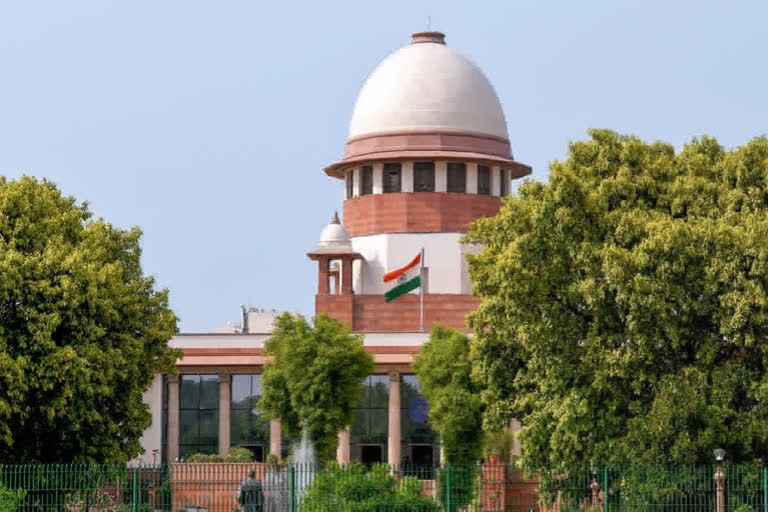
The Supreme Court on Thursday made significant observations during the ongoing hearing in the Sabarimala reference case, cautioning against excessive judicial interference in matters related to religion and religious practices. The remarks came during the thirteenth day of hearings before a nine judge Constitution Bench examining broader constitutional questions linked to gender equality, religious freedom and the autonomy of religious denominations.
Justice BV Nagarathna, while addressing the complex issues involved in the matter, observed that religion remains deeply intertwined with the social and cultural fabric of India. She stated that indiscriminate challenges to religious customs before constitutional courts could eventually destabilise the very foundations of the country’s civilisational continuity.
The observations have once again reignited a nationwide debate over the balance between constitutional morality and religious freedom. The Sabarimala matter has evolved far beyond the question of temple entry and now includes several sensitive issues involving women’s rights, faith based practices and the constitutional powers of courts in matters concerning religion.
During the hearing, Justice Nagarathna remarked that India is not merely a political republic but also an ancient civilisation built upon pluralities, diversities and deeply rooted traditions. She stressed that courts must remain conscious of the long term social consequences of judicial intervention in religious matters.
According to the bench, if every religious practice starts becoming the subject of constitutional litigation, it could lead to an endless cycle of challenges involving temples, rituals, entry restrictions and denominational customs across communities. The court noted that religion in India is not a peripheral aspect of life but forms a central component of social identity and collective existence.
Justice Nagarathna observed that the nine judge bench was aware that whatever constitutional principles it ultimately lays down would have implications for the entire country and future generations. She emphasised that India’s rapid economic and developmental transformation should not come at the cost of disturbing the cultural constants that have historically shaped Indian society.
The Sabarimala reference case itself emerged after the landmark 2018 Supreme Court verdict that allowed women of all age groups to enter the Sabarimala temple in Kerala. The earlier judgment had struck down the traditional restriction on women between the ages of 10 and 50 from entering the shrine dedicated to Lord Ayyappa.
That verdict triggered widespread protests, legal debates and review petitions from various religious organisations and devotees who argued that the practice formed an essential part of the temple’s denominational character. In response to the intense constitutional questions raised, a larger nine judge bench was constituted to examine broader principles relating to religious freedom and equality.
The present proceedings are not limited only to Sabarimala. The bench is simultaneously examining several connected issues involving women’s entry into religious places and the extent to which courts can examine practices claimed to be essential religious customs.
On Thursday, the court also expressed oral concerns regarding the practice of Female Genital Mutilation among sections of the Dawoodi Bohra community. The bench decided to tag petitions challenging the practice with the ongoing Sabarimala reference proceedings because both involve constitutional questions related to bodily autonomy, gender justice and religious practices.
The issue of Female Genital Mutilation has remained controversial for years in India. Petitioners challenging the practice have argued that it violates fundamental rights guaranteed under the Constitution, particularly the rights to dignity, bodily integrity and equality. Supporters within the community have maintained that the practice forms part of religious tradition and community identity.
The Supreme Court’s decision to club these petitions together indicates that the larger constitutional debate is now expanding into multiple dimensions involving the intersection of faith, gender and individual rights.
Legal experts observing the hearings believe the eventual judgment could become one of the most influential constitutional rulings in recent Indian judicial history. The court is expected to define the scope of constitutional scrutiny in religious matters and clarify whether courts can determine what constitutes an essential religious practice.
The essential religious practices doctrine has long been a controversial principle within Indian constitutional law. Courts have historically examined whether a particular religious custom is fundamental to a religion before deciding whether constitutional protection applies. Critics argue that this approach forces judges into theological interpretation, while supporters believe judicial oversight remains necessary to protect fundamental rights.
During Thursday’s proceedings, the bench appeared particularly cautious about entering areas that could potentially alter long standing religious traditions across communities. Justice Nagarathna’s remarks reflected the concern that excessive constitutional intervention might unintentionally create social instability and widespread litigation targeting numerous religious customs.
At the same time, the court also acknowledged that constitutional values such as equality, dignity and non discrimination remain central to democratic governance. The challenge before the bench lies in balancing those constitutional commitments with the protection of religious autonomy guaranteed under Articles 25 and 26 of the Constitution.
Senior advocates participating in the hearing presented competing arguments regarding the extent of judicial review in matters of faith. Some lawyers argued that constitutional courts must intervene wherever practices discriminate against women or violate individual rights. Others contended that courts should avoid becoming arbiters of theology and should respect denominational autonomy.
The hearings have drawn national attention because the final judgment could influence future disputes involving temples, mosques, churches and other religious institutions across India. The ruling may also shape how courts handle conflicts between collective religious traditions and evolving constitutional standards.
Political and social reactions to the hearing have remained divided. Supporters of stronger judicial intervention argue that constitutional morality should prevail over discriminatory customs. Others believe that religious communities should retain the right to preserve traditions unless practices clearly violate public order, morality or health.
Religious scholars have also entered the debate, with many emphasising that Indian civilisation has historically accommodated diverse forms of worship and belief systems. Some experts argue that sudden judicial restructuring of faith practices may create resistance and deepen social polarisation rather than produce meaningful reform.
Women’s rights organisations closely following the case maintain that constitutional promises of equality cannot remain subordinate to exclusionary religious customs. They argue that constitutional courts have a duty to protect citizens from discriminatory practices regardless of religious justification.
Meanwhile, traditionalist groups insist that courts must recognise the unique spiritual and ritualistic character of religious institutions. According to them, state or judicial interference in sacred traditions could undermine religious freedom itself.
The Supreme Court has not yet indicated when the final judgment in the reference case will be delivered. Thursday’s hearing remained inconclusive and proceedings are scheduled to continue next week. The eventual ruling is expected to become a defining constitutional precedent on the relationship between faith, equality and judicial power in India.
The observations made by Justice BV Nagarathna have already triggered extensive discussions in legal and political circles because they directly address one of the most sensitive constitutional questions facing modern India. As the hearings continue, the country watches closely to see how the Supreme Court balances constitutional rights with the preservation of religious diversity and civilisational continuity.
The outcome of the Sabarimala reference case could ultimately redefine the boundaries of judicial intervention in matters of religion and shape the constitutional future of religious freedom in India for decades to come.