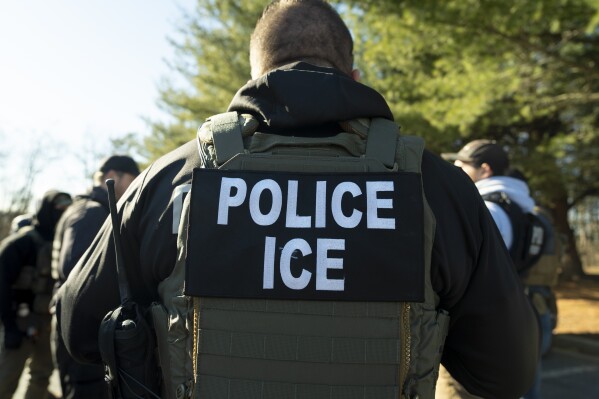
Immigration and Customs Enforcement (ICE) has increasingly become a more visible and fearsome force on American streets since President Donald Trump took office. Although ICE is still technically bound by constitutional limits, its operations have raised concerns about whether it is evolving into a secret police force that targets political dissidents and curtails individual freedoms. In this analysis, we examine how ICE’s activities align with the characteristics of secret police and the potential implications of its growing power.
The Characteristics of Secret Police
Secret police are agencies typically associated with authoritarian regimes. These forces operate covertly, engaging in surveillance, arbitrary arrests, and the suppression of political opposition. Secret police agencies are usually loyal to a singular ruler, and their actions are often shrouded in secrecy, making it difficult to hold them accountable. They target political opponents, engage in intelligence gathering, and use methods like detention and torture to maintain control.
A look at ICE’s increasing visibility and growing influence under Trump’s leadership suggests that it may be meeting many of the criteria associated with secret police forces.
Targeting Dissidents and Political Opponents
One of the hallmark traits of secret police is the targeting of political dissidents, and ICE appears to be following this pattern. ICE has increasingly used its resources to target activists, such as Mahmoud Khalil, a pro-Palestinian activist who was arrested on March 8, 2024. The agency reportedly used its authority to arrest Khalil under the Immigration and Nationality Act, which allows deportation for individuals whose presence is considered to have adverse foreign policy consequences for the United States.
This pattern of targeting individuals based on their political activism is seen by many legal scholars as a violation of constitutionally protected free speech. The case of Rumeysa Ozturk, a university student detained by ICE in March, further highlights the agency’s growing role in suppressing political opposition. The use of ICE to target these individuals raises alarms about the agency’s role in silencing dissent.
Loyalty to the Leader
While ICE does not directly report to Trump, it operates under leaders who have shown strong loyalty to him. The agency falls under the Department of Homeland Security, headed by Kristi Noem, a staunch Trump ally. Furthermore, Tom Homan, a former ICE director appointed by Trump as his “border czar,” has remained a vocal supporter of Trump’s immigration policies.
The actions of Homan and Noem, particularly their disregard for court orders such as those barring the deportation of Venezuelan gang members, suggest that ICE’s operations are deeply intertwined with Trump’s political objectives. This raises questions about whether ICE could act as a tool for political repression, carrying out the will of the president without regard for legal or constitutional constraints.
Secrecy and Covert Operations
ICE’s growing secrecy is another cause for concern. Agents involved in detaining individuals have increasingly operated undercover, often in plain clothes and without proper identification. For example, ICE agents detained two men in Charlottesville, Virginia, without providing any proof of a warrant when asked by bystanders. These operations, conducted without transparency, undermine public trust in the agency and its commitment to accountability.
Additionally, ICE has escalated its surveillance capabilities, including mass monitoring of social media and the procurement of technologies to track and profile individuals. The agency has even solicited bids from private contractors to gather intelligence on social media users and utilize facial recognition software to identify potential threats. These actions are eerily reminiscent of the surveillance methods employed by secret police agencies in authoritarian regimes.
Arbitrary Searches, Arrests, and Detentions
Reports of arbitrary searches, detentions, and interrogations are on the rise. ICE has been accused of entering schools under false pretenses to search for undocumented students and carrying out “collateral arrests” – detaining individuals who were not the original targets of the operation. There have also been cases where tourists and visa holders have been detained for weeks without explanation.
Perhaps most troubling are reports of prolonged solitary confinement in ICE detention facilities, which some experts argue amounts to torture. Since Trump’s inauguration, at least three people have died in ICE custody, further highlighting the agency’s growing use of coercion and indefinite detention.
Concerns about Future Expansion of Power
While ICE is far from resembling the most infamous secret police forces in history, the agency’s increasing power and discretion have raised alarm bells. With the passage of a budget bill that would provide ICE with up to $175 billion over the next decade, the agency’s capacity for surveillance, detention, and repression will only grow. Critics worry that this could lead to an even more aggressive targeting of dissent, including against U.S. citizens.
The expansion of ICE’s role in American society raises the specter of a future where the agency is able to exert unchecked power over individuals who challenge the status quo. As the U.S. continues to grapple with issues of free speech, surveillance, and political repression, ICE’s growing influence will likely play a pivotal role in shaping the future of American authoritarianism.
While ICE is not yet a secret police force in the classic sense, its increasing use of covert operations, political targeting, and mass surveillance reflects many of the characteristics of authoritarian regimes’ secret police agencies. The agency’s growing influence, combined with a lack of oversight, raises significant concerns about its role in American democracy. If ICE is allowed to continue on its current trajectory, it may one day become a key player in a repressive apparatus that undermines civil liberties and suppresses political opposition.