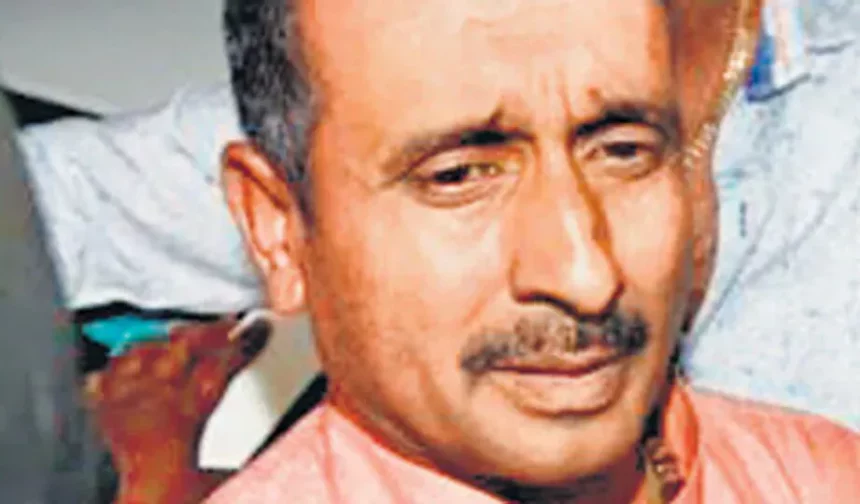
The Supreme Court is set to hear a crucial plea by the Central Bureau of Investigation challenging the suspension of sentence granted to former bjp mla kuldeep singh sengar in the unnao rape case, a matter that has once again drawn national attention to questions of justice, accountability, and the treatment of powerful public figures accused of serious crimes.
On monday, a three-judge vacation bench of the Supreme Court of India, headed by chief justice of india surya kant along with justices j k maheshwari and augustine george masih, is expected to consider the cbi’s appeal against a recent delhi high court order. That order suspended the life sentence awarded to kuldeep singh sengar, who was convicted in connection with the 2017 unnao rape case involving a minor survivor. The apex court will also hear a separate petition filed by advocates seeking a stay on the high court’s decision, underscoring the gravity and public importance of the issue.
Cbi challenges high court reasoning on public servant status
The appeal filed by the Central Bureau of Investigation raises fundamental questions about how courts interpret the law when the accused holds or held public office at the time of the alleged offence. According to the agency, the delhi high court committed a legal error by holding that kuldeep singh sengar, who was an mla when the offence occurred, could not be treated as a public servant for the purpose of prosecution under the protection of children from sexual offences act.
In its submissions before the apex court, the cbi referred to earlier judicial pronouncements, including its own interpretation of the law in cases involving lawmakers, to argue that members of legislative assemblies and parliamentarians exercise authority derived from public trust. The agency contended that anyone occupying such an office carries enhanced responsibility towards society, particularly when allegations involve grave offences against vulnerable victims such as minors.
The cbi maintained that the high court failed to adopt a purposive interpretation of the pocso act, which was enacted to provide robust protection to children and ensure stringent accountability for sexual offences. By narrowing the definition of who qualifies as a public servant, the agency argued, the high court undermined the spirit of the legislation and diluted safeguards meant to deter abuse of power by influential individuals.
According to the investigating agency, treating an elected representative differently from other public officials ignores the reality that such individuals often wield significant influence over local administration and law enforcement. This influence, the cbi argued, is precisely why lawmakers should be subject to stricter scrutiny when accused of serious crimes, not leniency based on technical interpretations.
The appeal also highlighted concerns that suspending a life sentence in such a sensitive case could erode public confidence in the justice system. The cbi asserted that courts must balance the rights of the accused with the rights of victims and the broader societal interest in ensuring that justice is not only done but seen to be done.
High court order, survivor’s fears, and the road ahead
The delhi high court, in its order dated december 23, suspended the life sentence imposed on kuldeep singh sengar, noting that he had already served seven years and five months in prison. The court granted him relief pending the disposal of his appeal against the 2019 trial court verdict that found him guilty of kidnapping and raping the minor survivor.
While suspending the sentence, the high court imposed a series of stringent conditions. Sengar was directed to furnish a personal bond of fifteen lakh rupees along with three sureties of the same amount. He was also restrained from entering within a five-kilometre radius of the survivor’s residence in delhi and was explicitly barred from threatening or contacting the survivor or her mother. The court made it clear that any violation of these conditions would result in cancellation of bail.
Despite the suspension of his life sentence in the rape case, sengar has not been released from jail. He continues to remain incarcerated due to a separate conviction in the custodial death case of the survivor’s father, in which he is serving a ten-year sentence and has not been granted bail.
The high court’s decision, however, sparked sharp reactions from legal observers and women’s rights advocates, who questioned whether the passage of time served in prison should outweigh the severity of the crime and the circumstances under which it was committed. Critics argued that cases involving sexual violence against minors demand exceptional caution, especially when the accused is a former lawmaker with a history of alleged intimidation and misuse of power.
The survivor herself has voiced deep anxiety following the suspension of sengar’s sentence. Speaking during a protest in delhi, she said she has faith that the supreme court will deliver justice but expressed fear for her safety and that of her family. She alleged that sengar had used his influence to intimidate witnesses and claimed that her family had suffered significant hardships since the high court order, including the loss of her husband’s employment and threats to her children.
In an emotional appeal, the survivor urged uttar pradesh chief minister Yogi Adityanath to ensure adequate security so she could pursue her legal battle without fear. She asserted that protection must be extended not only to her but also to those witnesses who are willing to speak out, stressing that intimidation and pressure could severely compromise the pursuit of justice.
The supreme court’s hearing is expected to closely examine whether the high court correctly exercised its discretion in suspending sengar’s sentence and whether its interpretation of the law aligns with established principles governing cases involving public representatives and sexual offences against minors. Legal experts note that the apex court’s decision could have far-reaching implications, not just for this case but for how similar cases are handled in the future.
At the heart of the matter lies a broader debate about accountability of elected representatives, the purpose of stringent laws like the pocso act, and the responsibility of courts to protect survivors while safeguarding due process. The outcome of monday’s hearing will be watched closely by the survivor, civil society, and the legal community alike, as it may determine whether the balance tilts towards stricter enforcement of the law or continued reliance on judicial discretion in granting relief to convicted individuals pending appeal.
As the case returns to the spotlight, it serves as a reminder of the long and often painful journey survivors of sexual violence must undertake in search of justice. The supreme court’s intervention now carries the weight of not only resolving a legal dispute but also reaffirming public faith in the rule of law in cases where power, politics, and serious criminal allegations intersect.