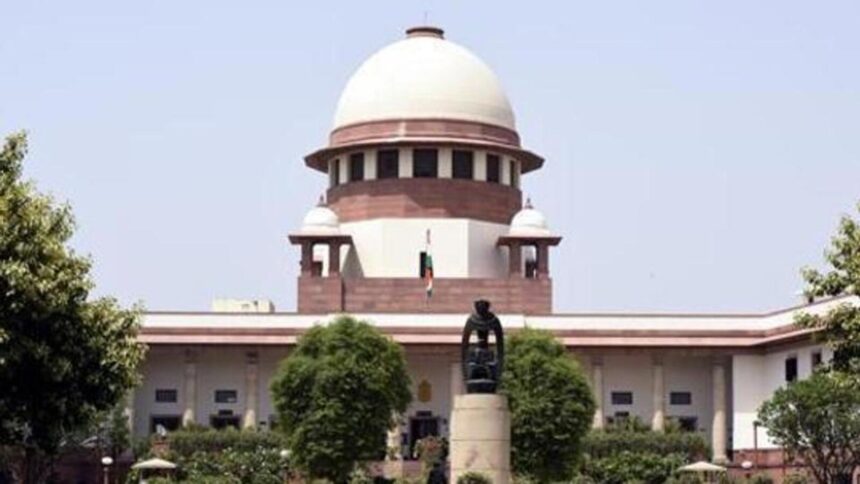
The Supreme Court has ruled that any money received and retained without legal authority, including by the government, must carry the right to interest for the rightful owner. The landmark judgment was passed in a case involving the Delhi government, where the court directed it to pay ₹4.35 lakh in interest on a refund of ₹28.1 lakh to a couple who had lost an e-stamp paper purchased for a property transaction in 2016.
A bench comprising justices JB Pardiwala and R Mahadevan made it clear that even in the absence of a statutory provision, the government cannot escape its obligation to reimburse individuals with accrued interest for the period of undue retention. The ruling, delivered on February 18 and released this month, could set a precedent for similar cases involving delayed refunds by government agencies, particularly in matters of taxation and financial disputes.
The case was brought to the Supreme Court by Poornima Advani, a former chairperson of the National Commission for Women, and her husband Shailesh K Hathi. In July 2016, the couple purchased an e-stamp paper worth ₹28.1 lakh for a property transaction in Delhi. However, due to delays in finalizing their home loan, the execution of the sale deed was postponed. In August 2016, their broker informed them that the crucial stamp paper had been misplaced, leading to the couple seeking a refund.
Despite repeated requests, the refund process was significantly delayed. The couple eventually approached the Supreme Court, seeking justice against the undue retention of their money. The court, in its ruling, emphasized that the revenue department of the government could not dismiss its responsibility merely because there was no explicit statutory provision mandating interest payments on such refunds. The judgment reinforced the legal principle that restitution must include fair compensation for the time during which the rightful owner was deprived of their money.
Legal experts have hailed this decision as a milestone, stating that it could have broader implications beyond taxation cases. Advocate Abhishek Gupta remarked that the Supreme Court’s application of the doctrine of restitution to award interest, even in the absence of statutory backing, would serve as a guiding principle for future cases involving financial disputes between private individuals and government entities.
The court has directed the Delhi government to pay the interest amount within two months, reinforcing the notion that the state must be held accountable for financial delays that impact individuals. This ruling serves as a reminder that government departments cannot withhold funds without consequences and must ensure timely reimbursements to citizens.