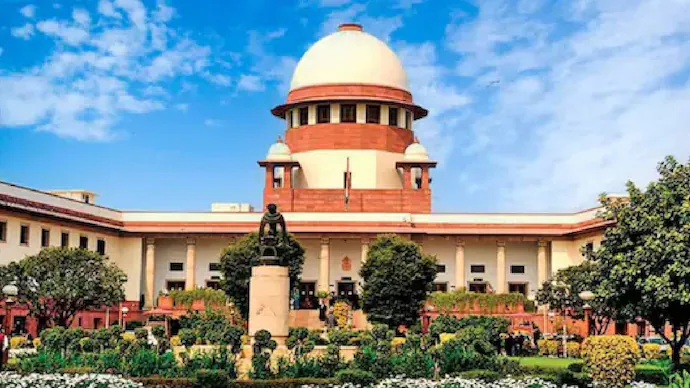
The Supreme Court of India on Thursday delivered sharp observations on what it described as the growing culture of indiscriminate freebies across states, remarking that such policies require urgent reconsideration in light of their long-term economic consequences. The court’s comments came while hearing a plea linked to a proposal by the Tamil Nadu Power Distribution Corporation Ltd seeking to provide free electricity to all consumers irrespective of their financial standing.
A bench comprising Chief Justice Surya Kant and Justices Joymalya Bagchi and Vipul M Pancholi observed that while targeted welfare measures for the poor are understandable and often necessary, blanket subsidies extended without economic differentiation place an excessive burden on already strained state finances. The court noted that many states are revenue deficit entities and yet continue to expand free distribution schemes without adequately addressing employment creation or infrastructure development.
Fiscal Discipline Versus Populist Policies
During the proceedings, the bench underlined the delicate balance between social welfare obligations and fiscal prudence. It acknowledged that governments have a constitutional responsibility to protect vulnerable sections of society and ensure access to essential services. However, the court emphasised that policies extending universal benefits without assessing financial sustainability may hamper broader economic growth.
The plea under consideration proposed free electricity supply to all consumers, regardless of their income level. The bench remarked that “hand-holding the poor” through subsidies or direct support is understandable in a welfare state. However, extending such benefits to financially capable sections raises questions about policy intent and long-term viability. The judges pointed out that states must evaluate whether such measures create structural economic imbalances that future administrations and taxpayers will have to shoulder.
The court observed that indiscriminate freebies could divert crucial resources away from capital expenditure, industrial expansion, education, and job creation initiatives. It suggested that instead of allocating funds to universal subsidies, governments should consider investing in avenues that generate employment and improve productivity. Employment generation, the bench noted, provides sustainable empowerment, whereas unconditional subsidies risk fostering dependency.
The judges further remarked that revenue deficit states must exercise greater caution before announcing financially expansive schemes. They indicated that public funds must be utilised in ways that strengthen economic foundations rather than weaken fiscal stability. The court’s intervention signals an emerging judicial scrutiny over populist measures that have increasingly become central to electoral politics across various states.
The observations also reflect broader national debates on the economic impact of competitive populism, where political parties promise free utilities, transport, or cash transfers as part of campaign strategies. While such promises often aim to address immediate public needs, critics argue that long-term fiscal stress may undermine development priorities.
The bench stopped short of issuing immediate prohibitory directions but made it clear that revisiting the broader policy framework surrounding freebies is necessary. The remarks may influence ongoing discussions on how welfare schemes are structured and implemented across the country.
Employment as Sustainable Welfare
In its oral observations, the court stressed that employment creation should form the cornerstone of state policy. According to the bench, creating economic opportunities ensures dignity, self-reliance, and long-term financial stability for citizens. In contrast, unchecked distribution of subsidies without revenue backing may weaken state capacity to invest in productive sectors.
The judges indicated that states must strike a careful equilibrium between social justice objectives and fiscal accountability. Welfare schemes targeted at economically weaker sections, they clarified, remain within the legitimate domain of governance. However, policies that extend benefits to all without differentiation may dilute the principle of equitable resource allocation.
The court also drew attention to the cumulative fiscal strain caused by expanding subsidy regimes. When multiple states simultaneously announce universal free services, the aggregate effect may disrupt national economic planning and credit ratings. Fiscal stress at the state level can translate into reduced public investment, delayed infrastructure projects, and mounting debt obligations.
Legal experts interpret the court’s remarks as part of a continuing judicial conversation on economic governance. While courts traditionally refrain from interfering directly in policy formulation, they have increasingly commented on macroeconomic issues when constitutional principles of equality, accountability, and responsible governance are implicated.
The bench emphasised that public discourse must shift toward employment-centric development. By investing in industrial corridors, skill development programmes, and small enterprise support, states can generate income streams that reduce dependency on subsidies. Such an approach, the judges implied, aligns more closely with sustainable economic principles.
The court’s intervention may also prompt governments to conduct more rigorous impact assessments before rolling out universal benefit schemes. Economists often argue that well-targeted welfare programmes can coexist with fiscal discipline, but universalised subsidies without revenue safeguards risk deepening deficits.
The matter remains under judicial consideration, and further hearings are expected to explore the constitutional and economic dimensions more extensively. The court’s remarks, however, have already reignited debate over the balance between welfare politics and economic sustainability in India’s federal framework.