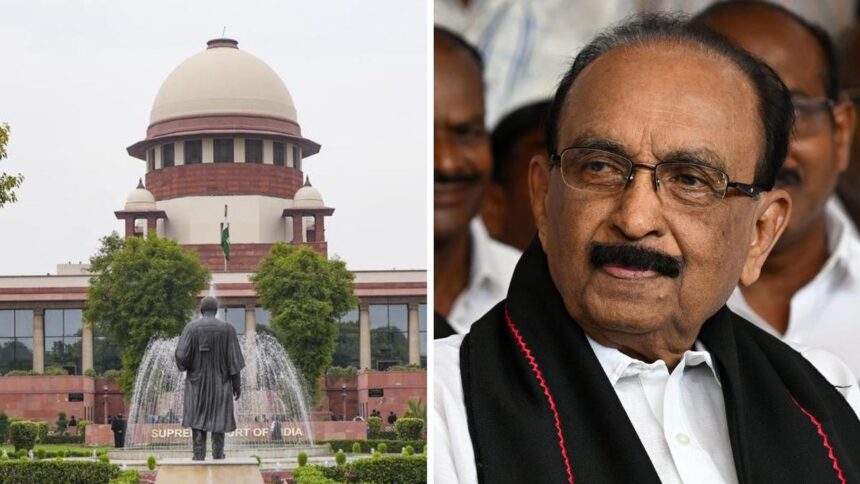
The Supreme Court of India is currently examining a series of petitions filed by the states of Tamil Nadu, West Bengal, and Kerala challenging the ongoing Special Summary Revision (SIR) of voter lists. The process, intended to update and verify electoral rolls across multiple states, has become highly contentious, with political parties and state governments raising concerns about the potential violation of citizens’ fundamental rights and the creation of a climate of fear among voters. During a recent hearing, the Election Commission (EC) accused political parties of deliberately attempting to instill panic regarding the SIR process. Chief Justice of India Surya Kant, presiding over the bench with Justice Joymalya Bagchi, emphasized the seriousness of the issue, directing the central and state election authorities to respond comprehensively to Kerala’s petition by December 1, with subsequent hearings scheduled for Tamil Nadu and West Bengal in early December. The matter underscores the intricate balance between administrative electoral processes, political sensitivities, and the protection of democratic rights during a nationwide revision of voter lists.
Judicial Proceedings and State-Level Concerns
The Supreme Court’s current hearings revolve around multiple petitions questioning the legality and execution of the SIR. Kerala, Tamil Nadu, and West Bengal have approached the apex court seeking a temporary halt to the process, citing concerns over administrative errors, exclusion of eligible voters, and potential infringement of fundamental rights. During the hearing, the EC contended that political parties were deliberately exaggerating fears about the process, suggesting that such claims were not grounded in reality but intended to create political leverage. In Kerala, the high court had refrained from ruling on a similar petition, citing ongoing cases in the Supreme Court from other states and emphasizing judicial discipline. Justice V.G. Arun’s bench had noted that interventions in Kerala’s petition could compromise the coordinated national implementation of SIR, as over half the process was already complete, making a mid-course halt disruptive to election preparedness.
The Supreme Court bench led by CJI Surya Kant has requested detailed replies from central and state election authorities, highlighting the necessity for procedural clarity, transparency, and adherence to constitutional safeguards. The Kerala government’s petition is set to be addressed on December 1, while Tamil Nadu’s petitions, including those filed by prominent leaders such as Vaiko of MDMK, DMK, CPI(M), and actor Vijay’s political outfit TVK, along with other MPs and MLAs, will be heard on December 4. West Bengal’s petition will be examined on December 9, coinciding with the release of the state’s draft voter list. The Chief Justice indicated that if compelling grounds were presented by the state governments, the court might consider extending deadlines for voter verification, ensuring that no eligible citizen is excluded from the electoral process.
The legal arguments presented focus on the potential impact of SIR on citizens’ fundamental rights. Vaiko, MDMK party chief, asserted that the revision process violates established constitutional provisions by potentially disenfranchising voters and imposing undue administrative burdens. In Tamil Nadu, multiple political entities have voiced opposition to SIR, while AIADMK has chosen to support the process, demonstrating the polarized political response across different parties and states. In West Bengal, Chief Minister Mamata Banerjee has actively mobilized public opinion, taking out a rally in Bongaon to protest the revision process, asserting that the Election Commission has lost its impartiality and alleging that it has become politically aligned with the ruling party at the center.
Implementation, Public Response, and Administrative Challenges
The SIR process, initiated on November 4, involves door-to-door verification and updating of voter lists by Booth Level Officers (BLOs) across twelve states and union territories. This includes adding new voters, correcting discrepancies, and removing duplicates. The process is extensive, covering approximately 51 crore voters, with over 5.33 lakh BLOs and more than 7 lakh Booth Level Agents (BLAs) participating. The verification involves multiple steps, including the submission of forms, document validation, and resolving instances of missing or duplicate entries. States such as Andaman and Nicobar, Chhattisgarh, Goa, Gujarat, Kerala, Lakshadweep, Madhya Pradesh, Puducherry, Rajasthan, Tamil Nadu, Uttar Pradesh, and West Bengal are actively engaged in this exercise, which is scheduled to continue until February 7.
In West Bengal, public reaction has been a mix of concern and compliance. Citizens have expressed fear that inaccuracies in the voter list could affect access to government welfare schemes. Many residents in rural areas have actively sought assistance from educated youth and local volunteers to ensure that their names are correctly listed. Welfare programs such as Bangla Awas, Krishak Bandhu, Swasthya Sathi, Sabuj Sathi, Lakshmi Bhandar, Karmashree, Shramashree, and Jai Bangla are tied to the voter list, making accurate registration critical for continued benefit access. Reports also indicate misinformation and anxiety regarding alleged deportations or exclusions linked to the revision process, further complicating public perception.
In West Bengal, the Election Commission reported that over ten lakh voter forms were found invalid due to reasons such as duplication, non-availability of voters, death, or relocation. To address political concerns, a delegation of ten TMC MPs was scheduled to meet the EC on November 28, though the Commission initially called only five members, demonstrating ongoing negotiations between state authorities and the national electoral body. The Chief Electoral Officer of Bengal, Manoj Kumar Agarwal, highlighted the procedural challenges involved in updating the lists and maintaining accuracy amidst large-scale administrative operations.
The administrative machinery for SIR involves meticulous planning, including pre-training of BLOs from October 28 to November 3, ensuring that officers can efficiently verify voter information and assist citizens in compliance. The process relies on thorough door-to-door verification, submission of necessary documentation, and resolving disputes regarding duplicate or missing entries. The scale of operations underscores the complexity of maintaining electoral integrity in a country with diverse populations, high mobility, and political sensitivities.
The SIR initiative also emphasizes the role of technology in streamlining voter verification. Digital tools, databases, and verification software are employed to cross-check entries, validate identification documents such as Aadhaar and voter cards, and generate updated lists for state and national elections. These measures aim to reduce administrative errors, prevent fraudulent entries, and enhance transparency in the electoral process. However, challenges remain, including public apprehension, political interventions, and the logistical difficulties of implementing door-to-door verification across vast and varied terrains.
Public awareness campaigns have been launched to educate citizens about the importance of voter verification and the steps involved in SIR. These campaigns aim to address misinformation, assuage fears regarding potential disenfranchisement, and emphasize the importance of accurate voter registration for participation in democratic processes. Engagement with local communities, educational institutions, and civil society organizations has been crucial in ensuring that citizens are informed and can navigate the verification process efficiently.
The petitions filed by Tamil Nadu, West Bengal, and Kerala highlight broader constitutional debates around electoral rights, administrative authority, and the balance between state and central responsibilities. The Supreme Court’s intervention serves as a critical mechanism to adjudicate these disputes, ensuring that administrative actions comply with legal standards and protect the rights of citizens. The involvement of multiple high-profile political leaders, parties, and state governments underscores the contentious nature of SIR and its implications for electoral politics across the country.
The ongoing SIR process also raises questions about the broader electoral ecosystem, including voter awareness, civic participation, and the equitable delivery of public services. Ensuring accurate and inclusive voter lists is not only a legal requirement but also central to the functioning of a vibrant democracy. The Supreme Court’s scrutiny of the process, combined with administrative oversight by the Election Commission, reflects the need to balance efficiency, inclusivity, and constitutional protections during large-scale electoral exercises.
By addressing the petitions and monitoring the implementation of SIR, the judiciary aims to create a framework that safeguards the rights of citizens while allowing necessary administrative procedures to continue. The hearings scheduled in early December for Kerala, Tamil Nadu, and West Bengal will provide further clarity on the court’s stance, potential modifications to the process, and safeguards to protect vulnerable populations, particularly in politically sensitive regions.
The intersection of legal oversight, political activism, and administrative execution highlights the complexity of implementing nationwide electoral revisions. Ensuring transparency, protecting fundamental rights, and maintaining public confidence are central challenges for the Election Commission as it navigates objections, political resistance, and logistical hurdles in executing SIR. These hearings demonstrate the ongoing dialogue between judicial authority and administrative machinery, underscoring the dynamic interplay required to uphold electoral integrity in India.
The Supreme Court’s active engagement in SIR-related petitions, combined with extensive public and political scrutiny, illustrates the delicate balance between legal mandates, electoral administration, and citizen participation. As the process unfolds, stakeholders—including state governments, political parties, civil society, and the Election Commission—must work collaboratively to ensure that the SIR achieves its intended objectives without compromising constitutional guarantees or public trust.
The SIR controversy in Tamil Nadu, West Bengal, and Kerala exemplifies the challenges inherent in executing large-scale electoral revisions in a diverse, populous democracy. The Supreme Court’s role as an adjudicator, combined with administrative diligence by the Election Commission and active civic engagement, is central to resolving disputes, safeguarding electoral rights, and ensuring the credibility of voter registration processes ahead of upcoming elections.