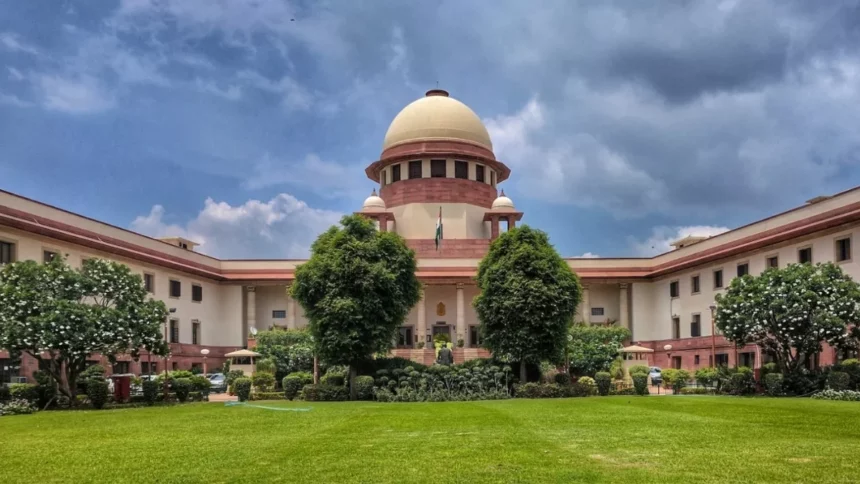
The Supreme Court of India on Thursday expressed strong disapproval of the “scurrilous and unfounded allegations” made in a petition challenging the conferment of senior designations to certain lawyers. The case, which was heard by Justices B R Gavai and K V Viswanathan, involved a plea filed by advocate Mathews J Nedumpara and other petitioners, including several practicing lawyers. The petition raised concerns over the designation of senior advocates, alleging that the process was biased and unjust.
During the hearing, the bench pointed out that the petition contained insinuations against judges, which it deemed inappropriate. The bench specifically referred to a statement in the plea, which suggested that it was nearly impossible to find a judge, sitting or retired, whose family members, such as children or siblings over the age of 40, were still practicing as ordinary lawyers. The petitioners, led by Mr. Nedumpara, claimed that this classification of lawyers into two categories—senior advocates and others—violated the principle of equality under the Constitution and was detrimental to the legal profession.
At one point, the bench asked advocate Nedumpara, “How many judges can you name whose offsprings have been designated as senior counsel?” The court emphasized that it would not tolerate scurrilous remarks that undermined the institution’s integrity. Justice Gavai sharply told Mr. Nedumpara, “This is a court of law, not a boat club or Azad Maidan in Bombay to make speeches. When you address a court of law, make legal arguments, not arguments for the gallery.”
The petitioners had questioned the fairness of the senior designation process, especially the recent conferment of senior status to about 70 lawyers by the Delhi High Court. The petition argued that such classifications of lawyers created two distinct groups and offered undue privileges to a select few, which went against the ethos of equality laid out in the Constitution.
In response, the bench offered Nedumpara the opportunity to amend the petition to remove the objectionable statements. The bench warned that failure to amend the petition might lead to further actions. “If you do not amend the petition, we may take such steps as we find necessary,” the court stated. It also asked whether the petitioners intended to continue with the scurrilous averments or not, giving them four weeks to reconsider their position.
Despite the strong tone of the bench, the court said it was willing to grant Nedumpara the liberty to amend the petition and consult with the other petitioners before proceeding further. The petitioners had challenged specific provisions of the Advocates Act, namely Sections 16 and 23(5), arguing that they resulted in inequities by creating two categories of lawyers: senior advocates and other advocates.
The petitioners further contended that this categorization had led to a catastrophe in the legal profession, creating a significant divide between lawyers and fostering an environment of privilege for a select group. They requested that the court quash the Delhi High Court’s recent conferment of senior designations.
The case is significant as it raises important questions about the fairness of the process of granting senior designations to lawyers and its impact on the broader legal community. The Supreme Court’s response, coupled with its firm stance on maintaining the dignity of the judiciary, highlights the importance of respect and professionalism in legal proceedings.
The petitioners have been given four weeks to amend their petition, and it remains to be seen how they will proceed with their case in light of the court’s stern remarks.