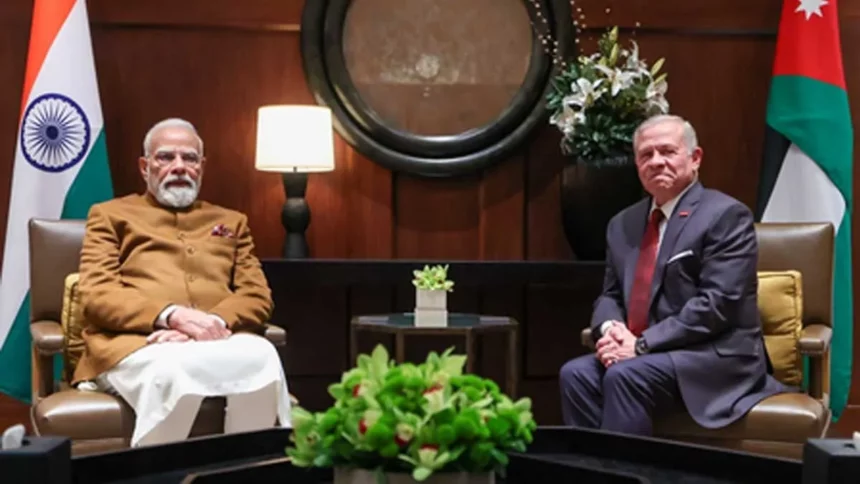
Prime Minister Narendra Modi’s landmark two-day visit to Jordan marked a defining moment in the 75-year diplomatic relationship between India and the Hashemite Kingdom, reflecting renewed political trust, expanding strategic cooperation, and a shared vision for regional stability and global engagement. The visit stood out not only for its substantive outcomes but also for its warmth and symbolism, highlighting how personal diplomacy and institutional collaboration together are reshaping the trajectory of India–Jordan relations.
Historic engagements and expanding cooperation across sectors
Prime Minister Modi’s visit to Jordan unfolded against the backdrop of long-standing ties rooted in mutual respect, cultural affinity, and consistent diplomatic engagement. Over the decades, India and Jordan have maintained cordial relations, but the visit signaled a clear intent from both sides to elevate this partnership to a more comprehensive and future-oriented level. High-level discussions with King Abdullah II and Crown Prince Al-Hussein bin Abdullah II focused on reinforcing cooperation across a wide spectrum of sectors that are central to contemporary governance and development.
The leaders explored opportunities to deepen collaboration in renewable energy, an area of growing importance for both nations. Jordan’s experience in solar and wind energy, combined with India’s large-scale renewable ambitions and technological capabilities, presents a natural synergy. Water management also emerged as a priority, particularly given Jordan’s status as one of the most water-scarce countries in the world. India’s expertise in water conservation, desalination technologies, and sustainable irrigation methods was seen as a potential area for meaningful cooperation.
Digital technology and innovation featured prominently in the discussions, reflecting India’s growing role as a global digital powerhouse. From digital public infrastructure to e-governance and fintech solutions, India’s experience offers valuable lessons for Jordan as it pursues modernization and inclusive growth. Cultural exchanges and heritage conservation were also highlighted, underscoring the importance both countries place on preserving historical identity while embracing modern development.
Throughout the visit, Prime Minister Modi emphasized that the engagements were immensely productive and forward-looking. The leaders reaffirmed their shared commitment to nurturing a relationship that has endured for three-quarters of a century, built on trust, goodwill, and mutual respect. This reaffirmation was not merely rhetorical but was reflected in the breadth and depth of discussions that addressed both immediate priorities and long-term strategic goals.
Regional and global issues formed an integral part of the dialogue. Cooperation in counter-terrorism and security was discussed in the context of shared concerns about extremism and instability. Both sides recognized that peace and stability in West Asia are closely linked to global energy security, economic growth, and international cooperation. The conversations highlighted a growing strategic convergence, with India and Jordan positioning themselves as responsible stakeholders committed to dialogue, moderation, and multilateral engagement.
Economic ties were another important dimension of the visit. While specific agreements were not the centerpiece of the discussions, there was a clear emphasis on expanding trade and investment. The vision to significantly increase bilateral trade over the coming years reflects confidence in the complementary strengths of the two economies. Opportunities in infrastructure development, technology transfer, pharmaceuticals, and industrial cooperation were seen as avenues to translate political goodwill into tangible economic benefits for citizens in both countries.
A particularly striking aspect of the visit was the personal involvement of Crown Prince Al-Hussein in several key moments. His decision to personally drive Prime Minister Modi to the Jordan Museum offered a glimpse into Jordan’s rich cultural heritage and underscored the importance of cultural diplomacy. Such gestures reinforced the idea that bilateral relations are not confined to formal agreements but are also shaped by personal rapport and shared appreciation of history and culture.
Symbolic hospitality and personal diplomacy elevate relations
Beyond policy discussions and strategic dialogue, the visit was marked by exceptional warmth and symbolism that elevated its diplomatic significance. One of the most memorable moments came when Crown Prince Al-Hussein bin Abdullah II personally accompanied Prime Minister Modi to the airport and bid him farewell. This rare gesture was widely viewed as a powerful expression of respect and friendship, reflecting the depth of trust and goodwill between the leadership of the two nations.
Prime Minister Modi publicly expressed his gratitude for the Crown Prince’s hospitality, describing it as a reflection of the strong personal rapport and mutual appreciation that now characterize India–Jordan relations. Such moments of personal diplomacy resonated strongly, sending a clear message about the closeness of ties and the sincerity of both sides in strengthening their partnership.
The Crown Prince’s engagement in cultural interactions during the visit further enriched its tone. By guiding the Indian Prime Minister through aspects of Jordan’s heritage, he helped create a narrative of people-to-people connection that transcended official protocol. These interactions highlighted how culture, history, and shared values can serve as powerful bridges in international relations.
The overall atmosphere of the visit reflected a blend of historic respect and forward-looking ambition. Leaders from both countries spoke about the importance of aligning their partnership with global priorities such as sustainable development, technological innovation, and peacebuilding. Jordan’s strategic role in West Asia and India’s expanding global footprint were seen as complementary, offering opportunities for collaboration on regional and international platforms.
The visit also underscored the evolving nature of diplomacy in a rapidly changing world. While formal agreements and strategic frameworks remain important, personal engagement and symbolic gestures play an increasingly vital role in building trust and shaping public perception. In this context, the warmth displayed during Prime Minister Modi’s visit to Jordan added a distinctive and lasting dimension to bilateral relations.
As India and Jordan look ahead, the visit stands as a reminder of what can be achieved when shared interests are matched by mutual respect and genuine engagement. The renewed momentum generated by these interactions is expected to guide future cooperation, deepen understanding, and strengthen the foundations of a partnership that continues to evolve with changing global realities.