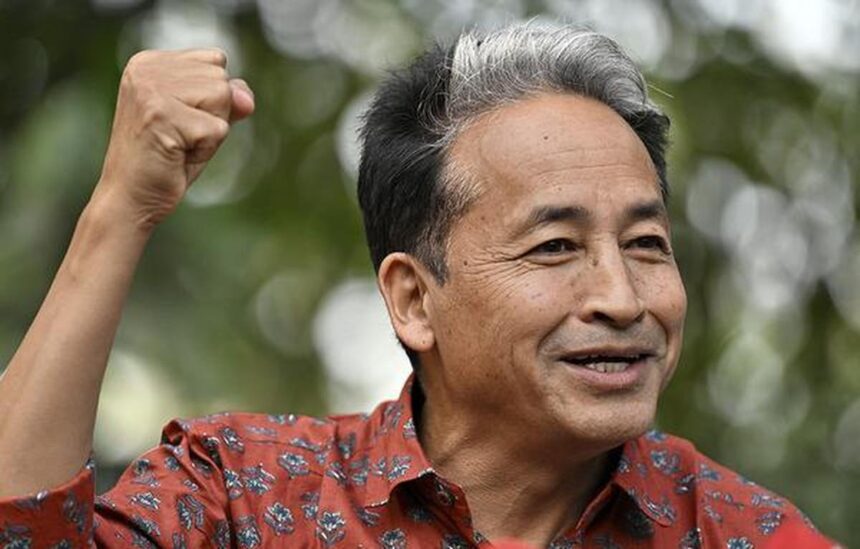
Sonam Wangchuk returned to Leh after nearly six months of detention, marking an emotional and politically significant moment for Ladakh. The renowned social worker and engineer reached his home region after around 170 days, following the Centre’s decision to lift the National Security Act imposed on him earlier. His return was met with a massive public reception, with hundreds of supporters gathering to welcome him with flowers and traditional white scarves. Addressing the crowd, Wangchuk struck a conciliatory tone, saying he holds “no bitterness” and wants to move forward through dialogue. His words reflected a shift toward reconciliation and constructive engagement, even after months of detention and a period marked by political tension and protests in Ladakh. He described his return as “special” and expressed joy at being back among his people and the mountains he deeply connects with.
Detention, Release and Government’s Stand
Wangchuk’s detention dates back to September 2025, when he was arrested amid protests demanding full statehood for Ladakh. The demonstrations had turned violent, leading to casualties and injuries, after which authorities invoked the National Security Act against him. Under this law, individuals can be detained without formal charges for extended periods if they are considered a threat to public order or national security. Wangchuk was subsequently moved to Jodhpur jail, where he remained in custody for nearly half a year.
The Centre lifted the NSA on March 14, just days before a scheduled Supreme Court hearing related to his detention. Officials stated that the decision was taken to create an atmosphere conducive to peace and dialogue in the region. The government also highlighted that prolonged protests and strikes were affecting students, employment, tourism, and the local economy in Ladakh. By releasing Wangchuk, authorities signaled a willingness to de-escalate tensions and engage with stakeholders. The move was also seen as part of broader efforts to address regional concerns through institutional mechanisms, including a high-powered committee tasked with facilitating discussions between the government and local representatives.
A Message of Reconciliation and Future Dialogue
Upon his return, Wangchuk emphasized the importance of dialogue over confrontation. He acknowledged that mistakes had been made from a justice perspective but chose not to dwell on grievances. Instead, he called for a forward-looking approach, stating that a “new sun will rise” for the cause they are working towards. His remarks suggest a strategic shift toward peaceful advocacy and constructive engagement with authorities.
Wangchuk also reflected on his time in detention, describing it as a period of self-reflection despite the challenges it posed. He noted the difficulties faced by his family, particularly his wife, who managed legal proceedings during his incarceration. His statement underscored resilience and a continued commitment to Ladakh’s future. Even before his release, Wangchuk had reiterated through social media that his activism remained unchanged and that his goal was to secure a just and sustainable future for the region. His latest remarks reinforce that stance while signaling openness to dialogue as the primary path forward.
Ladakh’s Demands and the Road Ahead
The protests that led to Wangchuk’s detention were rooted in long-standing demands for full statehood for Ladakh, along with safeguards for the region’s environment, culture, and employment opportunities. These issues have remained central to the political discourse in Ladakh since its reorganization as a Union Territory. Local groups such as the Leh Apex Body and the Kargil Democratic Alliance have consistently raised these concerns and participated in discussions with the government.
A high-powered committee formed by the Centre has been engaging with these groups to find a way forward. Meetings have focused on addressing key demands, including constitutional safeguards and economic development. Wangchuk’s release is expected to strengthen these discussions, as he remains one of the most influential voices advocating for Ladakh’s interests. His emphasis on dialogue aligns with the government’s stated objective of resolving issues through consultation and consensus.
Beyond politics, Wangchuk’s contributions to education and sustainable development continue to shape his public image. Born in Ladakh and educated in Srinagar and Delhi, he co-founded the Students Educational and Cultural Movement of Ladakh (SECMOL) in 1988 to reform the region’s education system. Through initiatives like “Operation New Hope,” he has worked on improving government schools, developing localized curricula, and training teachers. His work has had a lasting impact on education in Ladakh, making him a respected figure not just as an activist but also as an innovator.
His return, therefore, is not only a political development but also a social moment for Ladakh. It brings renewed attention to the region’s aspirations and the need for balanced development that respects its unique identity. As discussions continue, the focus will be on whether dialogue can translate into concrete outcomes that address the concerns of Ladakh’s people.
Wangchuk’s message of hope and reconciliation sets the tone for the next phase of engagement between the government and the region. While challenges remain, his emphasis on moving forward without bitterness reflects a broader desire for stability and progress. The coming months will be crucial in determining whether this moment leads to meaningful change or becomes another chapter in Ladakh’s ongoing struggle for recognition and rights.