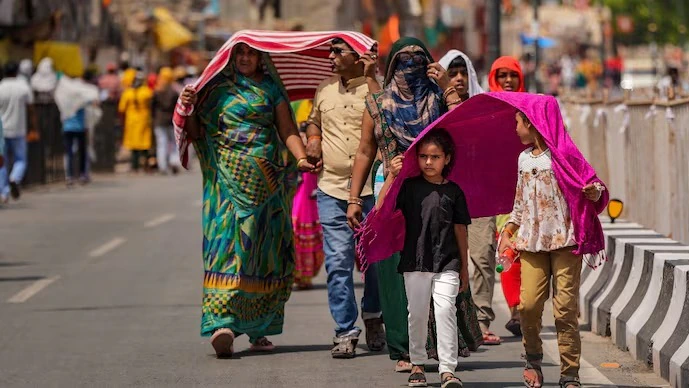
A severe heatwave is set to grip large parts of India this week, with the India Meteorological Department (IMD) issuing alerts for several states, including Delhi, Rajasthan, Gujarat, Punjab, and Uttar Pradesh. As temperatures soar above seasonal averages, people are being urged to take precautions such as avoiding prolonged sun exposure, staying hydrated, and limiting outdoor activities during peak hours.
On Sunday, Delhi recorded a maximum temperature of 38.2°C, which is nearly three degrees above the normal for this time of year. The IMD has placed a yellow alert for the national capital for Monday and Tuesday, warning of increased risks of heat-related illnesses, especially for individuals exposed to the sun for long durations or engaged in heavy physical labor.
Widespread Heatwave Forecast Across States
The IMD forecast indicates that heatwave to severe heatwave conditions will persist throughout the week across northwest India. On Monday, parts of Gujarat’s Saurashtra and Kutch regions and west Rajasthan are expected to be the worst affected. Additionally, isolated areas in east Rajasthan, Himachal Pradesh, Punjab, Haryana-Chandigarh-Delhi, and west Uttar Pradesh are also likely to experience heatwave conditions. Coastal regions such as parts of Gujarat, Konkan, and Goa will face hot and humid weather.
For Tuesday, severe heatwave conditions may continue in some parts of Rajasthan, while isolated regions in Gujarat, Punjab, Haryana, Delhi, west Uttar Pradesh, and Madhya Pradesh are expected to remain under heatwave influence. Similar patterns are projected for Wednesday and Thursday, with eastern Rajasthan, Gujarat, and parts of central and north India continuing to sizzle under the scorching sun.
Red Alert Issued for West Rajasthan
In response to the severity of the situation, a red alert has been issued for parts of west Rajasthan on Monday, signaling a high likelihood of heat-related illnesses or even heatstroke. The warning particularly emphasizes the vulnerability of elderly individuals, children, and those with pre-existing health conditions.
IMD officials have urged residents in affected regions to take necessary precautions, such as avoiding outdoor physical activities during the hottest part of the day, wearing light clothing, and drinking water frequently—even in the absence of thirst—to prevent dehydration.
As the heatwave continues its march across the region, health officials and local authorities are preparing to mitigate the impact on public health and ensure adequate awareness to minimize risks.