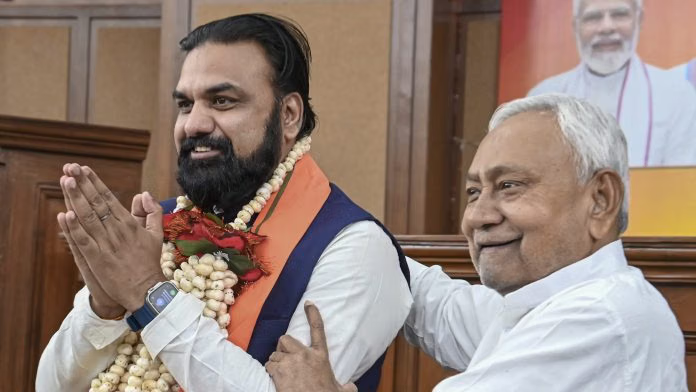
A major political transformation unfolded in Bihar as Samrat Choudhary was sworn in as the new Chief Minister, replacing Nitish Kumar. The development signals the beginning of a new phase in the state’s politics, with the Bharatiya Janata Party taking direct control of the government for the first time in Bihar’s history.
End of Nitish Kumar Era
The swearing-in ceremony followed the resignation of Nitish Kumar, who had dominated Bihar politics for nearly two decades. His tenure, which began in 2005, shaped governance and political alignments in the state for years.
With his exit, Bihar witnesses a significant leadership transition, ending an era marked by coalition politics led by Janata Dal (United). Nitish Kumar has now moved away from the Chief Minister’s role, paving the way for a BJP-led administration.
First BJP Chief Minister in Bihar
Samrat Choudhary’s elevation is historic as he becomes the first leader from BJP to hold the Chief Minister’s post in Bihar. This milestone reflects the party’s growing political strength and strategic positioning within the state.
The oath-taking ceremony was held in Patna, where the Governor administered the oath of office and secrecy. Alongside the Chief Minister, key नेताओं also took oath as part of the new cabinet, indicating continuity within the alliance framework.
Political Strategy and Power Shift
The transition is seen as part of BJP’s broader strategy to strengthen its presence in state politics and move from a coalition partner to the leading force. The shift also reflects changing power dynamics within the National Democratic Alliance (NDA).
Political analysts view this move as an effort to consolidate voter support ahead of future elections, while also projecting strong leadership at both state and central levels.
Leadership Background and Rise
Samrat Choudhary’s political journey has seen multiple phases, including stints in different parties before joining BJP. He previously served as Deputy Chief Minister and held key organizational roles within the party, helping build its base in Bihar.
His rise to the मुख्यमंत्री पद is seen as the culmination of years of political experience and strategic positioning within the party structure.
Implications for Bihar Politics
The leadership change is expected to reshape Bihar’s political landscape. With BJP now at the helm, governance priorities, policy direction, and electoral strategies may undergo notable changes.
The development also signals a shift from personality-driven politics to a more party-centric approach in the state. However, the new government will face challenges such as maintaining alliance cohesion, delivering on development promises, and managing socio-political dynamics.
The coming months will be crucial in determining how effectively the new leadership navigates governance and public expectations. The transition marks not just a change in leadership but a broader reconfiguration of Bihar’s political narrative.