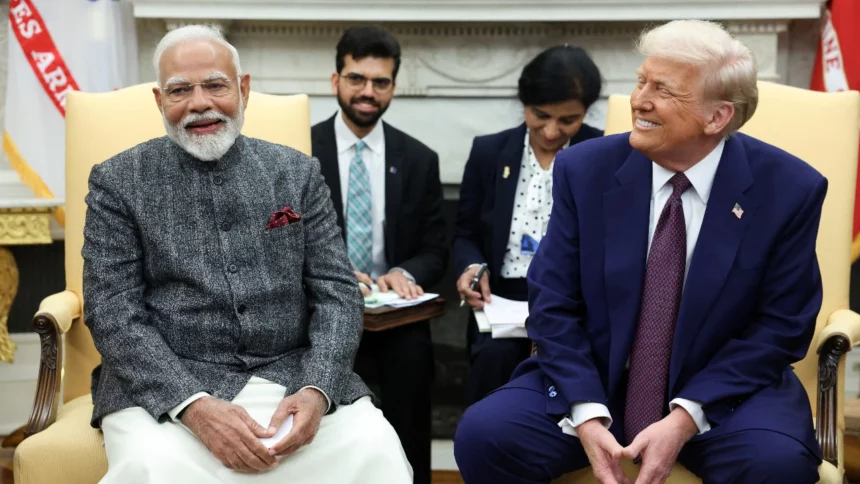
A crucial diplomatic engagement took place as Narendra Modi and Donald Trump spoke over a 40-minute phone call, addressing rising tensions in West Asia and the implications of the ongoing Iran crisis. The discussion comes at a time when the United States has imposed a naval blockade linked to the conflict, raising global concerns over energy supply routes and geopolitical stability. The conversation highlighted shared concerns over maintaining open and secure international waterways, especially the strategically vital Strait of Hormuz.
Focus on Strait of Hormuz Security
During the call, both leaders emphasized the importance of keeping the Strait of Hormuz open and secure for global trade and energy flows. This narrow passage is one of the world’s most critical maritime chokepoints, through which a significant portion of global oil supply passes.
The conversation gains importance as the US naval blockade targeting Iranian-linked shipping has disrupted normal traffic in the region. The move followed failed diplomatic negotiations and ongoing hostilities, which have already impacted oil shipments and increased volatility in global markets.
For India, the issue is particularly significant due to its heavy dependence on oil imports routed through this corridor. Any disruption directly affects fuel prices, inflation, and economic stability.
Bilateral Relations and Strategic Partnership
Apart from regional security, the two leaders also reviewed progress in India-US bilateral relations. Narendra Modi highlighted the advancement of cooperation across sectors and reaffirmed commitment to strengthening the Comprehensive Global Strategic Partnership.
The call reflects continued high-level engagement between the two nations, even amid global crises. It also signals alignment on key geopolitical issues, including maritime security and energy stability.
US Ambassador to India Sergio Gor described the conversation as “very positive and productive,” indicating ongoing diplomatic coordination between the two sides.
Background: Iran Conflict and Naval Blockade
The phone call comes shortly after the US announced a naval blockade targeting Iranian ports and vessels, following the collapse of peace talks. The blockade is part of a broader escalation in the ongoing Iran conflict, which began earlier in 2026.
Iran had previously restricted movement through the Strait of Hormuz, triggering concerns about global energy security. In response, the US initiated military operations aimed at ensuring navigation and countering Iranian actions.
The situation remains volatile, with risks of further escalation impacting not only regional stability but also global trade and oil prices.
Global Implications of the Crisis
The Strait of Hormuz crisis has emerged as a major global concern, affecting economies far beyond the Middle East. Nearly one-fifth of the world’s oil supply typically passes through this route, making it a critical artery for energy markets.
Disruptions caused by the conflict and blockade have already led to rising fuel prices and supply chain uncertainties. Countries like India, which rely heavily on imported energy, are particularly vulnerable to these shocks.
The discussion between the two leaders underscores the urgency of maintaining open sea lanes and preventing further escalation. It also reflects broader international efforts to stabilize the situation through diplomatic and strategic coordination.
The Modi–Trump call highlights the growing importance of Indo-US cooperation in managing global crises. As tensions continue in West Asia, maintaining secure trade routes and energy flows remains a top priority for major economies.
The coming weeks will be crucial in determining whether diplomatic efforts can ease tensions or whether the situation escalates further. The role of global powers in ensuring maritime security will remain central to the evolving geopolitical landscape.