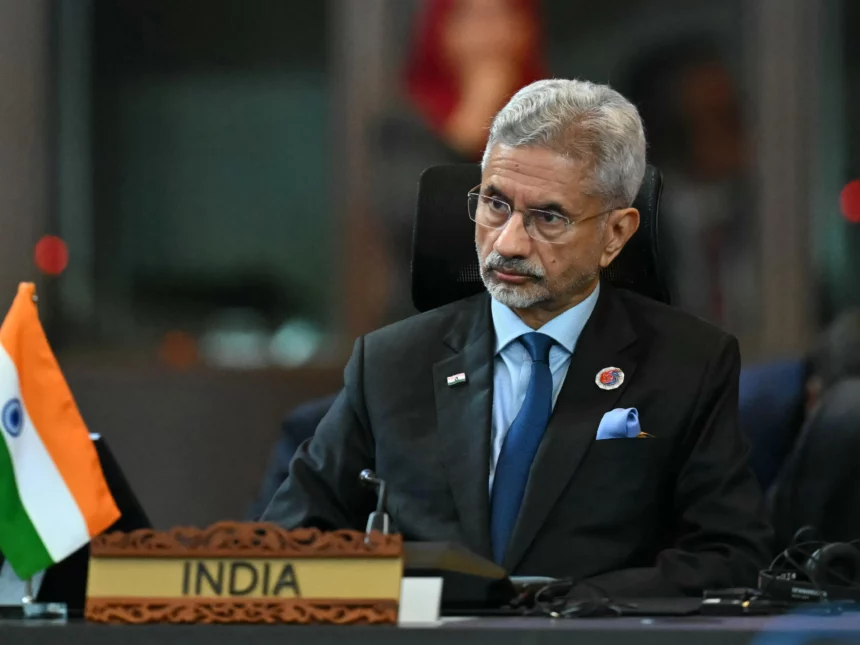
External Affairs Minister S. Jaishankar is set to travel to Sri Lanka on Tuesday as Prime Minister Narendra Modi’s special envoy, underscoring India’s sustained diplomatic and humanitarian engagement with the island nation in the aftermath of Cyclone Ditwah, which caused extensive damage to lives, infrastructure, and livelihoods across several regions.
The visit comes at a critical juncture when relief operations are transitioning into recovery and reconstruction efforts. India has already emerged as the first responder and one of the largest contributors of humanitarian assistance to Sri Lanka following the cyclone. S. Jaishankar’s meetings with the Sri Lankan leadership are expected to reinforce India’s commitment to stand by its neighbour during crises, while also strengthening long-term cooperation under New Delhi’s Neighbourhood First policy.
India’s humanitarian response and relief efforts after Cyclone Ditwah
India’s engagement with Sri Lanka following Cyclone Ditwah has been marked by the scale, speed, and coordination of its humanitarian response. Soon after the cyclone struck the island nation in late November, India responded to Sri Lanka’s appeal for assistance, mobilising relief supplies and personnel under Operation Sagar Bandhu. According to officials from the Ministry of External Affairs, India has so far dispatched more than 1,134 tonnes of humanitarian aid to the affected areas.
The relief material sent from India has included dry rations, tents, tarpaulins, hygiene kits, medical equipment, and other essential supplies needed by communities displaced or affected by flooding and infrastructure damage. These consignments were aimed at addressing immediate needs such as food security, shelter, sanitation, and medical care during the most acute phase of the crisis.
Indian naval assets played a central role in delivering this assistance. Ships such as INS Vikrant, INS Udaygiri, INS Sukanya, along with several Landing Craft Utility vessels, were deployed to transport relief material to key Sri Lankan ports including Colombo and Trincomalee. The use of naval platforms ensured that large quantities of aid could be delivered quickly, even as ports and transport networks on the island faced disruptions.
Alongside naval operations, the Indian Air Force and the Indian Army contributed significantly to on-ground relief and rescue efforts. Air Force aircraft were used to airlift supplies and personnel, while Army teams assisted Sri Lankan authorities with search, rescue, and medical support in cyclone-hit regions. One of the most visible symbols of India’s commitment was the deployment of an 85-member Indian Army field hospital in Mahiyanganaya.
The field hospital provided emergency medical services to more than 7,000 patients, offering treatment for injuries, infections, and other health issues that emerged in the wake of the disaster. This medical outreach not only addressed immediate health needs but also helped prevent the spread of disease in temporary shelters and flood-affected areas. Indian officials have described the operation as a demonstration of India’s capacity to deliver integrated humanitarian assistance that combines logistics, medical care, and manpower.
Sri Lankan leaders and citizens have publicly acknowledged and appreciated India’s swift and extensive support. Expressions of gratitude from Sri Lankan ministers and former officials highlighted the depth of bilateral ties and the trust between the two countries, particularly during times of emergency. These acknowledgements reinforced the perception of India as a reliable partner in the region, willing to act decisively when neighbours face humanitarian crises.
Diplomatic engagement, recovery planning, and the neighbourhood first framework
S. Jaishankar’s visit to Colombo is expected to build on the goodwill generated by India’s relief efforts and translate it into deeper diplomatic engagement. During his meetings with Sri Lanka’s top leadership, discussions are likely to focus on coordination of ongoing aid, assessment of remaining humanitarian needs, and planning for long-term recovery and reconstruction.
The talks are also expected to explore how India can continue supporting Sri Lanka beyond immediate disaster response. This may include cooperation in rebuilding damaged infrastructure, restoring livelihoods in affected regions, and strengthening disaster preparedness and resilience for the future. Indian officials have indicated that New Delhi views disaster assistance not as a one-time intervention, but as part of a broader partnership aimed at sustainable recovery.
The visit highlights the centrality of the Neighbourhood First policy in India’s foreign relations. By sending S. Jaishankar as a special envoy of Prime Minister Modi, New Delhi is signalling that Sri Lanka remains a key partner in India’s regional vision. The policy emphasises close political, economic, and security ties with neighbouring countries, as well as a readiness to provide support during crises.
Beyond humanitarian cooperation, S. Jaishankar’s engagements in Sri Lanka are also expected to touch upon broader bilateral issues. These may include economic cooperation, connectivity projects, and regional stability in the Indian Ocean. While the immediate focus remains on cyclone recovery, the visit provides an opportunity to reaffirm shared interests and align future initiatives.
Indian officials have stressed that the outreach to Sri Lanka is part of a consistent approach rather than a reaction limited to a single event. Over the years, India has extended assistance to Sri Lanka in various forms, including economic support, development projects, and emergency aid during natural disasters. The current engagement is being portrayed as a continuation of that long-standing relationship, adapted to the specific challenges posed by Cyclone Ditwah.
The diplomatic dimension of the visit also reflects India’s intent to remain actively involved in the region at a time when strategic competition in the Indian Ocean is intensifying. By combining humanitarian action with high-level political dialogue, New Delhi aims to reinforce its role as a first responder and trusted partner, capable of addressing both immediate needs and long-term development goals.
As Sri Lanka moves from relief to recovery, S. Jaishankar’s discussions are expected to help shape the next phase of bilateral cooperation. The visit underscores the idea that humanitarian assistance and diplomacy are closely linked, with effective disaster response strengthening political ties and mutual confidence. Through this engagement, India is seeking to demonstrate that its commitment to Sri Lanka extends beyond moments of crisis and into the shared pursuit of stability, resilience, and regional partnership.