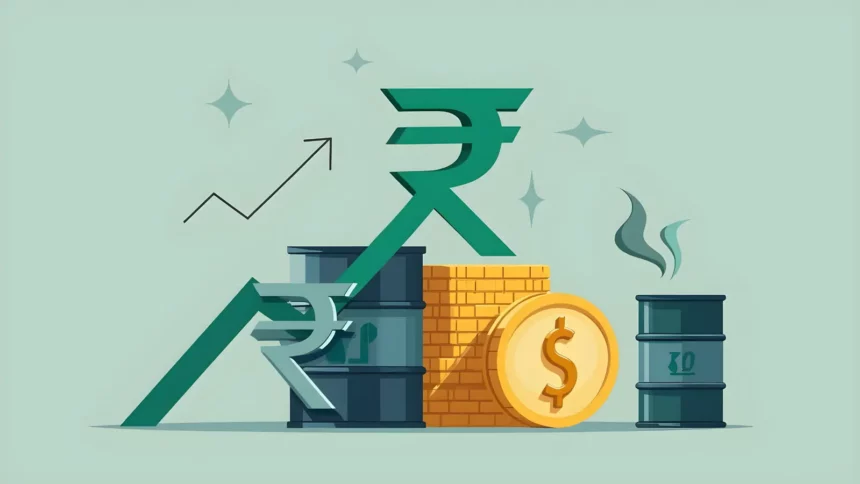
The Indian rupee surged by 65 paise to 86.13 against the US dollar in early trade on Tuesday, buoyed by a sharp fall in crude oil prices and optimism surrounding a possible ceasefire between Iran and Israel. The easing geopolitical tensions, a weak US dollar, and a rebound in domestic equity markets gave the rupee a significant boost after it had hit a five-month low just a day earlier.
Oil prices dip as ceasefire hopes grow
Crude oil prices fell sharply as investors reacted to statements from US President Donald Trump, who claimed that a ceasefire between Iran and Israel was imminent. Brent crude, the international benchmark, dropped 2.73% to USD 69.53 per barrel in futures trading. The decline in oil prices is a key positive for India, which imports the bulk of its crude requirements. Lower oil prices ease pressure on India’s import bill and help strengthen the rupee.
“The market factored in President Trump’s statement even though Iran has not yet confirmed the ceasefire,” said Anil Kumar Bhansali, Head of Treasury and Executive Director at Finrex Treasury Advisors LLP. “Oil slipping below USD 70 is a significant driver for the rupee’s gains,” he added.
Bhansali also pointed out that the USD-INR pair touched the 86.00 level early in the session and opened at 86.07 before settling at 86.13, reflecting a 65 paise gain from the previous day’s close. The rupee had earlier weakened by 23 paise to end Monday at 86.78 against the dollar—its lowest closing since January.
Market sentiment improves ahead of Powell’s testimony
Adding to the rupee’s strength was a softer greenback. The US dollar index, which tracks the dollar’s strength against six major currencies, slipped 0.29% to 98.13. Traders are now closely watching the upcoming testimony of Federal Reserve Chairman Jerome Powell to the US Senate and House of Representatives, scheduled for Tuesday and Wednesday. Market participants are anticipating Powell may hint at a possible interest rate cut, which would further weaken the dollar and support emerging market currencies like the rupee.
India’s domestic equity markets also staged a strong comeback, aiding investor sentiment. The BSE Sensex surged 930.7 points to close at 82,827.49, while the NSE Nifty climbed 278.95 points to settle at 25,250.85. The rally helped create a risk-on environment, further supporting the rupee.
However, foreign institutional investors (FIIs) remained net sellers, offloading equities worth Rs 1,874.38 crore on Monday, according to data from the exchanges. Despite this, the overall sentiment remained optimistic due to improving global cues.
Forex traders noted that while the rupee’s sharp rise is encouraging, further movement will depend on geopolitical developments and Powell’s commentary on US monetary policy. Any confirmation from Iran on the ceasefire or signals of rate cuts from the Fed could add further momentum to the rupee’s recovery.
The day’s developments have brought some relief to Indian markets, which were under pressure from high oil prices and global uncertainty. The rupee’s rebound, coupled with a strong stock market performance, suggests that investors are regaining confidence as geopolitical risks show signs of easing—at least for now.