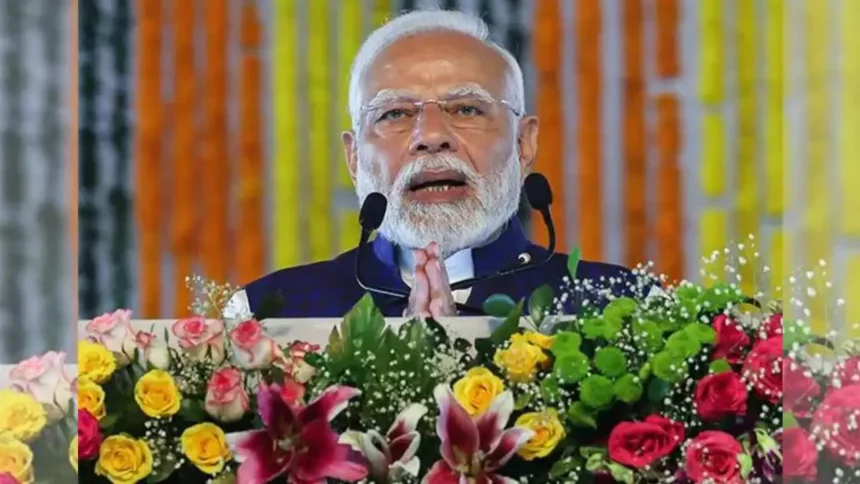
As India approaches the 50th anniversary of the Emergency, Prime Minister Narendra Modi has directed the compilation and preservation of all legal records related to the controversial period in Indian history. Chairing the 47th annual general meeting of the Prime Ministers’ Museum and Library (PMML) Society in New Delhi, PM Modi emphasized the importance of preserving these documents for future generations and researchers. The initiative comes amid a broader push to commemorate the Emergency period and enhance the role of museums in showcasing India’s democratic journey.
Focus on emergency records and national memory
The Prime Minister’s directive aligns with the government’s upcoming nationwide observance of June 25 — the day in 1975 when then-Prime Minister Indira Gandhi imposed Emergency, suspending civil liberties and stifling dissent. PM Modi called for a systematic and comprehensive collection of all legal battles, orders, and documentation related to that era, underscoring that historical accuracy and transparency are critical for national memory.
He stressed that archiving these materials will allow future scholars and citizens to study the period in depth, without distortion. The initiative is part of the government’s plan to mark the 50-year milestone through a series of exhibitions, including one at the Prime Ministers’ Museum and Library, featuring detailed displays chronicling the Emergency and its aftermath.
Revamping India’s museum ecosystem
During the PMML meeting, PM Modi also proposed a “museum map of India,” a digital framework to connect all museums across the country with a shared cultural and information network. The Prime Minister’s Office (PMO) later said in a statement that the goal is to create a unified national database capturing metrics such as visitor footfall and quality standards.
PM Modi further suggested that museums be equipped with modern technology to engage the public better and ensure their relevance. He proposed regular workshops for museum staff focusing on capacity building and knowledge exchange. Top influencers and foreign embassy officials, he said, should also be invited to visit India’s museums to amplify global awareness of India’s rich heritage.
In a symbolic gesture, PM Modi planted a kapur (cinnamomum camphora) tree on the lawns of Teen Murti House, where the meeting was held, reflecting the themes of growth, sustainability, and legacy. The museum, which now includes exhibits on all Prime Ministers, was cited by PM Modi as a major step in honoring all past leaders, including India’s first Prime Minister, Jawaharlal Nehru — a move he said had not been undertaken before 2014.
Preparations for nationwide Emergency anniversary events
To coincide with the Emergency’s 50th anniversary, the Centre has asked all states and Union Territories to hold commemorative events throughout the year under the theme of “Constitution Murder Day.” A symbolic Mashal Yatra (torch rally) will begin from Delhi on June 25 and culminate at Kartavya Path on March 21, 2026, with PM Modi expected to attend.
Adding to the official commemorations, the Dr. Syama Prasad Mookerjee Research Foundation (SPMRF), a BJP-affiliated think tank, has planned a high-profile, invite-only event at the PMML. The exhibition will feature a series of curated stands detailing the Emergency’s timeline, public resistance, and the formation of the first non-Congress government under Morarji Desai.
Several key ministers, including Defence Minister Rajnath Singh (vice-president of the PMML), Finance Minister Nirmala Sitharaman, and Union Ministers Gajendra Singh Shekhawat, Ashwini Vaishnaw, and Dharmendra Pradhan, participated in the meeting. Former Union Minister Smriti Irani and former principal secretary Nripendra Mishra were also in attendance, contributing their insights to the ongoing development of the museum and library’s mission.