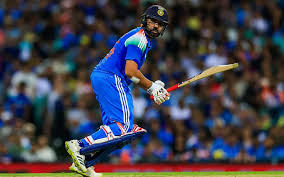
Former India captain Rohit Sharma has begun his on-field preparations in earnest ahead of the upcoming India–New Zealand One Day International series, training intensely in the nets and focusing on both batting and fielding as the countdown to the first match begins. With the three-match ODI series set to start on January 11, Rohit’s practice session has drawn attention not only because of his stature in Indian cricket, but also because of the larger context in which he returns to international action. After a demanding year and a mixed domestic outing, the senior batter appears determined to hit peak rhythm as India host New Zealand for a packed white-ball schedule that includes three ODIs and five T20Is.
Rohit, who stepped down from captaincy duties in limited-overs cricket, looked relaxed yet focused during his training session. Videos and images shared on social media showed him batting fluently in the nets, timing the ball sweetly and displaying the trademark balance that has defined his success at the highest level. For Indian fans, these visuals serve as reassurance that one of the team’s most experienced campaigners is physically fit and mentally prepared for the challenges ahead.
focused preparation with t dilip as india rebuilds leadership group
During the training session, Rohit was seen working closely with India’s fielding coach T Dilip, underlining his commitment to all aspects of the game. Short clips shared from the official Instagram handle of his personal team showed Rohit practicing catching drills, movement inside the ring, and reflex work, areas that have gained increased importance in modern one-day cricket. The emphasis on fielding reflects the team management’s broader focus on athleticism and intensity, qualities that India will need against a well-drilled New Zealand side.
One of the highlights from the net session was Rohit unfurling a crisp straight drive, a stroke that has long been a hallmark of his batting. The shot, played with minimal effort and perfect timing, quickly caught the attention of fans online, many of whom hope it signals a return to consistent run-scoring in international cricket. While net sessions are not definitive indicators of match form, they often provide insight into a player’s rhythm and confidence, both of which Rohit appeared to have in abundance.
India will host New Zealand for the white-ball series, beginning on January 11, with the ODIs scheduled before the T20Is. The series also marks a transition phase for the Indian team, with Shubman Gill set to lead the side in the absence of Rohit as captain. Gill will have Shreyas Iyer as his deputy, marking a leadership group that blends youth with experience. Both Gill and Iyer return to the ODI setup after missing the recent series against South Africa, and their partnership will be closely watched as India shapes its future leadership core.
For Rohit, the series represents an opportunity to play a senior statesman’s role within a changing team environment. With captaincy responsibilities no longer on his shoulders, his focus can remain firmly on performance and mentoring younger players. His presence at the top of the order will be crucial in setting the tone for India’s batting, particularly against New Zealand’s disciplined bowling attack, which has historically challenged Indian batters with swing, seam, and tactical awareness.
rankings, recent domestic form, and expectations from the series
Beyond team dynamics, the upcoming ODI series holds individual significance for Rohit Sharma. He currently sits at the top of the ICC ODI batting rankings with 781 rating points, a position he attained for the first time in his career last year following a standout Player of the Series performance against Australia. Close behind him is Virat Kohli, who occupies second place with 773 points, making the battle for the top ranking an intriguing subplot of the series.
Strong performances against New Zealand would allow Rohit to consolidate his position at the summit, while any slip could open the door for challengers. Rankings aside, the series provides Rohit with a platform to reaffirm his value to the Indian side in the 50-over format, particularly as the team builds toward future global tournaments.
Rohit’s recent domestic appearances in the Vijay Hazare Trophy offered a glimpse into his current form, albeit with contrasting outcomes. Playing for Mumbai as part of the Board of Control for Cricket in India’s directive for senior players to feature in domestic competitions, Rohit delivered a commanding performance against Sikkim, smashing a scintillating 155 off just 94 balls. The innings showcased his ability to dominate bowling attacks with controlled aggression and served as a reminder of his destructive potential in one-day cricket.
However, his next outing was a stark contrast. Facing Uttarakhand, Rohit was dismissed for a golden duck, highlighting the unpredictability that often accompanies batting. While such fluctuations are not uncommon, they underline the importance of consistency at the international level, where margins are finer and pressure is relentless. The mixed domestic performances have only heightened anticipation around how Rohit will fare against New Zealand’s quality bowling unit.
As the series approaches, expectations from fans and selectors remain high. Rohit’s experience, composure, and record in ODIs make him a central figure in India’s plans, even as leadership transitions unfold. His preparation alongside T Dilip, focus on fitness and fielding, and visible confidence in the nets suggest a player eager to contribute decisively.
The India–New Zealand series promises competitive cricket and valuable insights into India’s evolving white-ball strategy. For Rohit Sharma, it represents both a test and an opportunity: a test of form after a mixed domestic run, and an opportunity to reinforce his standing as one of the finest ODI batters of his generation. As he walks out to bat on January 11, the spotlight will firmly be on how preparation translates into performance on the international stage.